
 Forum Host
- Joined
- Feb 5, 2017
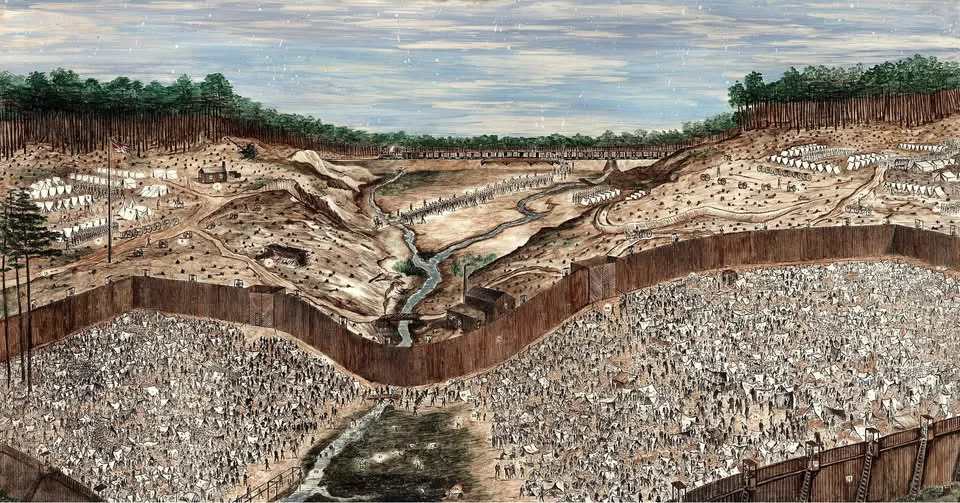
From The National Museum of Civil War Medicine - I also think this is one of the better drawings that explain the layout of Andersonville really well.
The first Union prisoners arrived at Camp Sumter prison in Georgia #OnThisDay in 1864. Nearly 13,000 would die while the prison was in use. The site would become infamous under its better-known name of Andersonville. After the war, Clara Barton would help to establish the National Cemetery there.
"The low grounds bordering the stream were covered with human excrements and filth of all kinds, which in many places seemed to be alive with working maggots. An indescribable sickening stench arose from these fermenting masses of human filth. There were near five thousand seriously ill Federals in the stockade and the Confederate States Military Prison Hospital, and the deaths exceeded one hundred per day, and large numbers of the prisoners who were walking about, and who had not been entered upon the sick reports, were suffering incurable diarrhea, dysentery, and scurvy. "
--John L. Ransom, Andersonville diary (published 1881)
Image: Drawing of Andersonville prison by Thomas O'Dea, former prisoner of war
The first Union prisoners arrived at Camp Sumter prison in Georgia #OnThisDay in 1864. Nearly 13,000 would die while the prison was in use. The site would become infamous under its better-known name of Andersonville. After the war, Clara Barton would help to establish the National Cemetery there.
"The low grounds bordering the stream were covered with human excrements and filth of all kinds, which in many places seemed to be alive with working maggots. An indescribable sickening stench arose from these fermenting masses of human filth. There were near five thousand seriously ill Federals in the stockade and the Confederate States Military Prison Hospital, and the deaths exceeded one hundred per day, and large numbers of the prisoners who were walking about, and who had not been entered upon the sick reports, were suffering incurable diarrhea, dysentery, and scurvy. "
--John L. Ransom, Andersonville diary (published 1881)
Image: Drawing of Andersonville prison by Thomas O'Dea, former prisoner of war


 Bringing the