Immovable black hole; moving props.

Mike Serpa

Lt. Colonel
Joined
Jan 24, 2013
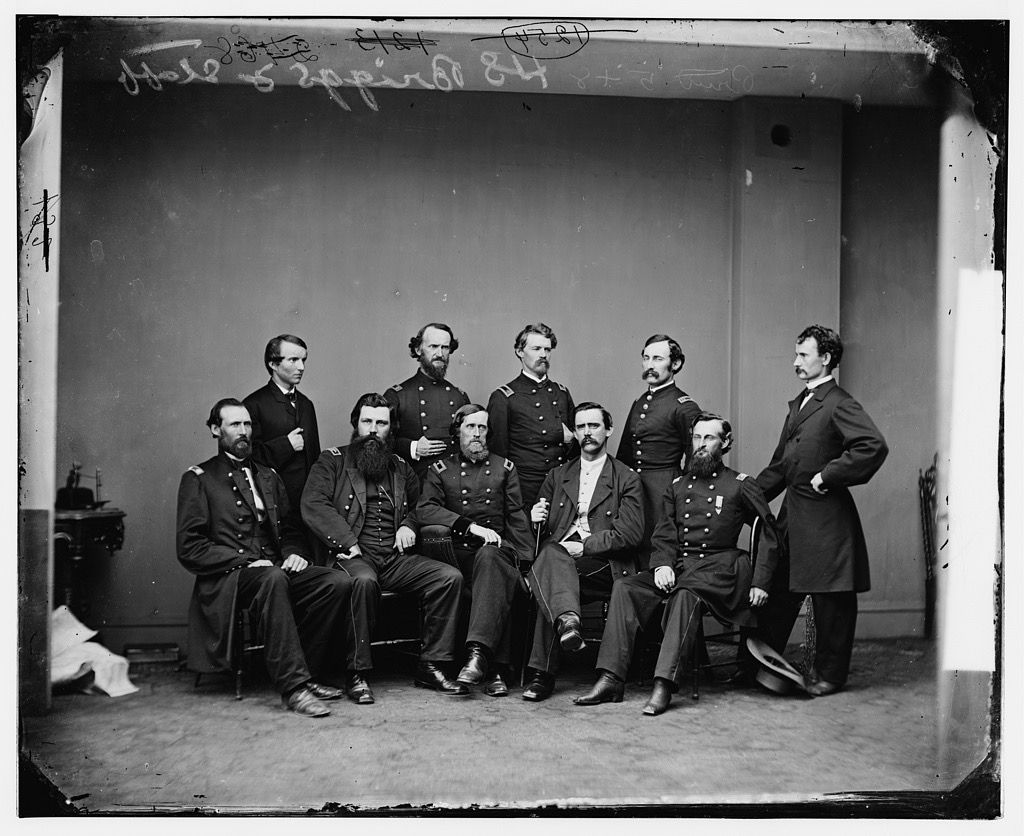
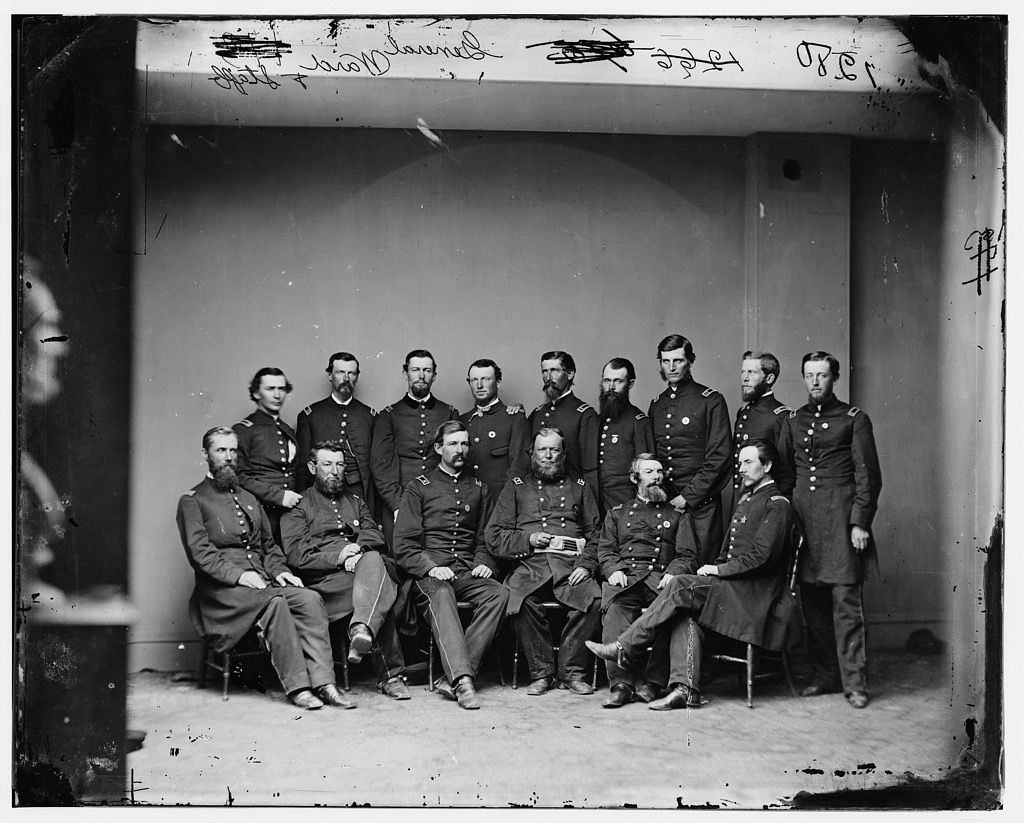
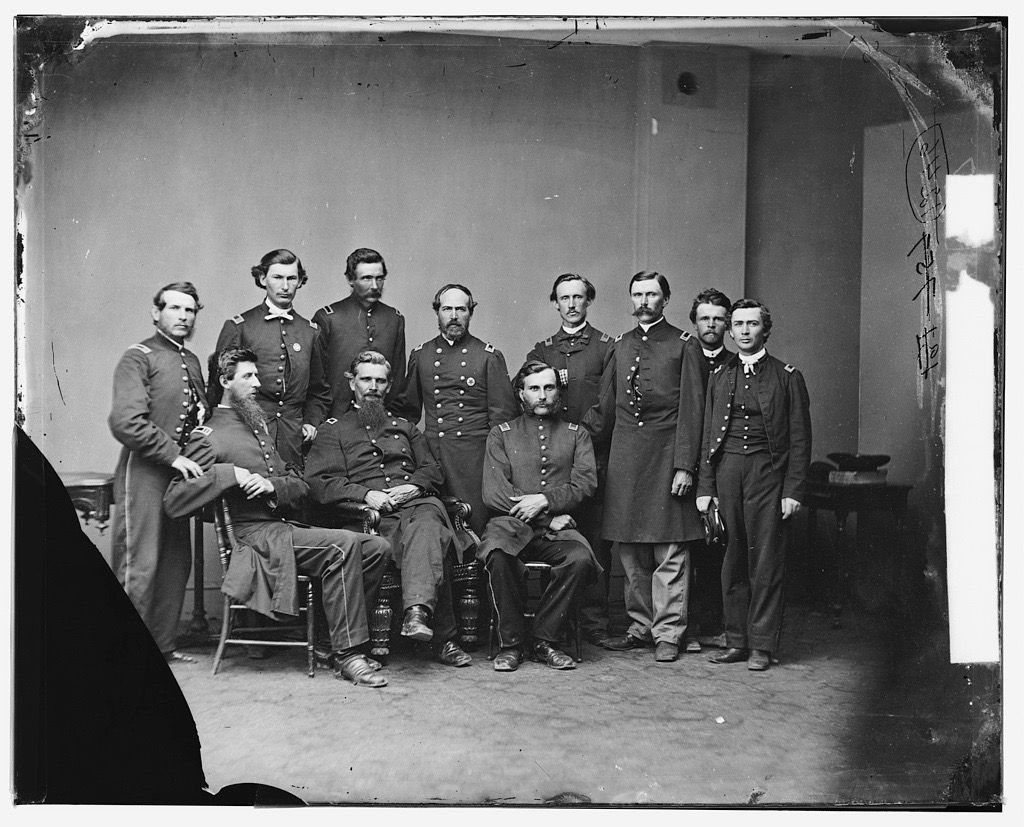
It looks like a black hole in the wall at the upper right of these photos. The props change from photo to photo. Also, an arc can be seen on the wall in some of the photos. It changes location. Anyone have an idea why this happened? @civilwarincolor? (Library of Congress photos.)

03118v^.jpg

General M.D. Leggett and Staff

03120v.jpg

General Frank Blair and Staff

03134v^.jpg

General Belknap and Staff

03204v.jpg

General Slocum and Staff. Bust of Abe?

03206v.jpg

General Carroll and Staff

03209v.jpg

General Henry S. Briggs and staff

03214v.jpg

General M.D. Leggett and Staff

03220v.jpg

General Daniel Dustin and Staff

03237v^.jpg

General Joseph Anthony Mower and staff
 
Could it also be a stovepipe from a woodstove? A stovepipe is definitely the answer, though. You can see the square from where the wall was protected from the heat. That's how you can tell it isn't for air conditioning. :D

That arc is a puzzle.
 
Mike -

Very interesting catch, had not noticed these before. I honestly have no idea about the black hole. The theory about it being for a stovepipe seems as reasonable as any other.

Obviously these where taken in the same studio, so then why would the arc that you noticed appears on some photos and not others. I agree with @Package4, this was most likely from a window or overhead skylight. I would vote for skylight as most studios of the day were located on the top floor and had a skylight that could be angled

2462518722_1235f74427.jpg


Studio_cropWeb.jpg


There is a great example of the shadow appearing in an image with the one of Admiral Worden.

p819937361-6.jpg
 
Mike -

Very interesting catch, had not noticed these before. I honestly have no idea about the black hole. The theory about it being for a stovepipe seems as reasonable as any other.

Obviously these where taken in the same studio, so then why would the arc that you noticed appears on some photos and not others. I agree with @Package4, this was most likely from a window or overhead skylight. I would vote for skylight as most studios of the day were located on the top floor and had a skylight that could be angled

2462518722_1235f74427.jpg


Studio_cropWeb.jpg


There is a great example of the shadow appearing in an image with the one of Admiral Worden.

p819937361-6.jpg
Nice colorizing! The window in the Worden photo looks like it is painted on the wall. Same with the shadow on the wall. The shadow of the chair leg should go more to left instead of behind and to the left. In some silent movie light rays were painted onto backdrops. I think the same thing happened with this photo.
 
Nice colorizing! The window in the Worden photo looks like it is painted on the wall. Same with the shadow on the wall. The shadow of the chair leg should go more to left instead of behind and to the left. In some silent movie light rays were painted onto backdrops. I think the same thing happened with this photo.


Hmm, interesting theory. Personally I believe that it is natural. If it had been painted on then you would expect to see that same element in other images. This is the only one I have ever seen that. Of course, I could be wrong...
 
Sure looks like a stove pipe opening to me...

I think the image posted by civilwarincolor has the answer to the arc on the wall; the circular light reflector to the rear right. The reflector would bounce the light from the skylights and depending on the intensity the arc would appear or disappear.
The skylights on the Armstead & White studio in Corinth are very obvious. This was one of four galleries in Corinth, MS and all of them had the tell-tale skylights. Note the sample cdv's near the front door and the side table.
951601o.jpg
 
Sure looks like a stove pipe opening to me...

I think the image posted by civilwarincolor has the answer to the arc on the wall; the circular light reflector to the rear right. The reflector would bounce the light from the skylights and depending on the intensity the arc would appear or disappear.
The skylights on the Armstead & White studio in Corinth are very obvious. This was one of four galleries in Corinth, MS and all of them had the tell-tale skylights. Note the sample cdv's near the front door and the side table.
View attachment 112567

Thanks for sharing that. Had not seen this one before.
 
civilwarincolor,

This image has two more galleries, Howard & Hall on the far left with Armstead & White, in their second location, to the right. You can see those skylights with moveable shades. Both stand adjacent to the Tishomingo Hotel and depot at the crossing of the Memphis & Charleston and the Mobile & Ohio railroads in Corinth, MS.

Tom
Tishomingo.jpg
 
Maybe the arc was due to some refraction off the lens or possible some sort of parabolic reflector beside the camera to capture as much usable light as was available. The bottom segment being lost with all the dark uniforms. ??
 
That arc looks to me like part of the circle you see on the wall ftom a flashlight. I wonder if the had a later they were using as supplemental lighting that left that arc.

My other thought is the arc reminds me of the shape a not tall person makes on the wall while washing or wiping it. I don't really think this is the answer because wouldn't there be other arc's on the wall if this were the case?

I hope they could crop these images before giving them out. Maybe with scissors?
 
That arc looks to me like part of the circle you see on the wall from a flashlight. I wonder if the had a later they were using as supplemental lighting that left that arc.

My other thought is the arc reminds me of the shape a not tall person makes on the wall while washing or wiping it. I don't really think this is the answer because wouldn't there be other arc's on the wall if this were the case?

I hope they could crop these images before giving them out. Maybe with scissors?

It could have been from a rounded mirror reflecting light back into the room from a skylight. Either way I am fairly confident that this is from an external light or shadow source and not a feature on the wall.

As for cropping the images before they give them out. Yes, but depends on the type of photo. A tintype or Ambrotype are either on metal of glass, so no cropping, no scissors.

For prints that produced a negative (as these are from the original post) the camera would originally have produced an image similar to the one below. That would have been printed and then trimmed to the proper size. This is why you often see scratches in the non usable part with the name or location of the image as reference. It would not appear in the final print, but was there so that they would remember.

4a39642r.jpg
 
Civilwarincolor, as long as you're answering questions, if you don't mind, I have a couple:

1- when did they start using negatives?

2- before negatives, did they make copies of a photo, for example to distribute to other family members, by taking a photograph of the original photograph?

I ask because I occasionally try to roughly date photos of 19th C quilts or quilt makers by looking at computer or printed images of their Ante-Bellum photographs. I've wondered when other family members have an old copy of the same old photo how that was done and if that is any kind of clue for dating purposes.

I really enjoy your work on this site. Thanks!
 
Hmm, interesting theory. Personally I believe that it is natural. If it had been painted on then you would expect to see that same element in other images. This is the only one I have ever seen that. Of course, I could be wrong...
Seeing this on only one image supports my statement. If it was a good idea it would have been used more than once. Both of us are not right. I look forward to the future when a definite answer is found.
 
Civilwarincolor, as long as you're answering questions, if you don't mind, I have a couple:

1- when did they start using negatives?

2- before negatives, did they make copies of a photo, for example to distribute to other family members, by taking a photograph of the original photograph?

I ask because I occasionally try to roughly date photos of 19th C quilts or quilt makers by looking at computer or printed images of their Ante-Bellum photographs. I've wondered when other family members have an old copy of the same old photo how that was done and if that is any kind of clue for dating purposes.

I really enjoy your work on this site. Thanks!

Happy to answer if I can. :smile:

Q. 1- when did they start using negatives?

A. The use of negatives came about in the early 1850's as they came up with ways to expose the image directly on glass. That image was a negative that could then be printed direct to paper. They did not have the photo paper that we are used to today, so quality suffered similar to what you would get if you printed a B&W image on copy paper from your printer.

Q 2- before negatives, did they make copies of a photo, for example to distribute to other family members, by taking a photograph of the original photograph?

Yes, this was very common. All of the negatives being glass were very fragile and they would print and mount the image and then take another photo. There are examples in the LOC that show peoples hand holding the negative. I show some of these in my presentation on things discovered during colorization. I will try to get the reference images (I am out of the office right now) and post them.

They also did this to sell/copy negatives for other distributors. So an image might be exclusive to one company for a period of time but then started turning up being offered either legitimately or nefariously by another dealer.

I don't have any idea how you would date these since that technique was in place for 40-50 years.

BTW, they did copy Daguerreotypes as well.

This image of William Henry Harrison was from 1850 and was from a Daguerreotype from 1841, shortly before Harrison died. The original no longer exists and this copy is the only know example.

William_Henry_Harrison_daguerreotype_edit.jpg
 

Learn About Us
About CivilWarTalk
Contact the Webmaster
Meet the Staff
Link to CivilWarTalk
Join Our Community
Register
Browse Forums
View Today's Discussions
Search the Forum
Get Help
FAQ
Student Guide
Forum Rules & Etiquette
Copyright / DMCA

     Contact Us CivilwarTalk on Facebook CivilWarTalk on YouTube CivilWarTalk on Twitter RSS Feed

Bringing the American Civil War and More to Life.
© 1999 - , CIVILWARTALK, LLC - Site Version 10.0

SlaveryTalk.com - SecessionTalk.com - CivilWarTalk.com - ReconstructionTalk.com
Back
Top