I wish I could paint.

Virginia Dave

Sergeant Major
Forum Host
Joined
Jan 3, 2019
Location
Waynesboro, Virginia
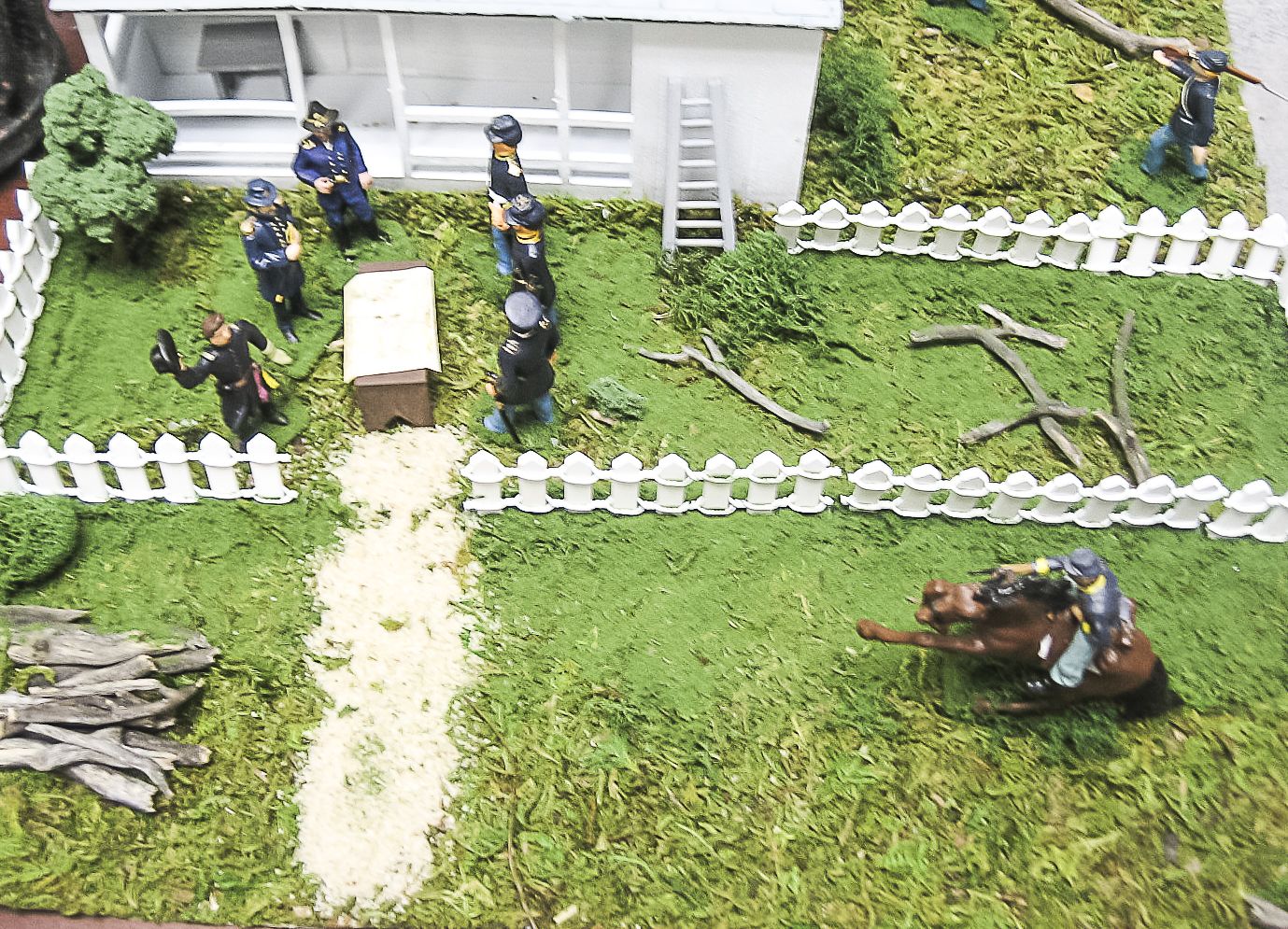
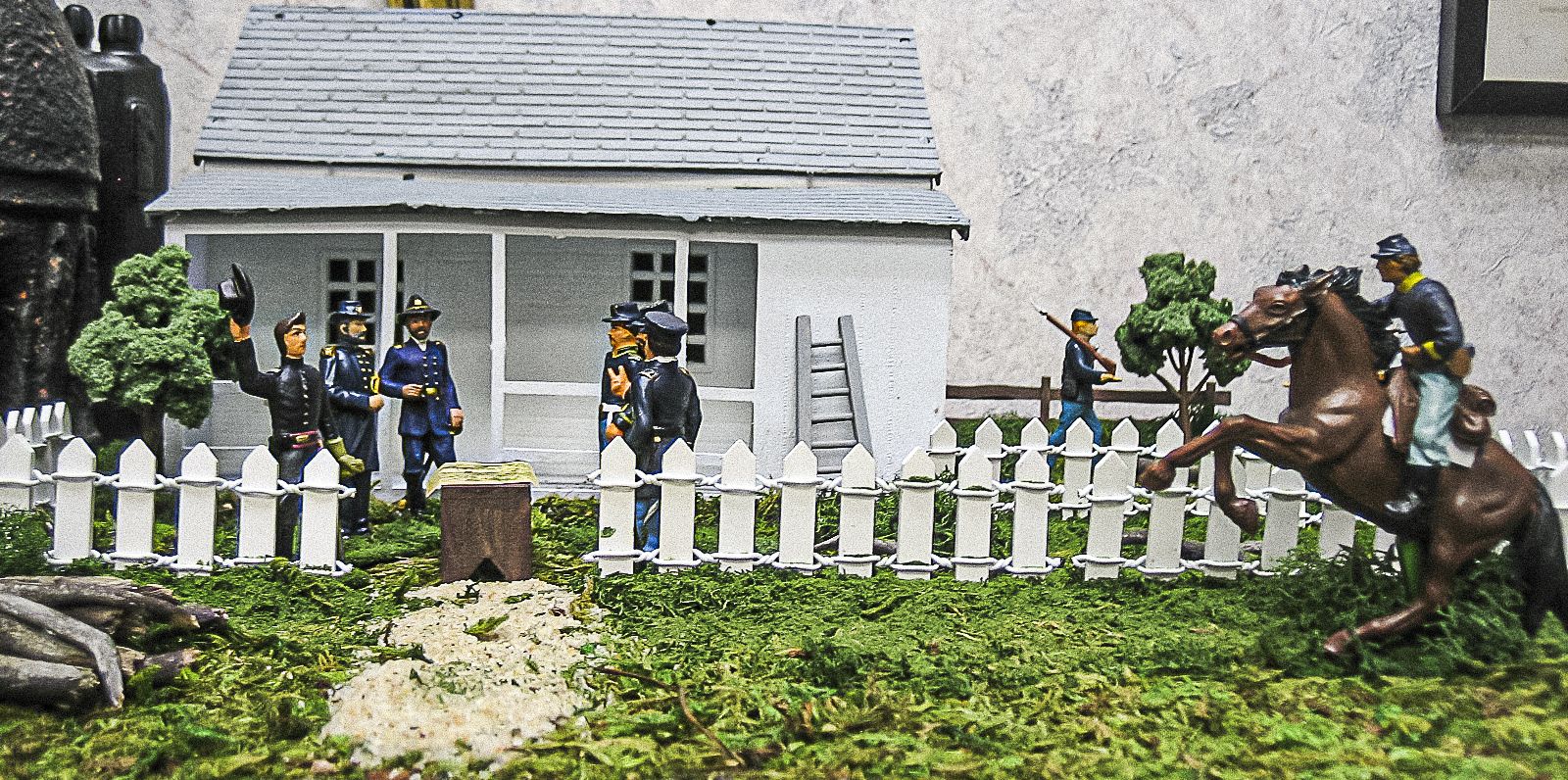
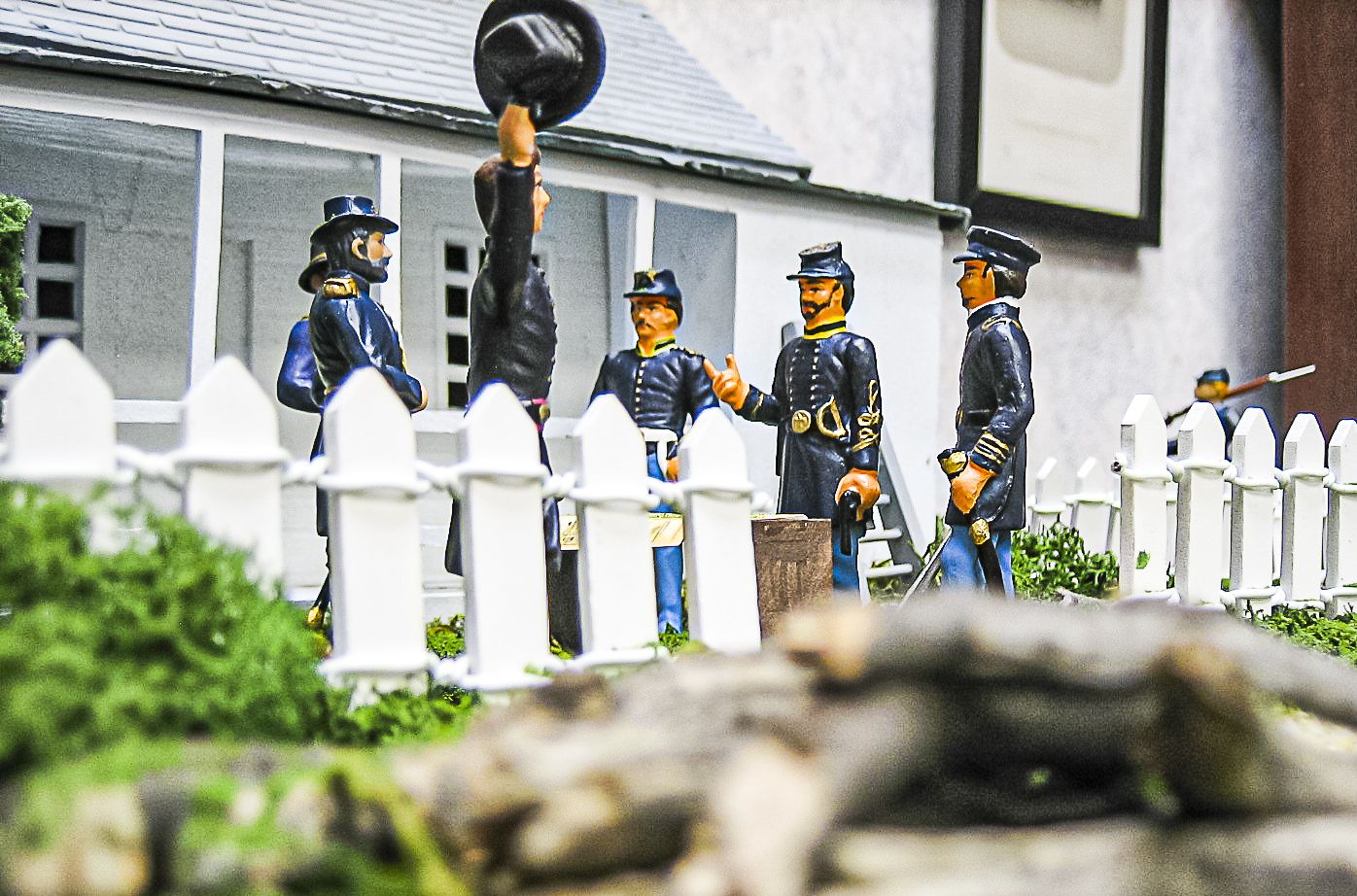
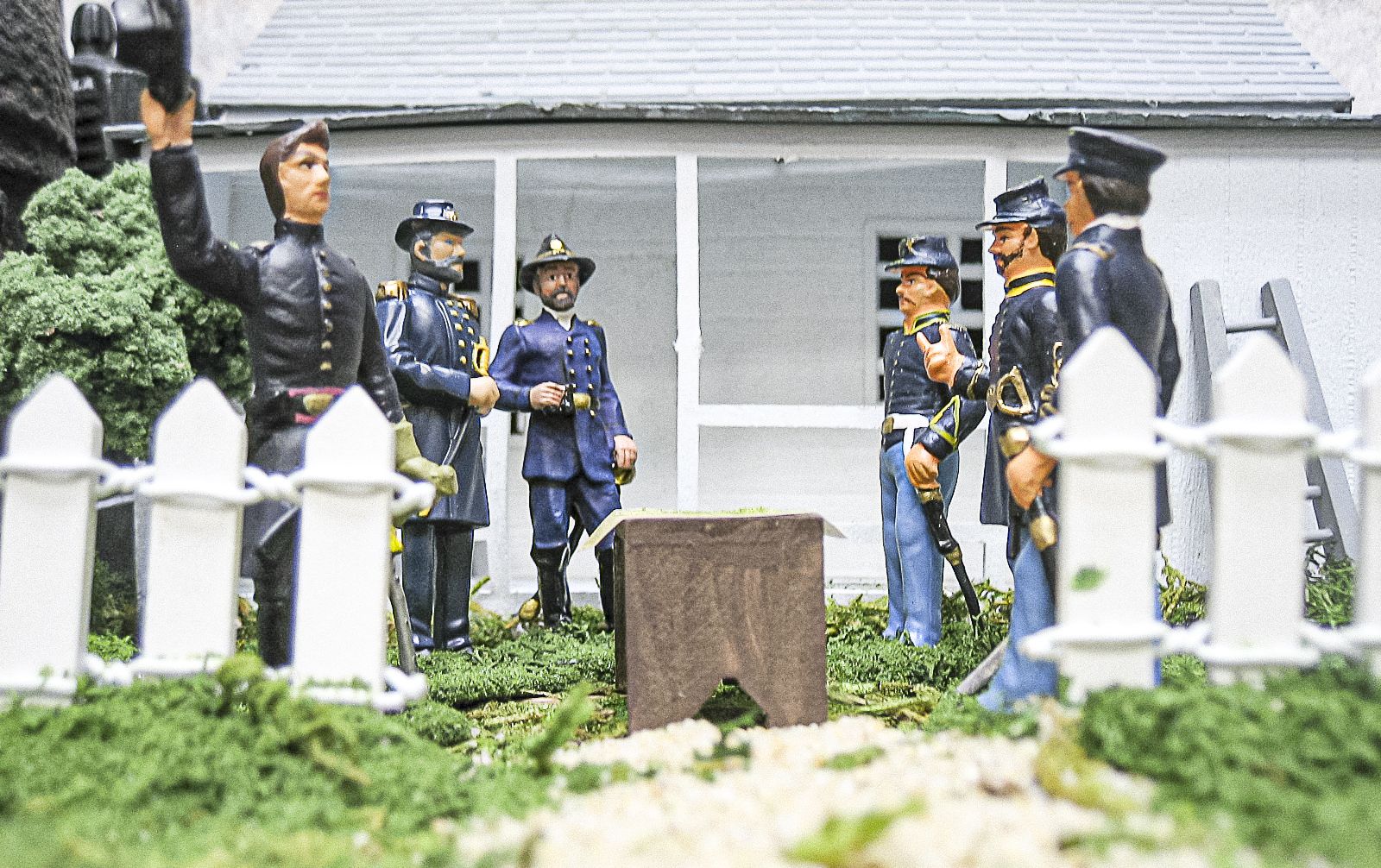
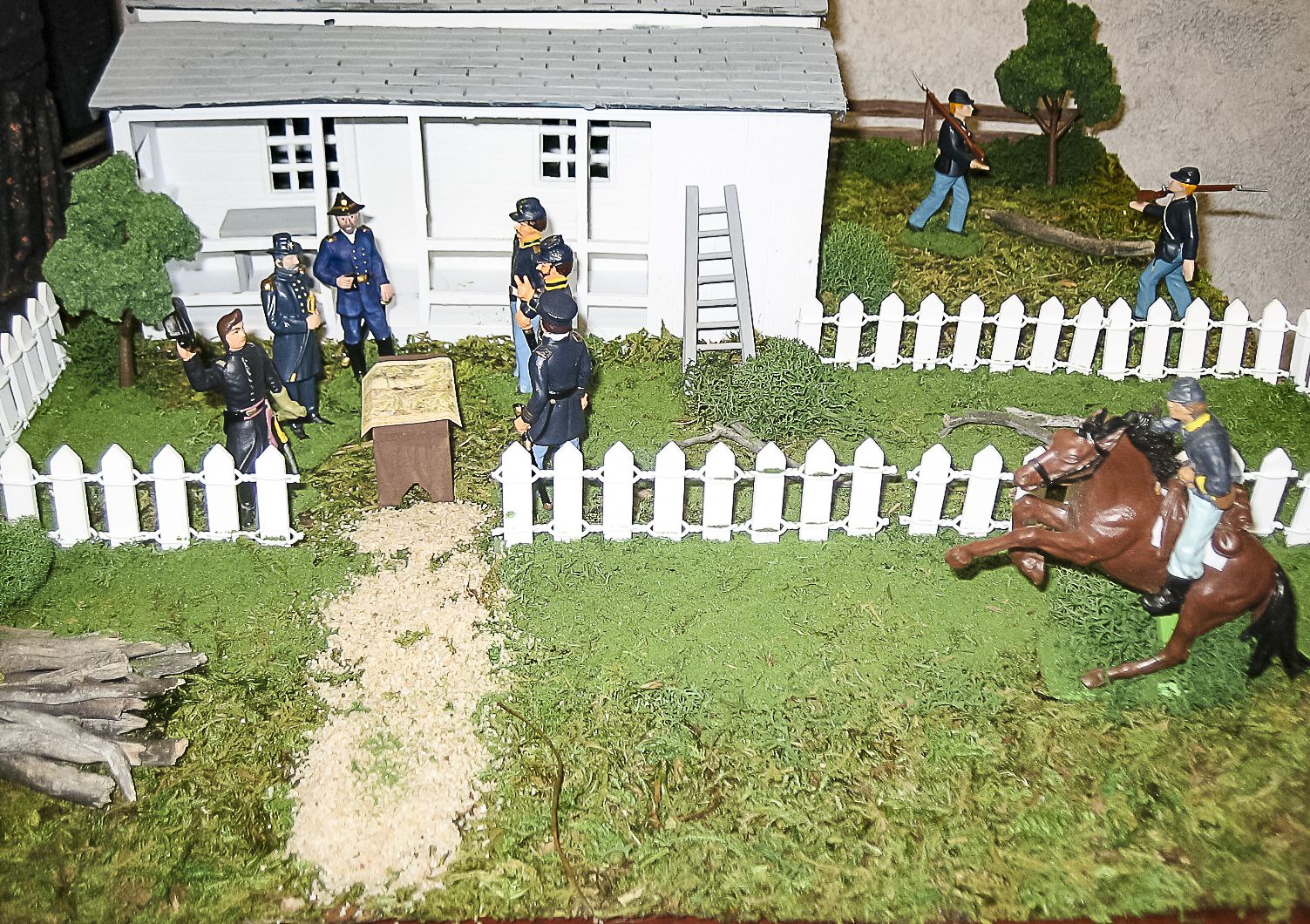
I have taken the advice of a good number of our members, and I am really beginning to enjoy this as an added part of my hobby. However, finding the right figures in the right positions to use are difficult for me to find. Most that I have seen are unpainted. So I use what I can find to the best effect that I can. So don't look to close at the uniforms of some of my figures. Some would consider them at the wrong place or time.

Anyway please look again and let me know what you think I could do to add to or better this little project. Everyone has been very helpful.

meade 1.jpeg


meade 6.jpg


Rays deer-1.jpg


Rays deer-2.jpg


Rays deer-3.jpg


Rays deer-4.jpg


Rays deer-5.jpg
 
The figures seem pretty good. I like the porch roof drooping.

The grass looks too green to me, but maybe that's because I'm in July. I like the back/side yard better. I might make the ladder wood colored. Maybe someone painted it gray, but I see aluminum extrusions.
 
The figures seem pretty good. I like the porch roof drooping.

The grass looks too green to me, but maybe that's because I'm in July. I like the back/side yard better. I might make the ladder wood colored. Maybe someone painted it gray, but I see aluminum extrusions.
Thanks I agree about the grass. I am looking for a better match. The ladder will be painted wood color. I have seen a lot of old wooden ladders that turned grey in the sun after years of exposure, but I think it will look better brown. Thanks

What do you think of the roof color. In one photo I saw it was green and in another it was red. I settled on grey, but am open to suggestions.
 
Thanks I agree about the grass. I am looking for a better match. The ladder will be painted wood color. I have seen a lot of old wooden ladders that turned grey in the sun after years of exposure, but I think it will look better brown. Thanks

What do you think of the roof color. In one photo I saw it was green and in another it was red. I settled on grey, but am open to suggestions.
The current roof is gray weathered wooden shingles.

DSC_0310.JPG


DSC_0306.JPG
 
Thanks I agree about the grass. I am looking for a better match. The ladder will be painted wood color. I have seen a lot of old wooden ladders that turned grey in the sun after years of exposure, but I think it will look better brown. Thanks

What do you think of the roof color. In one photo I saw it was green and in another it was red. I settled on grey, but am open to suggestions.


I think it would stick with gray for the roof. That much red, unless it was definitely noted as the Red Roof Inn or something, would draw too much visual attention. Kind of like a battleship model that has a copper oxide red hull. It's a lot of red and you're not supposed to be admiring the bottom of the hull.

If I wanted to have fun with the roof, I would do a heavier dark gray wash. But I always think heavy washes are fun, so you maybe shouldn't pay attention to me on that.

Weathered wood on the latter makes sense, but it didn't dawn on me. Looked like 6061 to me. If it had texture like the stacked firewood, it would look really good gray.
 
I think it would stick with gray for the roof. That much red, unless it was definitely noted as the Red Roof Inn or something, would draw too much visual attention. Kind of like a battleship model that has a copper oxide red hull. It's a lot of red and you're not supposed to be admiring the bottom of the hull.

If I wanted to have fun with the roof, I would do a heavier dark gray wash. But I always think heavy washes are fun, so you maybe shouldn't pay attention to me on that.

Weathered wood on the latter makes sense, but it didn't dawn on me. Looked like 6061 to me. If it had texture like the stacked firewood, it would look really good gray.
OK I am new at this. What is a wash? and 6061? Can you show me examples?
 
6061 is aluminum.

A wash is where you take some really thinned paint and "wash" it over your subject and it goes into the cracks (usually molded but whatever) and it makes shadows and so forth stand out. Since it is thin it doesn't stay on the flat parts. Shingles would be a good place to try it if you want to learn.

I learned how to do it when I painted a plastic German pill box from my Christmas army set in 1967 with black Tempra paints (I was 7) and decided I didn't like it and washed it off with water and it looked amazingly neat (didn't know the word "cool" yet). By accident I had discovered what the modelling world already knew as "washes". I do it now for aircraft panel lines and rivets because I'm too intimidated by figures to paint them.

Oh, one nice thing about a wash is that if you do one and it looks bad immediately, it's so thin it doesn't dry and you can just wipe it off. If you use oil paints as a base, a water wash just rinses off. Can't wait until later very well, but you know when you've screwed up.
 
I have taken the advice of a good number of our members, and I am really beginning to enjoy this as an added part of my hobby. However, finding the right figures in the right positions to use are difficult for me to find. Most that I have seen are unpainted.

I think you're making progress here! I haven't done any modeling since I was a kid, but discussions here have gotten me interested again. I think a multi-figure diorama might be too ambitious for me, but I've been snooping around looking for a larger-scale single figure that I might use for an initial effort. You can get many figures pre-painted, but I'd rather do my own painting and get a chance to learn from mistakes (which are definitely going to happen!)

Roy B.
 
I think you're making progress here! I haven't done any modeling since I was a kid, but discussions here have gotten me interested again. I think a multi-figure diorama might be too ambitious for me, but I've been snooping around looking for a larger-scale single figure that I might use for an initial effort. You can get many figures pre-painted, but I'd rather do my own painting and get a chance to learn from mistakes (which are definitely going to happen!)

Roy B.
I look forward to seeing what you come up with.
 
6061 is aluminum.

A wash is where you take some really thinned paint and "wash" it over your subject and it goes into the cracks (usually molded but whatever) and it makes shadows and so forth stand out. Since it is thin it doesn't stay on the flat parts. Shingles would be a good place to try it if you want to learn.

I learned how to do it when I painted a plastic German pill box from my Christmas army set in 1967 with black Tempra paints (I was 7) and decided I didn't like it and washed it off with water and it looked amazingly neat (didn't know the word "cool" yet). By accident I had discovered what the modelling world already knew as "washes". I do it now for aircraft panel lines and rivets because I'm too intimidated by figures to paint them.

Oh, one nice thing about a wash is that if you do one and it looks bad immediately, it's so thin it doesn't dry and you can just wipe it off. If you use oil paints as a base, a water wash just rinses off. Can't wait until later very well, but you know when you've screwed up.
I will give that a try. I guess I need a darker grey to do the wash with?
 
Dark gray would be good. You could try some real thin black, if don't have a dark gray handy. I mean, it's a roof, so you're getting shadows of the shingle next to it, plus the bird poo and tree matter that's washed into the crack, so whatever works works.
 
I think I would paint the roof gray, then after its dry, put a wash on it of either black or a very dark gray.
After that's all dried, I would do a dry brush of light gray.

I think a wash on the fence of a light gray would be good too.

Later edit-
For the grass, I think I would add lighter and darker shades of grass to what you already have. A little bit of white glue mixed with water and using a brush to apply the same in different areas, then shake the different colored grass over it should do it.

What your trying to do with the paint washes and different colors of grass is give some texture to a monochrome area. Doing so will give a feeling of depth to the diorama.
 
Last edited:
More on dioramas--

I think a diorama should tell a visual story. When I look at one that's been done well, I don't have to, or shouldn't have to look at the title to understand what the diorama represents. When I first saw yours, my first thought was, "Oh, that's Meade at Gettysburg." You've done a good job in that I wasn't surprised when I read what your diorama represented.

When you're thinking about building a diorama, you first and foremost have to consider scale.

Every man-made feature of the diorama, the buildings, fences, etc. have to match the size of the figures.
And, with larger scale figures means that there also has to be more details in the diorama; the figures will require more detail in their painting, the buildings will require more detail in their construction, and the landscape will require more detail. And all of this means you have to be subtle in what you do. So just keep in mind that when you use larger figures, you'll need more detail in everything.

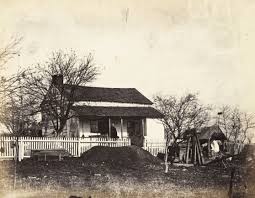
You've done a good job so far. You could leave it the way it is and it would be fine. Or, you could add some small details that would take it to a higher level. Look at the original picture of the farm house and get some ideas from that to add to your work.

How about a vine growing on the side of the house? Shouldn't the floorboards of the porch look look like they've been used? A little dry brushing of some light brown paint on the steps and the area of the porch in front of the door would give it that "used" look. A little wash of a light brown on the house will give it a more realistic look, like we've already discussed above with your roof. You've got a walkway from the gate to under the table, but then it stops. Continue it up to the porch, and add a few tiny touches of darker colored paint to the gravel. It' shouldn't be a uniform color. Do you see a uniform color in nature? Brush some lighter color of green to the outside layer of leaves to the tree in the corner of the yard, it will give it some depth. Look at a tree in your yard, the leaves are all a very subtle colors of green, with the outmost layer of leaves being a lighter color where the light hits them. How many different colors of brown do you see in the bark? And the ground under the tree should be a darker color as it's in the shade. There is a pile of logs outside the fence. Notice how they are not a uniform color, but have subtle shades of brown and gray on them? This is the look you want to emulate. I can't tell from the picture if the map laying on the table has some lines on it. Take a pencil and add some lines to show the roads and put a small rock or whittle a bottle or coffee cup to hold the map down so it doesn't blow away. All this stuff will add some realism and detail to your work and take it to another level.

And I don't want to hear you complain that "I can't do this" or "I can't paint." You can. What you're really saying is, "I don't know how to do this" which is ok, because none of us knew how to do this when we started. You're just afraid to let your inner child out. Look on You Tube for ideas on how to use washes and dry brushing and how to those people make a diorama. I could write you pages of what I would do to complete your diorama, but you can learn how to do all of this within 10 minutes of a little You Tube viewing.

You are so close to completing your diorama; you're like 95% done already. Adding a little subtle texture to the colors of the roof, the home, and groundwork will really finish it off. Your inner child is screaming to be let out! Let that boy go!
 
Do you see a uniform color in nature? Brush some lighter color of green to the outside layer of leaves to the tree in the corner of the yard, it will give it some depth. Look at a tree in your yard, the leaves are all a very subtle colors of green, with the outmost layer of leaves being a lighter color where the light hits them. How many different colors of brown do you see in the bark? And the ground under the tree should be a darker color as it's in the shade. There is a pile of logs outside the fence. Notice how they are not a uniform color, but have subtle shades of brown and gray on them?

Great suggestions -- very helpful. Makes me want to go out and buy some miniatures and paints and create a few disasters!

Roy B.
 
I use to have a sketch all the time. Mainly civil war drawings. When I use to live on my old parents farm house back in the day I had big bed room and miss it a lot actually and I had a big diarama of the battle of Gettysburg in my bed room which had the figures in the exact positions as pickets charge did. It use to be my dads train table.
 
I think I would paint the roof gray, then after its dry, put a wash on it of either black or a very dark gray.
After that's all dried, I would do a dry brush of light gray.

I think a wash on the fence of a light gray would be good too.

Later edit-
For the grass, I think I would add lighter and darker shades of grass to what you already have. A little bit of white glue mixed with water and using a brush to apply the same in different areas, then shake the different colored grass over it should do it.

What your trying to do with the paint washes and different colors of grass is give some texture to a monochrome area. Doing so will give a feeling of depth to the diorama.
Great tip. Thank you I can't wait to give it a go. I will post updates when the new touches are added.

Do you have links to some of your model work?
 
Here are some images of a barn I've been slowly working on . It will be part of a 1940s farm vignette with a tractor , farmworkers , livestock , etc. Although it is from a much later period it gives you an idea how to weather buildings . Use a base color and then try slightly different shades to weather different areas.

IMG_0269 (2).JPG


IMG_0270 (2).JPG


IMG_0272 (2).JPG


IMG_0273 (2).JPG
 
Here are some images of a barn I've been slowly working on . It will be part of a 1940s farm vignette with a tractor , farmworkers , livestock , etc. Although it is from a much later period it gives you an idea how to weather buildings . Use a base color and then try slightly different shades to weather different areas.

I love the way you've done the weathered effect on the siding.

Roy B.
 

Learn About Us
About CivilWarTalk
Contact the Webmaster
Meet the Staff
Link to CivilWarTalk
Join Our Community
Register
Browse Forums
View Today's Discussions
Search the Forum
Get Help
FAQ
Student Guide
Forum Rules & Etiquette
Copyright / DMCA

     Contact Us CivilwarTalk on Facebook CivilWarTalk on YouTube CivilWarTalk on Twitter RSS Feed

Bringing the American Civil War and More to Life.
© 1999 - , CIVILWARTALK, LLC - Site Version 10.0

SlaveryTalk.com - SecessionTalk.com - CivilWarTalk.com - ReconstructionTalk.com
Back
Top