
- Joined
- Jan 12, 2016
- Location
- South Carolina
One of the great things about reenacting is the opportunity to do some other interesting things besides just recreations of historical battles. Yesterday, to observe the anniversary of the Hunley sinking the Housitanic, some of my reenactment group and others from around the state participated in honor guard ceremonies for the Hunley crew at the museum.

Every fifteen minutes the guard would be changed, a bell would be rung, and the names of the eight crewmen would be read off, and we did this from roughly 10 to 3. Some of the men I think had clearly been in the military and knew how to do this properly. They looked like waxworks standing there, they were so still, and when they saluted it was very practiced. For me, someone who has not been in the military, trying to stand dead still for 15 minutes is a bit of a challenge! I had to try not to wobble, or lock my knees, and try not to shift my weight too noticeably. And I had to have read a blurb about the USS Alabama on the opposite wall about 200 times. A few members of our group had brought kids and grandkids and they got to take a turn either standing guard (see the picture above) and/or reading off the names. My oldest daughter took a turn reading the names and ringing the bell, and did a great job.
But it was definitely an interesting experience. Here I am, essentially playing soldier, but still doing something serious and respectful for genuine Confederates, and some insanely brave men who got on that submarine after two crews (minus a few on the first trial) had already died. And the amazing thing is that they were successful... they sank the enemy ship, and earned a place in naval warfare history in doing so.
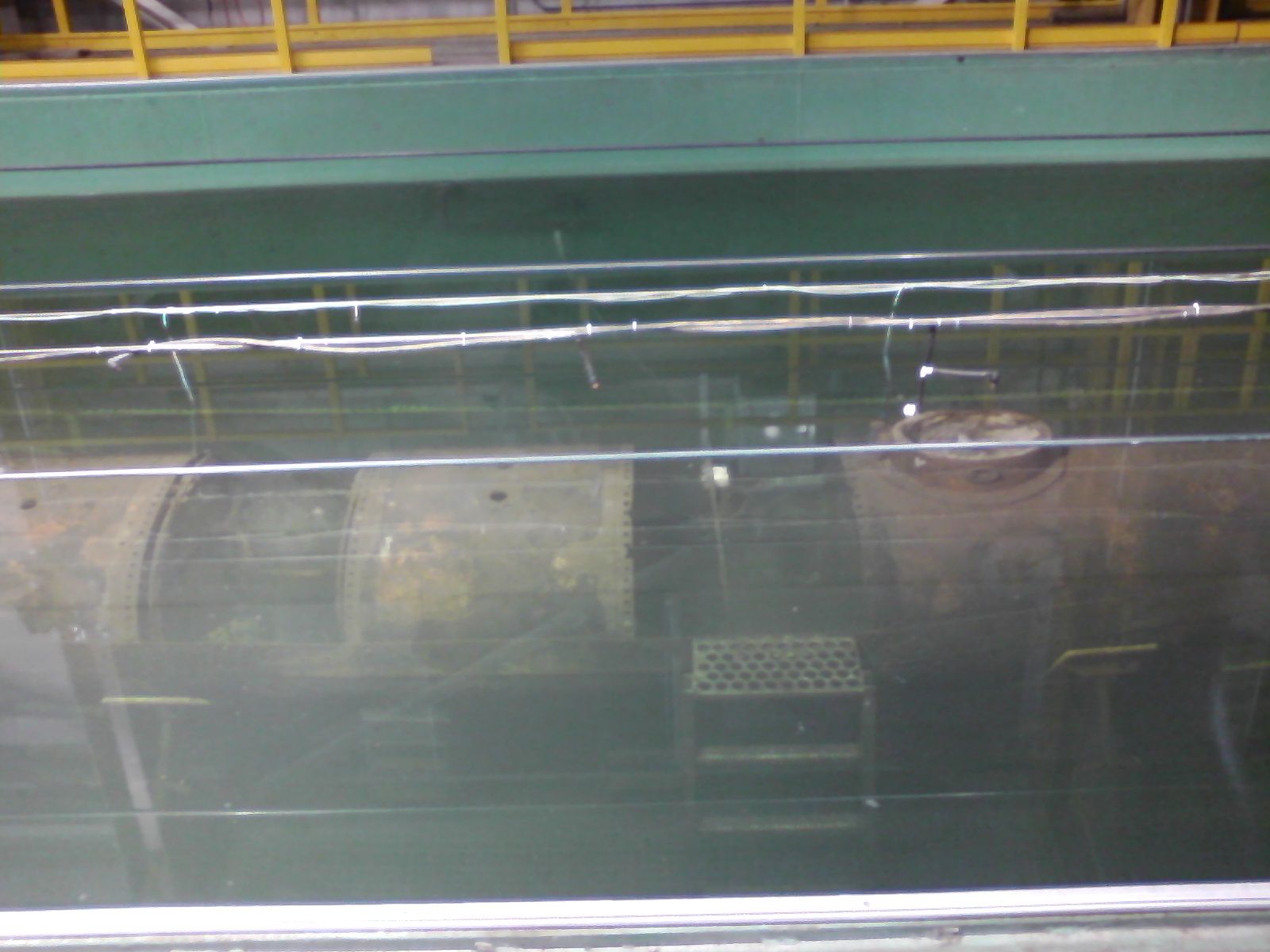
In between taking turns at watch, my wife, daughters and I had a good time socializing with the others from our group, as well as looking around the museum, which does a great job covering not only the history of the Hunley, but how it was recovered and brought to the surface, as well as the work they're doing in restoring it. And we got to take the tour and see it down in the tank where it's immersed in a chemical solution to slowly clean it of the accretion. They drain it three times a week to do work on it by hand as well.
All in all, it was a great experience, and as interesting as it would have been to just tour the museum, being a part of the day's program was definitely worthwhile.
Every fifteen minutes the guard would be changed, a bell would be rung, and the names of the eight crewmen would be read off, and we did this from roughly 10 to 3. Some of the men I think had clearly been in the military and knew how to do this properly. They looked like waxworks standing there, they were so still, and when they saluted it was very practiced. For me, someone who has not been in the military, trying to stand dead still for 15 minutes is a bit of a challenge! I had to try not to wobble, or lock my knees, and try not to shift my weight too noticeably. And I had to have read a blurb about the USS Alabama on the opposite wall about 200 times. A few members of our group had brought kids and grandkids and they got to take a turn either standing guard (see the picture above) and/or reading off the names. My oldest daughter took a turn reading the names and ringing the bell, and did a great job.
But it was definitely an interesting experience. Here I am, essentially playing soldier, but still doing something serious and respectful for genuine Confederates, and some insanely brave men who got on that submarine after two crews (minus a few on the first trial) had already died. And the amazing thing is that they were successful... they sank the enemy ship, and earned a place in naval warfare history in doing so.
In between taking turns at watch, my wife, daughters and I had a good time socializing with the others from our group, as well as looking around the museum, which does a great job covering not only the history of the Hunley, but how it was recovered and brought to the surface, as well as the work they're doing in restoring it. And we got to take the tour and see it down in the tank where it's immersed in a chemical solution to slowly clean it of the accretion. They drain it three times a week to do work on it by hand as well.
All in all, it was a great experience, and as interesting as it would have been to just tour the museum, being a part of the day's program was definitely worthwhile.
Last edited:


 Bringing the