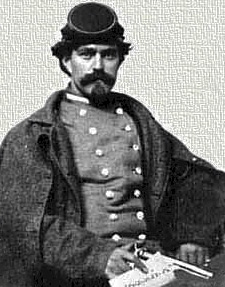
How Valuable was Harrison's Information?

Nathan Stuart

1st Lieutenant
Joined
Apr 14, 2020
In his 1863 Northern offensive action, Lee moved his Army of Northern Virginia into Pennsylvania hoping to draw the Federal Army of the Potomac into battle there and win a decisive victory on Northern soil. As Lee's Army moved into Pennsylvania his objective became to seize the state capital, Harrisburg. By June 29, his main Army was thinly spread across the northwest and north of Gettysburg.

However, on the evening of June 28, Lee received some highly useful intelligence information gathered by Longstreet's scout, Harrison, that changed his thinking. This was accurate information as to the disposition and strength of the Federal Army located around Frederick, moving northwards to pursue him, as well as of its recent change in leadership (to Meade).

This information compelled Lee to alter the direction of his northward advance and move his spread Army back towards Gettysburg to consolidate around there and perhaps engage the enemy (if he saw an opportunity) in that vicinity.

I wonder just how valuable (beneficial) Harrison's information was to Lee at Gettysburg.

If Lee had not received Harrison's information, he could have continued towards Harrisburg and engaged in a battle further north, somewhere in this general region. I've heard it suggested in a recent presentation, that if he had advanced too far north his supply line would have been stretched too far (he couldn't live off the local countryside forever) and his extended line of retreat was more likely to have been cut off, resulting in the possible destruction of his Army.

Given that Lee received Harrison's useful and accurate information and that he acted upon it, did Stuart's absence significantly disadvantage Lee at this time?

Even without the presence of Stuart's cavalry, did Harrison's information indeed save Lee's Army from being involved in a far riskier and perhaps catastrophic engagement further north of Gettysburg?
 
Certainly, Harrison's information was better than nothing, and Lee did act on it by summoning Ewell's Corp from its Harrisburg movement. But I don't think that it makes up for the absence of Stuart and his cavalry. Had Stuart been monitoring the moving locations of the various federal corps all along, Lee would have been able to make more considerate and informed decisions about his own plans. Perhaps most of all, Lee and the ANV would not have stumbled into the encounter at Gettysburg, which despite the day 1 success, ultimately put Lee in a disadvantaged position in which he was forced to react to Union moves, rather than take the initiative.
 
I wonder just how valuable (beneficial) Harrison's information was to Lee
At the beginning of Animal House they show a statute of the founder of the college and the pedestal has the inscription "Knowledge is Good". I love the inanity of that statement, but despite being obvious, its certainly true. Lee had no knowledge of the position of the Union army. Harrison gave him some. I suspect if you were a general in enemy territory and were blindly marching about, ANY information about your enemy would be extremely valuable.
 
I have always been facinated by this scout "Harrison". Who exactly was this man? (first name?) What did he do for Lee at Antietam? at Gettysburg? He seems to be a mystery man who even more mysteriously gave Lee critical info at various times.

Come on, folks, tell me all you know about him!
 
 
Thank you, Sir!
 
Col. Fremantle joined General Longstreet on the 27th of June; his journal suggests Longstreet only learned of the replacement of Hooker on the evening of June 30, camped at Greenwood, west of Gettysburg. From Fremantle:

"In the evening General Longstreet told me that he had just received intelligence that Hooker had been disrated, and that Meade was appointed in his place. Of course he knew both of them in the old army, and he says that Meade is an honorable and respectable man, though not, perhaps, so bold as Hooker.
I had a long talk with many officers about the approaching battle, which evidently cannot now be delayed long, and will take place on this road [toward Gettysburg] instead of in the direction of Harrisburg, as we had supposed…" [Fremantle, Three Months in the Southern States, 1864, 250.]


Fremantle claims many of the officers expected a battle along the Greenwood to Gettysburg road the day before the battle commenced on the 1st.

The next day, July 1, as the battle commenced, Fremantle notes a "spy" among Longstreet's retinue noted:
1642960179862.png


Three days' before was the 28th, and there were no federals in the town on that day by the various itineraries. Whoever this spy was, his statement was erroneous.

Jumping back a few days:

Lee's official report states a "Scout" brought valuable intelligence regarding the Union army to Lee on the 28th.

"The advance against Harrisburg was arrested by intelligence received from a scout on the night of the 28th, to the effect that the army of General Hooker had crossed the Potomac, and was approaching the South Mountain. In the absence of the cavalry, it was impossible to ascertain his intentions; but to deter him from advancing farther west, and intercepting our communication with Virginia, it was determined to concentrate the army east of the mountains."

Postwar, Charles Marshall of Lee's staff recalled seeing General Lee speaking to a man in citizen's dress, much disheveled, on the late night of the 28th of June, stated to be a "scout" from General Longstreet's corps, with intelligence of the Union army's movements, etc. [An Aide-de-camp of Lee] A.L. Long of Lee's staff later claimed the "scout" with whom Lee spoke on the night of the 28th was from Hood's Texas Brigade. These two staff officers of Lee suggest Lee interrogated the scout himself.

General Longstreet's official report confirms the "Scout" reported to Lee on the 28th was dispatched by him:

"On the night of the 28th one of my scouts came in with the information that the enemy had passed the Potomac and was probably in pursuit of us. The scout was sent to general headquarters with the suggestion that the army concentrate east of the mountains and bear down to meet the enemy."

Post-war, Longstreet wrote of Harrison. He first reported Harrison reached him during the 29th of June. He later claimed he arrived on the 28th, (Manassas and Appomattox) and was the same man as the "Scout" of the 28th reported by Lee, etc., and recalled by Lee's staff. However, For his part, Captain Fairfax of General Longstreet's staff, claimed to have conducted Harrison from Longstreet to General Lee's tent; and by his account Lee declined to speak to Harrison, as he was a spy. Fairfax understood General Lee's reticence, and claims he told Lee that in spite of Harrison's lack of credentials, his information was in accord with the views of General Longstreet.
In his last version of the incidents General Longstreet stated (From Manassas to Appomattox) that Lee indeed refused to see the spy Harrison as Fairfax claimed.

It is reported that at 7:30 AM, June 28, (which was well before the intelligence of the Scout, etc.) Gen. Lee sent to Ewell the following, demonstrating his orders to Ewell to withdraw from toward Harrisonburg on the 27th; a day before the scout's arrival.

1642962311486.png
 
I have always been facinated by this scout "Harrison". Who exactly was this man? (first name?) What did he do for Lee at Antietam? at Gettysburg? He seems to be a mystery man who even more mysteriously gave Lee critical info at various times.

Come on, folks, tell me all you know about him!

Yes, Henry Thomas Harrison seemed to be an interesting and somewhat mysterious individual.

At Gettysburg, there appears to be some debate as to whether Harrison delivered his information personally to Lee or relayed it to Lee via Longstreet on the evening of June 28. Either way, there appears no doubt the Lee received the intelligence in its entirety. Based on this information, Lee changed his plans that night.

After Gettysburg, Harrison seems to have disappeared into relative obscurity with his spying activities.
 
Certainly, Harrison's information was better than nothing, and Lee did act on it by summoning Ewell's Corp from its Harrisburg movement. But I don't think that it makes up for the absence of Stuart and his cavalry. Had Stuart been monitoring the moving locations of the various federal corps all along, Lee would have been able to make more considerate and informed decisions about his own plans. Perhaps most of all, Lee and the ANV would not have stumbled into the encounter at Gettysburg, which despite the day 1 success, ultimately put Lee in a disadvantaged position in which he was forced to react to Union moves, rather than take the initiative.

My point is that I don't think Stuart's absence during this time made much of a difference.

With Harrison's information, Lee knew the approximate strength of the Union Army, where that Army was presently located, and that it was moving northwards in pursuit of him. He was also aware that Meade was its new commander, whom he thought would likely be cautious. (Lee may have underestimated Meade here, as the latter was a very solid and dependable commander).

Lee needed to give battle (preferably on ground of his choice) and achieve a decisive victory to try and force the North, so he thought, to negotiate for peace.

Time was running out for Lee to precipitate an engagement. The risks were magnified, if he advanced too far north into enemy territory, as his Army would have become more exposed and isolated. With Harrison's intelligence, a better option suddenly emerged, and time was of the essence.

He took a calculated risk by considering the vicinity of Gettysburg to give battle, even though he stumbled into the start of the battle there. I think it was a prudent and sound enough decision to fight at Gettysburg in these circumstances.

It was problems in command, not the absence of Stuart's cavalry, that let Lee down and had a significant adverse effect. Two of Lee's three Corps commanders, were new to this role. Lee needed to give firmer and more positive directions to his rookie Corps commanders. If all the planned attacks earlier in the battle (including both flanking movements) were better coordinated and implemented in a more timely manner, there was a very good chance, Lee could have seized and held for a sufficient time the favorable defensive ground on Cemetery Ridge and beyond. (If Jackson commanded one of the Corps in the situation, the chances of success would have been further increased).

I am of the view that Stuart's absence at Gettysburg did not materially disadvantage Lee. In his northern thrust into Pennsylvania, Lee made the right choice to give battle around Gettysburg (no matter how accidentally, the battle started). It was failures in command (by both Lee and his Corps commanders) that led to his defeat. By July 3, it was clearly too late for Lee to compensate for the opportunities lost earlier on July 1 and 2.
 
At the beginning of Animal House they show a statute of the founder of the college and the pedestal has the inscription "Knowledge is Good". I love the inanity of that statement, but despite being obvious, its certainly true. Lee had no knowledge of the position of the Union army. Harrison gave him some. I suspect if you were a general in enemy territory and were blindly marching about, ANY information about your enemy would be extremely valuable.

Agree. I thought Harrison's information was extremely valuable in these circumstances.
 
I am of the view that Stuart's absence at Gettysburg did not materially disadvantage Lee.
This of course, is one of the great controversies involving the Gettysburg campaign and conflicting viewpoints can be found among various writers and historians. My inclination, based on my own reading, is that Stuart's absence tilted more towards disadvantaging Lee than not. Despite Harrison's important information, Lee himself remained anxious about the whereabouts of Stuart and for the intelligence about the AotP that he would be expected to provide. Lee was heavily dependent on Stuart for his keen screening and scouting abilities; Lee lacked similar confidence in Jones' and Robertsons' cavalry brigades that had been left behind to provide that type of reconnaissance.
 
This of course, is one of the great controversies involving the Gettysburg campaign and conflicting viewpoints can be found among various writers and historians. My inclination, based on my own reading, is that Stuart's absence tilted more towards disadvantaging Lee than not. Despite Harrison's important information, Lee himself remained anxious about the whereabouts of Stuart and for the intelligence about the AotP that he would be expected to provide. Lee was heavily dependent on Stuart for his keen screening and scouting abilities; Lee lacked similar confidence in Jones' and Robertsons' cavalry brigades that had been left behind to provide that type of reconnaissance.

Lee would have remained anxious about Stuart's whereabouts throughout the campaign, regardless of results. He would certainly have become more anxious as he advanced deeper into unknown enemy countryside.

But I do think Harrison's information was sufficient for him to calculate the risks involved and make a sound decision to engage. The provided information that he relied on was relevant, accurate and current. I doubt whether Stuart's scouting (if at the scene) would have reported anything materially different to alter Lee's decision to fight there and then.

Lee, always the bold opportunist, and with the knowledge of Harrison's information, suddenly saw an opportunity emerge to fight here. Lee was also pressed for time (this last point should not be underestimated).

Lee, of course, would have preferred Stuart's presence at the time. His cavalry screening could have helped Lee in launching his flank attacks. But I do not believe Stuart's involvement would have positively affected the outcomes of these failed infantry assaults.

I have little doubt that Lee's decision to fight there at the time, with the resources he had available, was the right one to make. It was the failures in command (by Lee and his Corps commanders) that significantly disadvantaged him for seizing the opportunities available at Gettysburg.
 
My point is that I don't think Stuart's absence during this time made much of a difference.
I think the greatest disadvantage due to Stuart's absence was on the night of the 1st and morning of the 2nd. Lee's whole plan on the 2nd was based on faulty intelligence about the location of the AOP right wing. If Stuart had been present I think he would have had better info on exactly what troops were on the field, where they were located, and when and where more would be arriving. He made his plans when he was essentially still groping at what was in front of him.
 
But I do think Harrison's information was sufficient for him to calculate the risks involved and make a sound decision to engage. The provided information that he relied on was relevant, accurate and current
Regardless as to whether Harrison's information was sufficient, his appearance and reporting was a fortuitous circumstance that Lee would not have been able to count on at the onset of the Gettysburg campaign. As army commander, Lee would have been expected to rely on Stuart and his cavalry to provide ongoing reconnaissance about the position of the Union corps.
 
I agree with those that argue Harrison's information was valuable. I believe it was critical.

I see no reason Lee would have recalled Ewell from Carlisle and Early from York without it. I see no reason Heth would not have approached Gettysburg on the 1st and ended up encountering Buford; initiating the movements of the Union Corps. The First and Eleventh Corps would have arrived without Ewell's three Divisions arriving to oppose them and Longstreet's Divisions were still too distant to engage. Don't forget Slocum's 12th Corps spent the 1st only four miles from Gettysburg on the Baltimore pike, so he could have joined the 1st and 11th quickly.

That would have caused an entirely different scenario. What it would be, I don't know. However, Heth would have had to retreated, Early would be isolated and cut off, and Ewell could have retreated down the Valley Pike, as Johnson's Division had, to join Lee. But it is obvious that it was Harrisons information that led Ewell and Early to be arriving at the right moment as they did. So I believe it was critical.

I question Lee's dependence on Stuart. Stuart had essentially been out of touch since Brandy Station, right? Why wouldn't Lee have utilized one of the other Cavalry commands that he was in contact with? He had Jenkin's, Imboden, and ole Grumble Jones at the very least? Yes, I know Jenkin's and Imboden were both relatively disorganized, "Independant" commands that Lee was unfamiliar with and was using to forage, but you use what you have, don't you? I am sure some of you can help me with that?

Regardless, without Harrison I see no orders to concentrate at Cashtown and probably no battle of Gettysburg? Possibly Early being picked off and defeated and Lee retreating south with the rest of his army from Chambersburg? Or at least repositioning to ground of his choosing, as Longstreet had advised?
 
I agree with those that argue Harrison's information was valuable. I believe it was critical.

I see no reason Lee would have recalled Ewell from Carlisle and Early from York without it. I see no reason Heth would not have approached Gettysburg on the 1st and ended up encountering Buford; initiating the movements of the Union Corps. The First and Eleventh Corps would have arrived without Ewell's three Divisions arriving to oppose them and Longstreet's Divisions were still too distant to engage. Don't forget Slocum's 12th Corps spent the 1st only four miles from Gettysburg on the Baltimore pike, so he could have joined the 1st and 11th quickly.

That would have caused an entirely different scenario. What it would be, I don't know. However, Heth would have had to retreated, Early would be isolated and cut off, and Ewell could have retreated down the Valley Pike, as Johnson's Division had, to join Lee. But it is obvious that it was Harrisons information that led Ewell and Early to be arriving at the right moment as they did. So I believe it was critical.

I question Lee's dependence on Stuart. Stuart had essentially been out of touch since Brandy Station, right? Why wouldn't Lee have utilized one of the other Cavalry commands that he was in contact with? He had Jenkin's, Imboden, and ole Grumble Jones at the very least? Yes, I know Jenkin's and Imboden were both relatively disorganized, "Independant" commands that Lee was unfamiliar with and was using to forage, but you use what you have, don't you? I am sure some of you can help me with that?

Regardless, without Harrison I see no orders to concentrate at Cashtown and probably no battle of Gettysburg? Possibly Early being picked off and defeated and Lee retreating south with the rest of his army from Chambersburg? Or at least repositioning to ground of his choosing, as Longstreet had advised?

Agree with the description of 'critical' to highlight the significance of Harrison's information.

The question one has to ask (and resolve) for themself here is:

Would Lee have fought at Gettysburg 'but for' Harrison's information?
 
This of course, is one of the great controversies involving the Gettysburg campaign and conflicting viewpoints can be found among various writers and historians. My inclination, based on my own reading, is that Stuart's absence tilted more towards disadvantaging Lee than not. Despite Harrison's important information, Lee himself remained anxious about the whereabouts of Stuart and for the intelligence about the AotP that he would be expected to provide. Lee was heavily dependent on Stuart for his keen screening and scouting abilities; Lee lacked similar confidence in Jones' and Robertsons' cavalry brigades that had been left behind to provide that type of reconnaissance.
Your right about Robertson. But Jones was considered the best "out post commander in the army". It was him (Battle of Fairfield) on July 3rd 1863 who kept the Fairfield Rd open to the South Mountain passes by defeating Wesley Merritt's brigade.
 
But Jones was considered the best "out post commander in the army".
Yes, I have heard that term in connection with Jones. But I wonder whether "outpost" commander is a term that relates more to a commander's ability to effectively picket and hold certain positions, rather than be effective at monitoring and reporting on the whereabouts of an enemy. I may be wrong about that, but it may be that Lee still had greater confidence in Stuart's recon abilities.
 

Learn About Us
►About CivilWarTalk
►Contact the Webmaster
►Meet the Staff
►Link to CivilWarTalk
Join Our Community
►Register
►Browse Forums
►View Today's Discussions
►Search the Forum
Get Help
►FAQ
►Student Guide
►Forum Rules & Etiquette
►Copyright / DMCA

     Contact Us CivilwarTalk on Facebook CivilWarTalk on YouTube CivilWarTalk on Twitter RSS Feed

Bringing the American Civil War and More to Life.
© 1999 - , CIVILWARTALK, LLC - Site Version 10.0

SlaveryTalk.com - SecessionTalk.com - CivilWarTalk.com - ReconstructionTalk.com
Back
Top