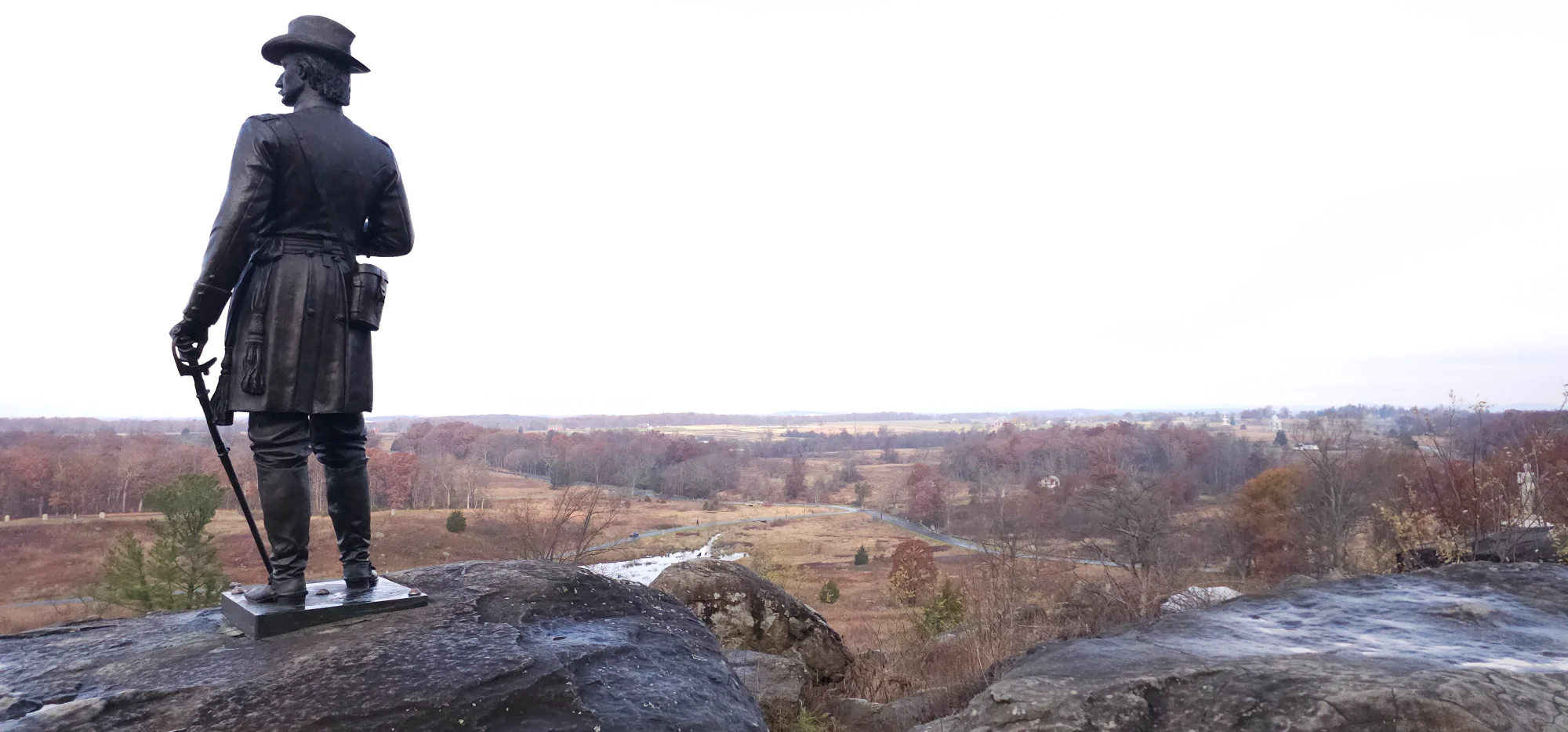
How the scenery has changed

61Cadillac

Private
Joined
Jun 2, 2025
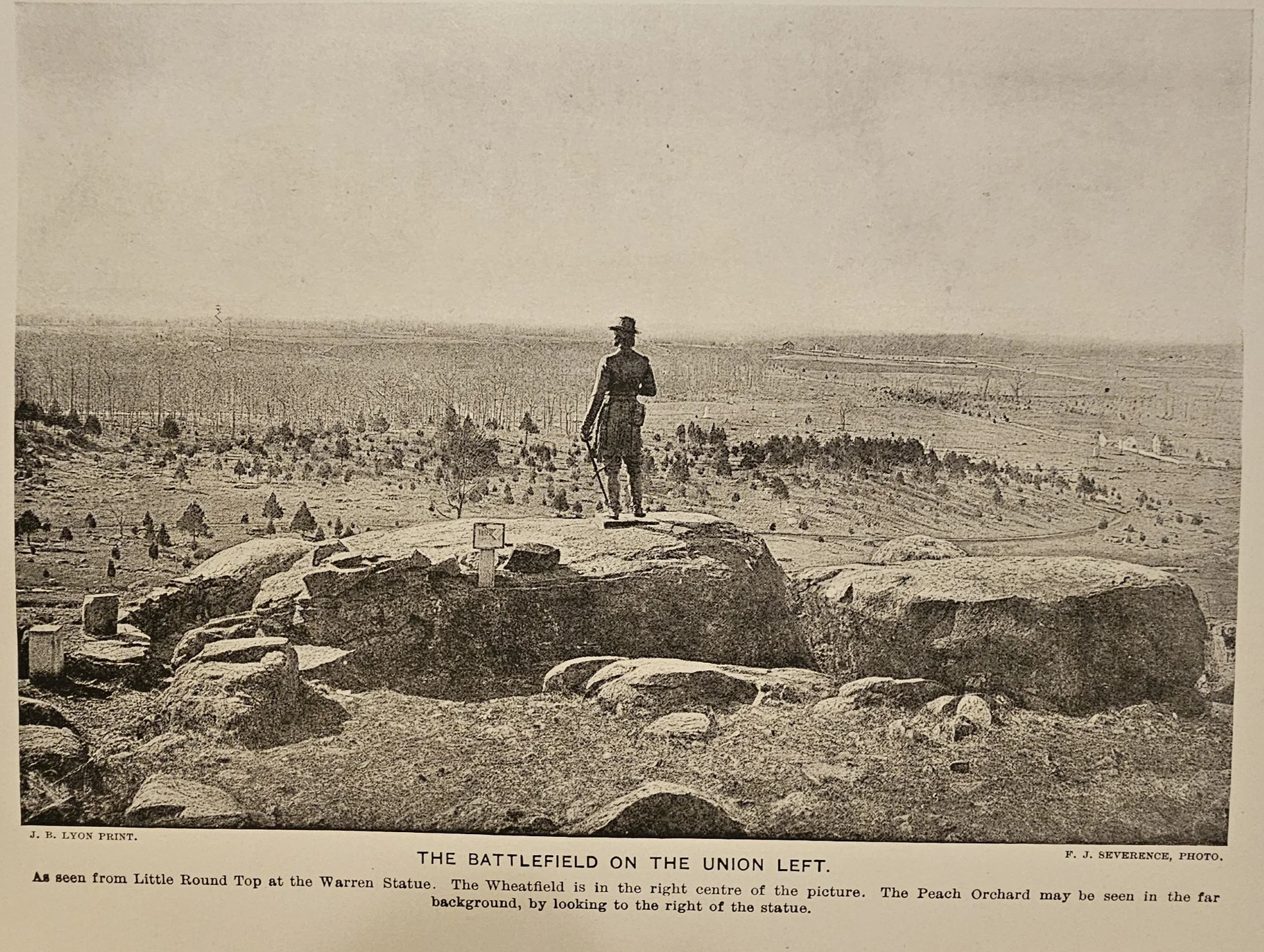
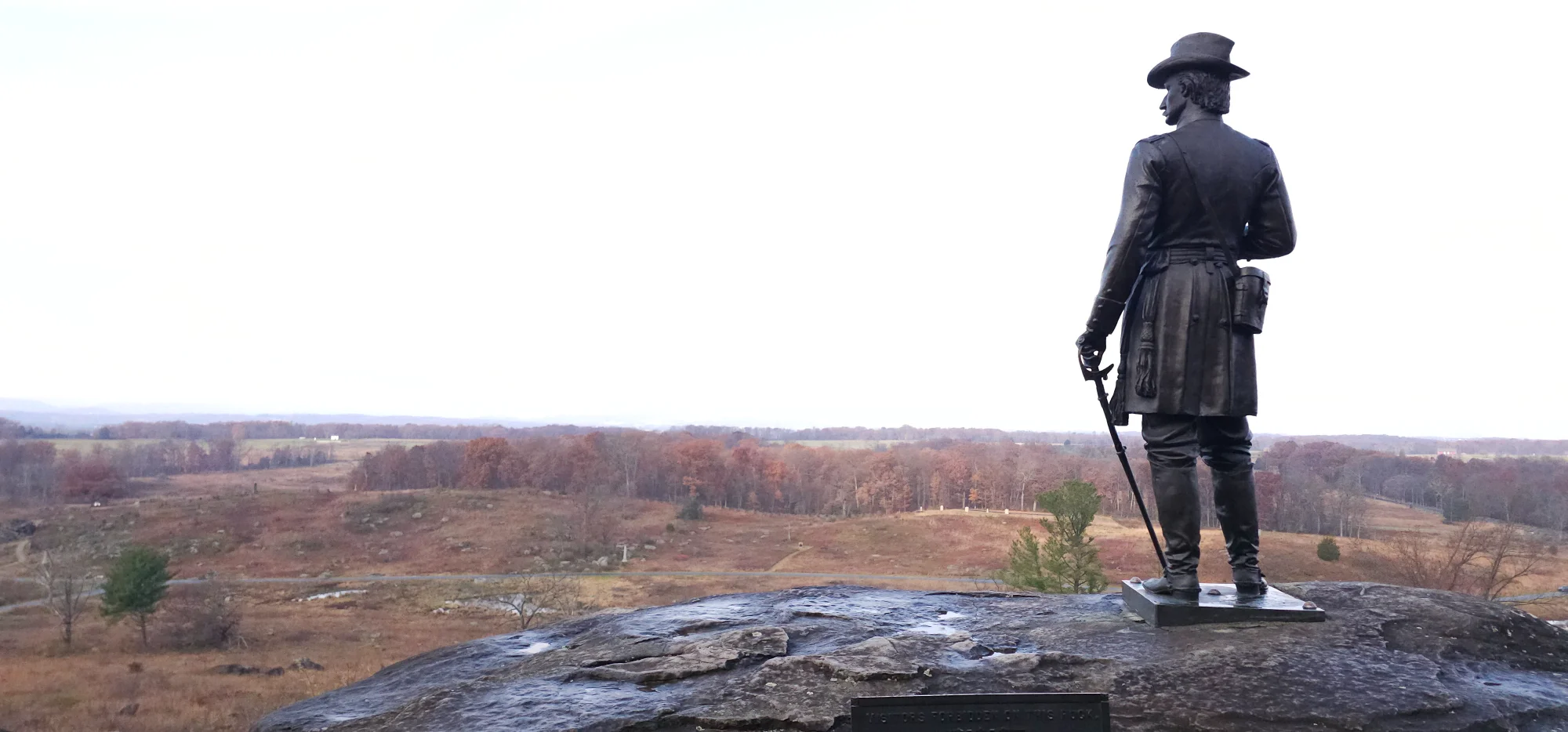
Going through one of the reference volumes I just picked up, New York at Gettysburg 3 volume set, published in 1902 I found this photo from Little Roundtop of the Warren monument. I realized I had photos from almost the exact spot I took in the 2nd week of November 2025, just a month ago. Thought it was interesting to see just how much the vegetation has changed the view lines in the last 123 years. It sure was a lot easier to see the enemy coming from the Peach Orchard and the Wheat field back then!
thumbnail_1000018443.webp


1000017348.webp


1000017349.webp
 
50 years ago, it was a lot more heavily wooded. You couldn't see LIttle Round Top from the Devil's Den. The Park Service has been on a very long quest to restore the field to a period appearance. Although a goal generally supported by history-heavy folks like us, it has at times been unpopular with visitors who wanted to visit a scenic park.
 
50 years ago, it was a lot more heavily wooded. You couldn't see LIttle Round Top from the Devil's Den. The Park Service has been on a very long quest to restore the field to a period appearance. Although a goal generally supported by history-heavy folks like us, it has at times been unpopular with visitors who wanted to visit a scenic park.
I heartily support restoring the whole battlefield to the way it looked at the time of the battle. The good folks who are looking for a scenic park have many other options for doing that. Gettysburg is national treasure and a historic site and deserves to be treated as such.
 
It must be challenging for the Park Service to both achieve and maintain the fine balance between wooded areas and open fields as these appeared in the Gettysburg period.

I vaguely recall watching a very early video presentation whereby the presenting park ranger mentioned that the Park Service permitted livestock (goats or cattle?) to wander over the park (or sections) to keep the vegetation growth in check. However, park management later decided to remove the animals when they thought the beasts could become hazardous to the visiting public.
 
Last edited:
Letting the area be grazed again as it was in 1863 sounds like a great idea to me, but I understand that many people today don't know how to behave around livestock. ( They may not be interested in having a "selfie" taken with you or your child).
It would definitely be impractical in today's environment.
 
I remember being chased by a bull behind the Trostle farm - but in all fairness, I did climb the fence into his pasture first.
Ha ha ha ha! I remember metal detecting in a pasture near a farm house a few years back among some cows. As I got closer they all started staring at me so I started going "Mooooo" and talking to them. Some lost interest and some kept staring. I didn't find anything so I didn't stick around very long. I think they were glad to see me go.
 
I'm not certain, could be wrong, but I think if you tried to duplicate the original photo exactly you wouldn't even be able to get to that camera position due to modern vegetation.
 
I'm not certain, could be wrong, but I think if you tried to duplicate the original photo exactly you wouldn't even be able to get to that camera position due to modern vegetation.
There would definitely be some trees around you but the underbrush isn't too thick there.

Ryan
 
It must be challenging for the Park Service to both achieve and maintain the fine balance between wooded areas and open fields as these appeared in the Gettysburg period.

I vaguely recall watching a very early video presentation whereby the presenting park ranger mentioned that the Park Service permitted livestock (goats or cattle?) to wander over the park (or sections) to keep the vegetation growth in check. However, park management later decided to remove the animals when they thought the beasts could become hazardous to the visiting public.
In this part of the country it's a regular business for stock raisers to rent out herds of goats to control underbrush. Portable plastic fencing is used to limit them to a certain area, then fencing and goats are moved on to the next area. Our city of Lampasas hired a herd to clean our the creek bed through a park in town. They did a splendid job, briars, poision ivy and all, and certainly enjoyed their work. I'm sure this is common in other places where goats are raised.
 
In this part of the country it's a regular business for stock raisers to rent out herds of goats to control underbrush. Portable plastic fencing is used to limit them to a certain area, then fencing and goats are moved on to the next area. Our city of Lampasas hired a herd to clean our the creek bed through a park in town. They did a splendid job, briars, poision ivy and all, and certainly enjoyed their work. I'm sure this is common in other places where goats are raised.
Yes. I believe goats eat a much wider variety of vegetation than almost any other form of livestock, like cattle and sheep. They provide virtually a 'complete mowing service'. But I've also heard the main practical problem in managing these animals is being able to effectively confine them to defined areas with appropriate boundary fencing.
 
Yes. I believe goats eat a much wider variety of vegetation than almost any other form of livestock, like cattle and sheep. They provide virtually a 'complete mowing service'. But I've also heard the main practical problem in managing these animals is being able to effectively confine them to defined areas with appropriate boundary fencing.
Actually, they had little to no difficulty managing the herds as the fences you see today, eg, Wainwright Avenue, have not changed over the course of my life or since disallowing cattle (Angus) to roam the fields a few years ago where Col. Avery's brigade (Early) attacked East Cemetery Hill July 2nd. That was a substantial herd of 25-30 that would come right up to the avenue (stone wall) scaring and thrilling some of the visitors in car tours. They roamed both sides of East Confederate Avenue (Culp Farm), all the way down to the right of Johnson's division (Jones brigade) before crossing Rodk Creek to attack Culps Hill.
**** Over the years, deer have been more trouble than cattle.
 

Learn About Us
About CivilWarTalk
Contact the Webmaster
Meet the Staff
Link to CivilWarTalk
Join Our Community
Register
Browse Forums
View Today's Discussions
Search the Forum
Get Help
FAQ
Student Guide
Forum Rules & Etiquette
Copyright / DMCA

     Contact Us CivilwarTalk on Facebook CivilWarTalk on YouTube CivilWarTalk on Twitter RSS Feed

Bringing the American Civil War and More to Life.
© 1999 - , CIVILWARTALK, LLC - Site Version 10.0

SlaveryTalk.com - SecessionTalk.com - CivilWarTalk.com - ReconstructionTalk.com
Back
Top