I maintain a roster of men who rode with Quantrill and there is a William B. Howard listed in 1862. He gave a newspaper to Quantrill that stated that fellow guerrilla, Perry Hoy, had been executed. I have no other information about this Howard.
There are two Hockensmith's listed, Clark and Henry (brothers) Hockensmith. Clark H. also had a brother-in-law who rode with Quantrill, H.W. Hobbs. Clark H. fought at Centralia and went to KY with Quantrill where he was killed at the Wakefield Farm fight in KY., (the last fight Quantrill was in and where he was shot in the spine). His brother, Henry H. was at Lawrence and after the war he attended Quantrill reunions. I think this information validates Red Rover's post #3. Cass County is directly south of Jackson County (Kansas City is in Jackson Co.), and Jackso Co. and the counties surround it was the prime area of requitement of men who rode with Quantrill. It's very interesting about how inter-related the men who served under Quantrill were. Brothers, brothers-in-law, cousins; more that 40% of the men who rode with Quantrill were somehow related, and this doesn't count the men who were neighbors or friends of each other. These relationships made the guerrilla's a very cohesive unit.
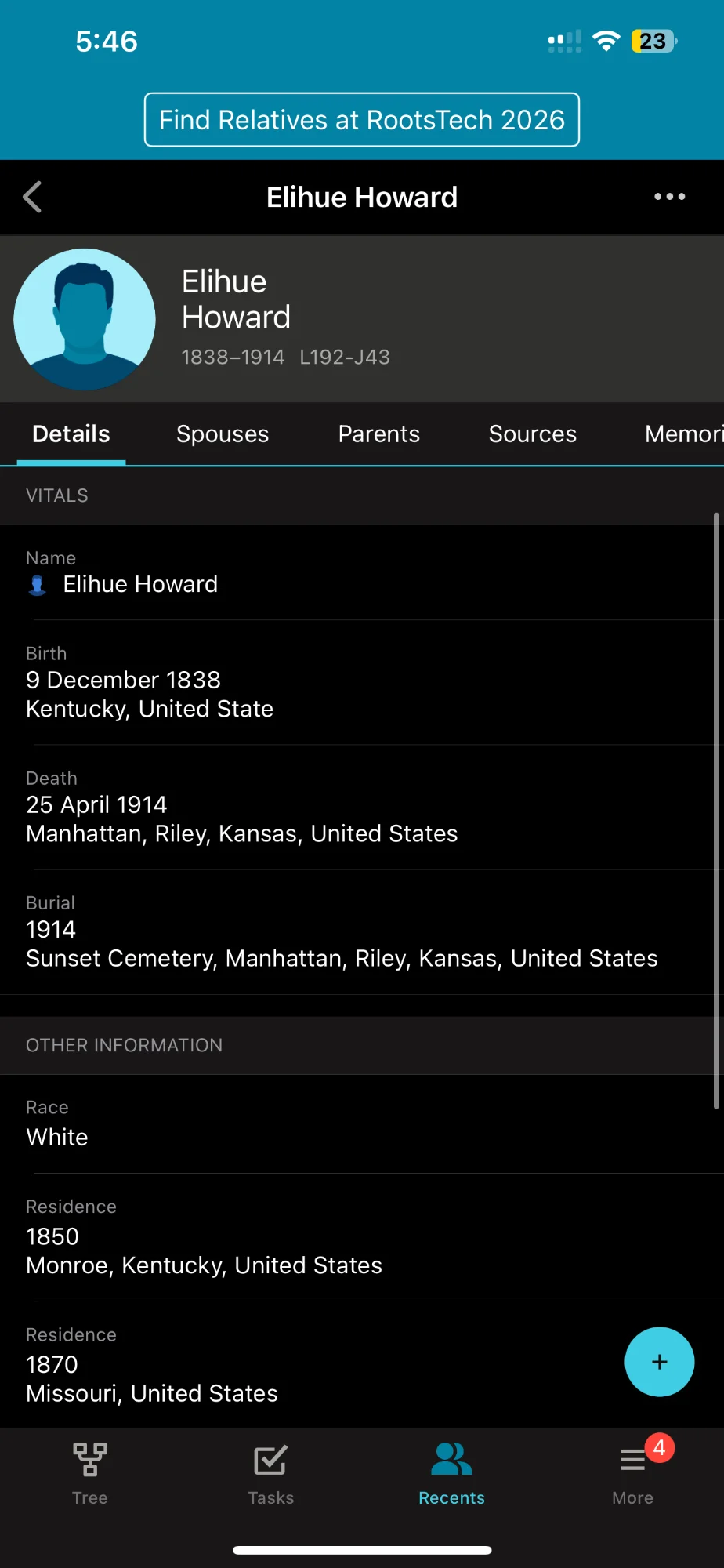
Webb City is down in Southwest Mo by Joplin, so how did Elihue Howard of Webb City, Mo meet and wed Margarite Hockensmith of Harrisonville, Cass Co. Mo? We don't have an 1860 census showing where E. Howard lived. General Order #11 would have cleared Cass Co. of all residences in late August/early September of 1863, with the exception of the town of Harrisonville. The Hockensmith family had southern ties, so they should not have been able to stay at Harrisonville, (only families that could prove their loyalty to the Union would have been allowed to stay). So many questions....
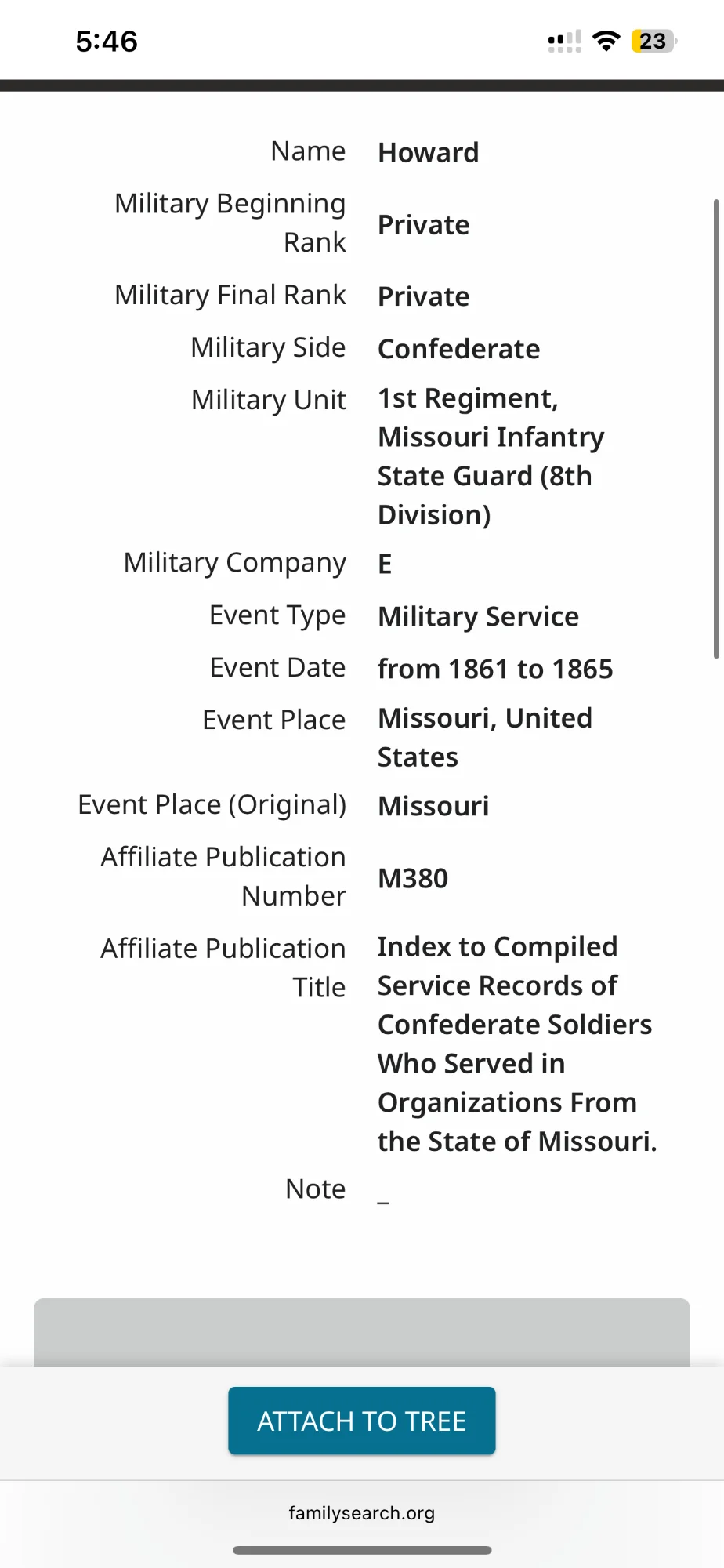
I personally have issues with sources that list the Missouri State Guard as a Confederate organization. The MSG was formed to resist invasion of the state, and it was pro-confederate, but it was a separate entity of the State of MO. It disbanded in early 1862, (there was a couple of MSG units that remained in service throughout the war), with some of the men returning to their homes, but those who remained were reshuffled into other units that became part of the Confederate army, and this had led to a lot of confusion of who served when and with what unit.



 Forum Host


 Bringing the