
- Joined
- Jul 12, 2015
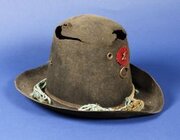
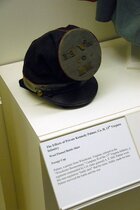
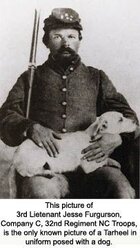
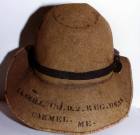
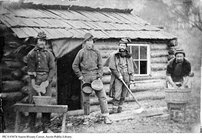
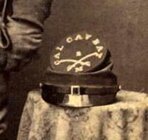
When it comes to headgear decorations/unit identifiers many reeanctors believe less is more. Is this really historically accurate based on surviving headgear and wartime photographs? Less might be more for front line units, but what about support troops, garrison troops and new regiments on there way to war?
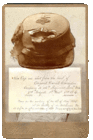
Headgear decorations may have been more common in 1861-1862 than in 1864-1865. Headgear decorations may have been more common in the Union Army than the Confederate Army. Less is more might not be historically accurate depending on your impression.
http://howardlanham.tripod.com/linkgr5/link208.html
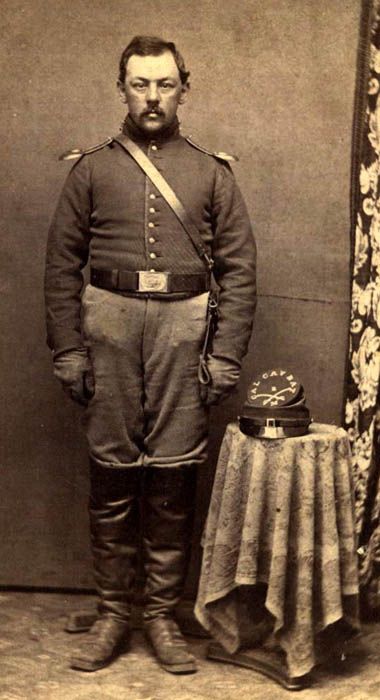
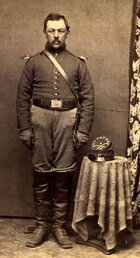
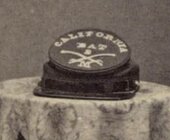
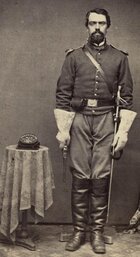
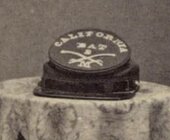
California Battalion, 2nd Massachusetts Cavalry

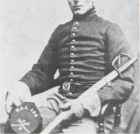
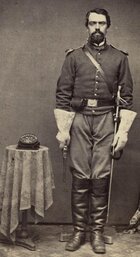
Joseph H. Burke in Mounted Man's Jacket
(Courtesy: Mike Sorenson)

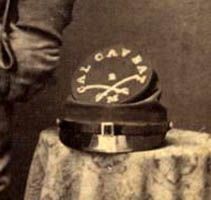
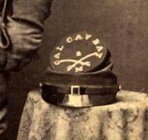
Details of Burke's Kepi
(Courtesy: Mike Sorenson)
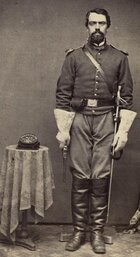
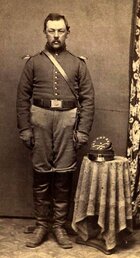
James N. Eby in Mounted Man's Jacket
(Courtesy: Mike Sorenson)
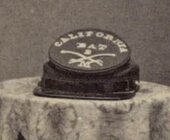
Details of Eby's Kepi
(Courtesy: Mike Sorenson)
Headgear decorations may have been more common in 1861-1862 than in 1864-1865. Headgear decorations may have been more common in the Union Army than the Confederate Army. Less is more might not be historically accurate depending on your impression.
http://howardlanham.tripod.com/linkgr5/link208.html
California Battalion, 2nd Massachusetts Cavalry
Joseph H. Burke in Mounted Man's Jacket
(Courtesy: Mike Sorenson)
Details of Burke's Kepi
(Courtesy: Mike Sorenson)
James N. Eby in Mounted Man's Jacket
(Courtesy: Mike Sorenson)
Details of Eby's Kepi
(Courtesy: Mike Sorenson)
Attachments
Last edited:

 Forum Host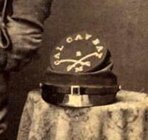



 ) Our hat brass can take on mythic, tribal significance, like wearing an NFL jersey to watch the Super Bowl, even if your team isn't playing. No hat brass tends to keep it in check. Unless you end up in the "no hat brass" tribe...




 Bringing the