
- Joined
- Nov 26, 2016
- Location
- central NC
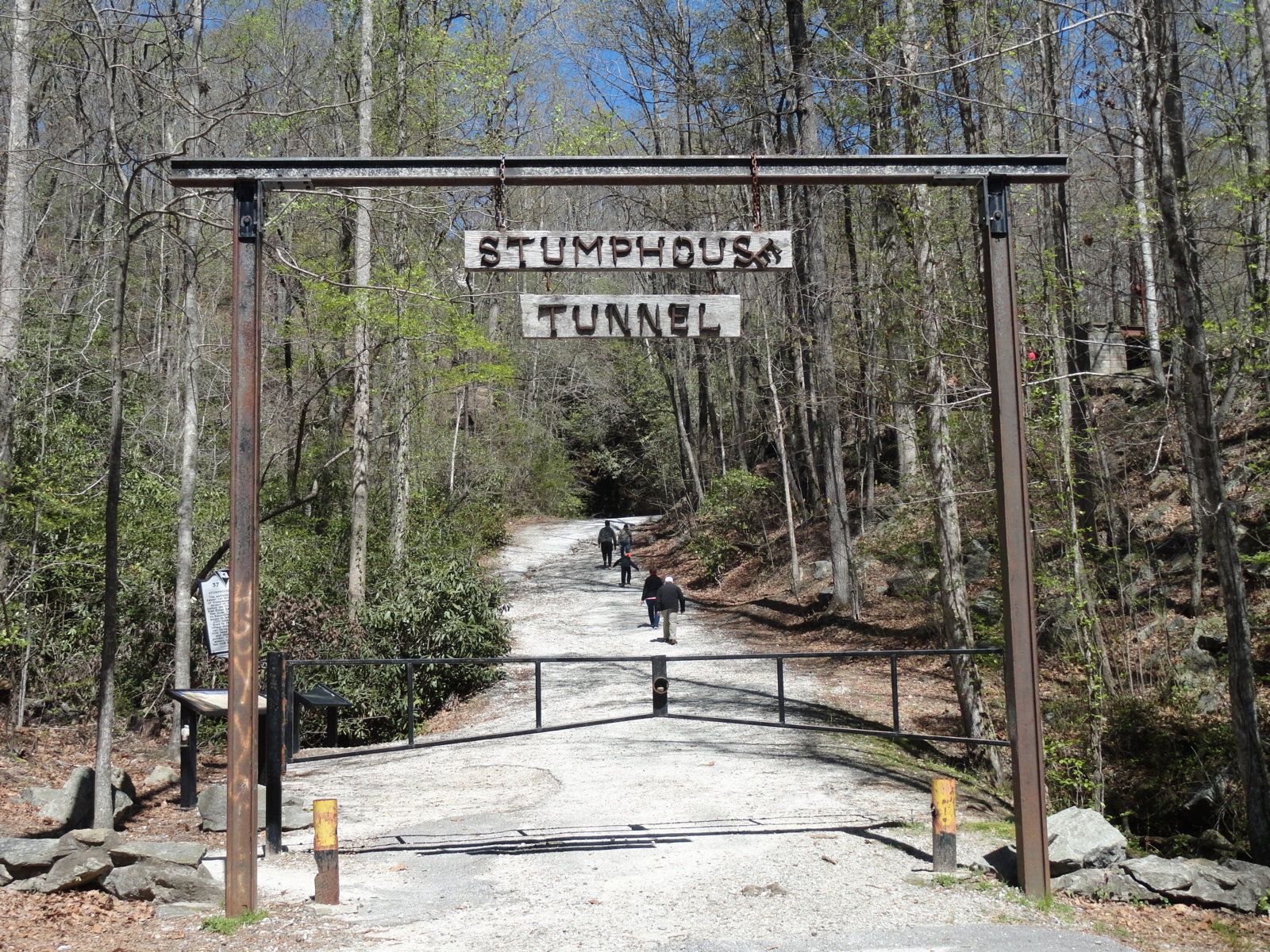
Entrance to Stumphouse.
I recently visited Gainesville, GA and did my best to track down all the sites related to General Longstreet. I hope you enjoy the pictures and posts that follow. My husband was a really good sport and a great photographer.
Our base camp was the Glen-Ella Springs Inn near Clarkesville so our adventure began with a side trip to Stumphouse Tunnel in nearby Walhalla, SC. Construction on this tunnel began in 1853, but it was never completed due to the Civil War. It would have been more than a mile long making it the longest railroad tunnel in the U.S. Visitors can hike into the tunnel with a flashlight. It is a cool 60 degrees year round.

The "end of the line" for Stumphouse. Clemson University stored blue cheese beyond this gated door in the 1950's.

Another interesting site we passed along the way. This is Traveler's Rest, a stagecoach inn and plantation home that was built around 1815 by James R. Wyly. Wyly operated the inn until 1833 when he sold it to his neighbor Devereaux Jarrett. Jarrett continued to operate the inn, but doubled its size to make it the homeplace of his 14,400-acre plantation along the Tugaloo River.

I recently visited Gainesville, GA and did my best to track down all the sites related to General Longstreet. I hope you enjoy the pictures and posts that follow. My husband was a really good sport and a great photographer.
Our base camp was the Glen-Ella Springs Inn near Clarkesville so our adventure began with a side trip to Stumphouse Tunnel in nearby Walhalla, SC. Construction on this tunnel began in 1853, but it was never completed due to the Civil War. It would have been more than a mile long making it the longest railroad tunnel in the U.S. Visitors can hike into the tunnel with a flashlight. It is a cool 60 degrees year round.
The "end of the line" for Stumphouse. Clemson University stored blue cheese beyond this gated door in the 1950's.
Another interesting site we passed along the way. This is Traveler's Rest, a stagecoach inn and plantation home that was built around 1815 by James R. Wyly. Wyly operated the inn until 1833 when he sold it to his neighbor Devereaux Jarrett. Jarrett continued to operate the inn, but doubled its size to make it the homeplace of his 14,400-acre plantation along the Tugaloo River.
Last edited by a moderator:

 Forum Host


 Thread Medic


 . I enjoyed it very much. You are carrying on splendidly.


 Bringing the