
UCVRelics
Brevet Brigadier General
 Forum Host
Gold Patron
Regtl. Quartermaster Shiloh 2020
Asst. Regtl. Quartermaster Antietam 2021
Regtl. Quartermaster Stones River / Franklin 2022
- Joined
- May 7, 2016
- Location
- Alabama
When the CW broke out the CS command in Mobile quickly manned and armed both Fort Morgan and Fort Gaines which guarded the entry into Mobile Bay, but there one small problem Grants Pass. The yankee navy could just slip thru Mississippi Sound and come thru the pass (see map). The CS Army built a fort on a oyster bed and expanded it with sand to build Fort Grant as it was first called due to it being in Grants pass. The first guns were a battery of three 32-pounder cannon with Parapets, or walls, of oyster shell and sand shielded the battery, which was later supplemented by an 8-inch Columbiad cannon.
Col. William Llewellyn Powell was in overall command of the lower bay defenses but fell ill and subsequently died on September 25, 1863. In October, Fort Grant was officially re-named Fort Powell in his honor.

By 1864, the fort was described as taking up the entire island, but descriptions of the fort are incomplete and sometimes differ. The magazine was located in the center of the bombproof shelter constructed of 24-inch pine logs with walls of sand that were 12 feet thick. Guns were mounted on the front facing south and were shielded on each side by dense sod. An entrance into the bombproof was positioned behind each gun. Soldiers' quarters were located at the wharf except during attacks, when they would stay in the bombproof until danger passed. High tide could partially flood the island, so during construction the platform for the cannons, or terreplein, was raised three feet above high tide. Confederate lieutenant Victor Von Scheliha, Chief Engineer of the Department of the Gulf of Mexico, described building what he called "cribs" along the outside of the fort with 12-inch pine logs. Measuring 5 feet wide, 10 feet long, and 6 feet high, the cribs were filled with oyster shells until level with low tide outside the fort. Sand was used to finish filling the cribs, which were then shielded by rocks on the exterior.


Skirmishes between U.S. military forces and Confederate blockade runners and the forts took place as the months passed. One such attack occurred on August 24, 1863, when two U.S. Navy gunboats traveled east through the Mississippi Sound and began firing on Fort Powell. A member of the First Alabama Artillery was slightly wounded during the skirmish by a gun bursting, but no one was killed. Major Caper report reflects the bursting Brooke gun.

U.S. Navy admiral David G. Farragut and his fleet launched a series of more determined assaults on Fort Powell beginning on February 16, 1864, designed in part to distract the Confederacy and reduce opposition against U.S. Army general William Tecumseh Sherman on his Atlanta Campaign. The large warships could not navigate the shallow water, so the U.S. Navy placed six mortar schooners near the fort. Each schooner was approximately 100 feet long and carried a 15-inch mortar that weighed some 17,000 pounds and fired a 200-pound projectile. The exploding shell could create a seven-foot crater where it landed. Most of the federal projectiles failed to hit the fort, landing harmlessly in the water. The few that found their target created chaos, including one that hit the officers' quarters and wounded Lt. Col. Williams.
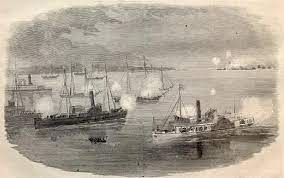
The shelling continued on February 23 with 304 shells directed at the fort and 18 actually striking it or the surrounding island. Engineers' reports noted significant damage to the quarters and wharf on the east face of the fort. However, most of the damage was quickly repaired by throwing sandbags into the shell craters. On February 29, Farragut renewed his efforts, adding more ships to the attack. Confederate losses from this battle were one killed and five wounded, with the fort receiving no lasting damage.
The most significant engagement Fort Powell took part in was during the Battle of Mobile Bay. Around 7:50 a.m. on August 5, 1864, Farragut and his fleet got past Fort Morgan and engaged the Confederate fleet. The naval battle between U.S. Navy and Confederate ships was finished by 10:30 a.m. At this point, federal forces focused on attacking and capturing Forts Powell, Gaines, and Morgan.
Fort Powell received several hits from federal artillery on August 5, but none of the men inside were harmed. One shell demonstrated the fort's vulnerability by entering one of the sally ports and passing through a bombproof shelter before burying itself in the opposite wall. Meanwhile, shells hitting the face of the fort drastically shifted the sand so quickly that Williams feared he could not hold out long. Williams telegraphed Col. Charles D. Anderson at Fort Gaines that Fort Powell should be evacuated, or else he would be forced to surrender within two days at the most. Anderson advised Williams to save his men when the fort was no longer defensible. Believing that time was at hand, William waited until low tide and marched his approximately 140-man garrison to Cedar Point. The retreating Confederates blew up the fort at 10:30 p.m. on August 5.

U.S. military reports show some ammunition and several guns were intact among the rubble, despite the Confederate effort to destroy the fort.
After reading Williams's report, Maj. Gen. Dabney H. Maury, commander of the District of Mobile, wrote that Fort Powell should not have been surrendered and relieved Williams from command pending a full investigation. By early September, Williams had been acquitted, but Maury disagreed with the ruling and prevented Williams from returning to command until December. In response to the abandonment of Fort Powell and the surrender of Fort Gaines, General Order No. 16 was distributed on August 9. The orders strictly prohibited fort and battery commanders from communicating with the enemy without permission, like such as surrendering as had occurred with Fort Gaines.

Nothing remains of the fort today and its completely underwater but there are some artifacts from this fort. Back in the 1970's some enterprising relic hunter figured out that when the tide was out artillery shells could be dug from around the fort. Hundreds of shells were recovered as well as some of the cypress planking from the fort. I was fortunate enough to buy a few of the rare CS pieces. I was able to get a 6,4 inch Selma made Tear Drop bolt, a bigger 6.4 inch Selma bolt and a massive 7 inch Brooke shell. I was also able to 3 pieces of the cypress planking.


I decided that I would make some nice stands from the wood to display the shells and of course I sent wood to Doc. Gary to make some pens.


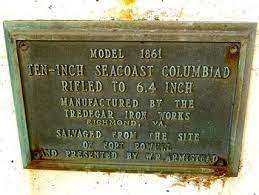
One of the big 10 inch guns that was rifled to 6.4 inch from the fort was recovered and is on display in Mobile. It was this gun that fired the shells I was able to acquire.


Col. William Llewellyn Powell was in overall command of the lower bay defenses but fell ill and subsequently died on September 25, 1863. In October, Fort Grant was officially re-named Fort Powell in his honor.
By 1864, the fort was described as taking up the entire island, but descriptions of the fort are incomplete and sometimes differ. The magazine was located in the center of the bombproof shelter constructed of 24-inch pine logs with walls of sand that were 12 feet thick. Guns were mounted on the front facing south and were shielded on each side by dense sod. An entrance into the bombproof was positioned behind each gun. Soldiers' quarters were located at the wharf except during attacks, when they would stay in the bombproof until danger passed. High tide could partially flood the island, so during construction the platform for the cannons, or terreplein, was raised three feet above high tide. Confederate lieutenant Victor Von Scheliha, Chief Engineer of the Department of the Gulf of Mexico, described building what he called "cribs" along the outside of the fort with 12-inch pine logs. Measuring 5 feet wide, 10 feet long, and 6 feet high, the cribs were filled with oyster shells until level with low tide outside the fort. Sand was used to finish filling the cribs, which were then shielded by rocks on the exterior.
Skirmishes between U.S. military forces and Confederate blockade runners and the forts took place as the months passed. One such attack occurred on August 24, 1863, when two U.S. Navy gunboats traveled east through the Mississippi Sound and began firing on Fort Powell. A member of the First Alabama Artillery was slightly wounded during the skirmish by a gun bursting, but no one was killed. Major Caper report reflects the bursting Brooke gun.
U.S. Navy admiral David G. Farragut and his fleet launched a series of more determined assaults on Fort Powell beginning on February 16, 1864, designed in part to distract the Confederacy and reduce opposition against U.S. Army general William Tecumseh Sherman on his Atlanta Campaign. The large warships could not navigate the shallow water, so the U.S. Navy placed six mortar schooners near the fort. Each schooner was approximately 100 feet long and carried a 15-inch mortar that weighed some 17,000 pounds and fired a 200-pound projectile. The exploding shell could create a seven-foot crater where it landed. Most of the federal projectiles failed to hit the fort, landing harmlessly in the water. The few that found their target created chaos, including one that hit the officers' quarters and wounded Lt. Col. Williams.
The shelling continued on February 23 with 304 shells directed at the fort and 18 actually striking it or the surrounding island. Engineers' reports noted significant damage to the quarters and wharf on the east face of the fort. However, most of the damage was quickly repaired by throwing sandbags into the shell craters. On February 29, Farragut renewed his efforts, adding more ships to the attack. Confederate losses from this battle were one killed and five wounded, with the fort receiving no lasting damage.
The most significant engagement Fort Powell took part in was during the Battle of Mobile Bay. Around 7:50 a.m. on August 5, 1864, Farragut and his fleet got past Fort Morgan and engaged the Confederate fleet. The naval battle between U.S. Navy and Confederate ships was finished by 10:30 a.m. At this point, federal forces focused on attacking and capturing Forts Powell, Gaines, and Morgan.
Fort Powell received several hits from federal artillery on August 5, but none of the men inside were harmed. One shell demonstrated the fort's vulnerability by entering one of the sally ports and passing through a bombproof shelter before burying itself in the opposite wall. Meanwhile, shells hitting the face of the fort drastically shifted the sand so quickly that Williams feared he could not hold out long. Williams telegraphed Col. Charles D. Anderson at Fort Gaines that Fort Powell should be evacuated, or else he would be forced to surrender within two days at the most. Anderson advised Williams to save his men when the fort was no longer defensible. Believing that time was at hand, William waited until low tide and marched his approximately 140-man garrison to Cedar Point. The retreating Confederates blew up the fort at 10:30 p.m. on August 5.
U.S. military reports show some ammunition and several guns were intact among the rubble, despite the Confederate effort to destroy the fort.
After reading Williams's report, Maj. Gen. Dabney H. Maury, commander of the District of Mobile, wrote that Fort Powell should not have been surrendered and relieved Williams from command pending a full investigation. By early September, Williams had been acquitted, but Maury disagreed with the ruling and prevented Williams from returning to command until December. In response to the abandonment of Fort Powell and the surrender of Fort Gaines, General Order No. 16 was distributed on August 9. The orders strictly prohibited fort and battery commanders from communicating with the enemy without permission, like such as surrendering as had occurred with Fort Gaines.
Nothing remains of the fort today and its completely underwater but there are some artifacts from this fort. Back in the 1970's some enterprising relic hunter figured out that when the tide was out artillery shells could be dug from around the fort. Hundreds of shells were recovered as well as some of the cypress planking from the fort. I was fortunate enough to buy a few of the rare CS pieces. I was able to get a 6,4 inch Selma made Tear Drop bolt, a bigger 6.4 inch Selma bolt and a massive 7 inch Brooke shell. I was also able to 3 pieces of the cypress planking.
I decided that I would make some nice stands from the wood to display the shells and of course I sent wood to Doc. Gary to make some pens.
One of the big 10 inch guns that was rifled to 6.4 inch from the fort was recovered and is on display in Mobile. It was this gun that fired the shells I was able to acquire.
Last edited:


 Bringing the