First Ever Photoshop?!

Sivart

Corporal
Joined
Nov 18, 2024
Location
Texas
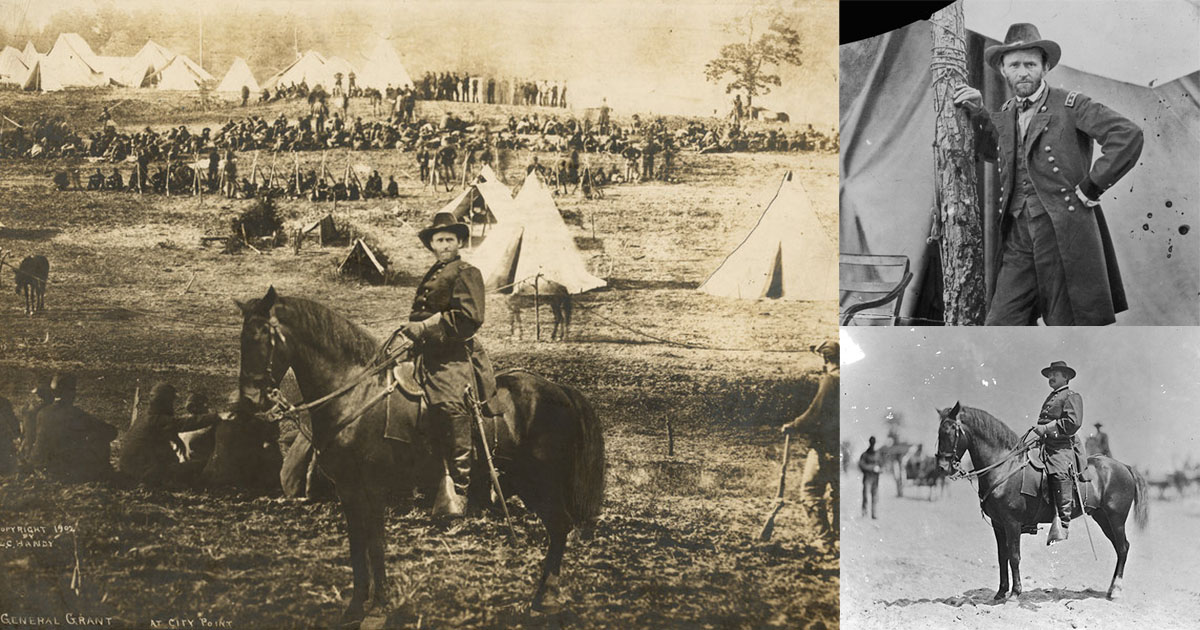
I came across this photo, and apparently, it was actually faked through compositing all the way back in 1902.
Here is the photo:

composite


It was done by a man named Levin Corbin Handy, and he did it by combining these three photos:

grant

Photo of Grant in 1864 (face)

riding

Major General Alexander M. McCook (body)
captured

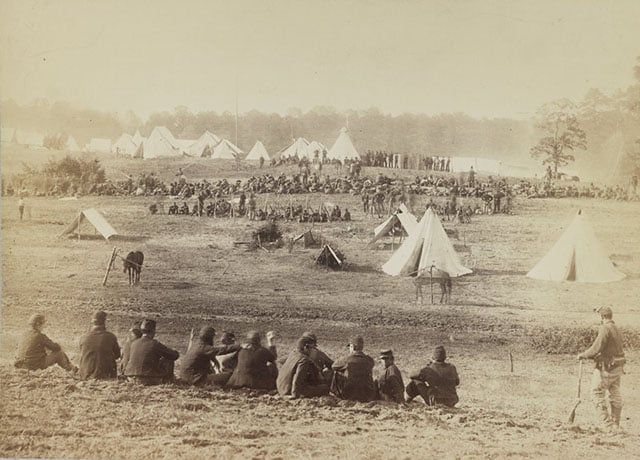
Confederates prisoners captured after the battle of Fisher's Hill (background)

The mystery of the photo was not unlocked until 2008

More information:
 
As I recall, in the 1850's photoshopped style images were all the rage. There was an attempt to make photography an art form by producing images with complex compositions using as many as 6 or more negatives. This allowed scenes to be created in the style of oil paintings. For examples see the work of Henry Peach Robinson.

 
I came across this photo, and apparently, it was actually faked through compositing all the way back in 1902.
Here is the photo:

View attachment 542381

It was done by a man named Levin Corbin Handy, and he did it by combining these three photos:

View attachment 542382
Photo of Grant in 1864 (face)

View attachment 542383
Major General Alexander M. McCook (body)

View attachment 542384
Confederates prisoners captured after the battle of Fisher's Hill (background)

The mystery of the photo was not unlocked until 2008

More information:
Call Oliver Stone...
 
I came across this photo, and apparently, it was actually faked through compositing all the way back in 1902.
Here is the photo:

View attachment 542381

It was done by a man named Levin Corbin Handy, and he did it by combining these three photos:

View attachment 542382
Photo of Grant in 1864 (face)

View attachment 542383
Major General Alexander M. McCook (body)

View attachment 542384
Confederates prisoners captured after the battle of Fisher's Hill (background)

The mystery of the photo was not unlocked until 2008

More information:
Wow!
 
The face does look odd in the final shot. Did people suspect the photo before it was discovered it was manipulated/ Or was it widely seen as real?
I'm not exactly sure. I think people knew something was up with the photo, but they didn't know what until 2008. The purpose of the photo in the first place was to sell to the U.S. government, as well as civilians, for historical records, but since the Civil War had just ended, not many were actually bought since the trauma was so fresh in people's minds.
 
Most of the 'live' photos were 'arranged' by the photographer. The panorama photos that were not posed usually show some movement - those hazy horses tails and legs, lack of cloud or hazy smoke due to the exposure length.

To take the 'after battle' photos, the photo teams arrived on the scene well after the action. All the arms and equipment had been gathered up and stacked, if not removed and often they carried some to add to photos. You will notice that few have hold of a rifle or sword or are lying on top of it. It is usually laid on or by the body. There are even signs that 'clean' bodies were moved to make them more 'arty'. There is and emphasis on relatively clean skin (sometimes blood was wiped off), no visible wound or bloodstains on clothes and certainly not bloated or 'smelly'. Remember that these photos were long exposure too - 5 - 10 seconds outside on a good day.
1741950026801.png

This guy is beginning to start stiffening - rigor mortis. (The hat may have been put there too)

1741950493847.png

There are other photos of this guy further down the slope, on his back with the rifle laid next to him


Horses appear less often, but notice that all these horses have no harness, saddle or bridle - all gathered up by the 'clean-up squad'. They will probably have been artillery carriage horses with so many in the same place.
1741950792942.png
 
When I first learned about Civil War photographers rearranging the scene and even sometimes moving the dead body, I found it very disturbing and wrong. That was a human being and somebody's loved one, after all. But, in actuality, that was a rather common practice in the early days of photography, even for people who didn't die on a battlefield. People saw the value of this new technology to capture the exact likeness of a person, and sometimes their death was the only opportunity the family had to capture that likeness before they were buried. So, I guess in a way we should view the photographs as a memorial. I still struggle to put myself in the minds of such people, though, trying to make an artsy scene where the centerpiece is an actual corpse. It's too foreign to anything I've experienced.
 

Learn About Us
About CivilWarTalk
Contact the Webmaster
Meet the Staff
Link to CivilWarTalk
Join Our Community
Register
Browse Forums
View Today's Discussions
Search the Forum
Get Help
FAQ
Student Guide
Forum Rules & Etiquette
Copyright / DMCA

     Contact Us CivilwarTalk on Facebook CivilWarTalk on YouTube CivilWarTalk on Twitter RSS Feed

Bringing the American Civil War and More to Life.
© 1999 - , CIVILWARTALK, LLC - Site Version 10.0

SlaveryTalk.com - SecessionTalk.com - CivilWarTalk.com - ReconstructionTalk.com
Back
Top