-
Welcome to CivilWarTalk, a forum about the American Civil War! - Join today! It's fast, simple, and FREE!
- Home
- Forums
- The War of the Rebellion Forums
- Technology & Culture of the Era
- Music & Songs of the 1860's
You are using an out of date browser. It may not display this or other websites correctly.
You should upgrade or use an alternative browser.
You should upgrade or use an alternative browser.
Extending Endurance Through Music
- Thread starter Tom Elmore
- Start date

Cavalry Charger
Major
- Joined
- Jan 24, 2017
Do you know how old he was? Or how he was killed? Supposedly, they were meant to be back behind the lines when the firing started, but stray shots/shell could get anybody I guessOffhand, I can think of Charley King of the 49th Penn., who was mortally wounded at Antietam.

Charley King was born in April, 1849, so he was 13. He was in the area near Miller Cornfield with his regiment, but the regiment was not directly under fire (most of the fighting in this sector had already occurred). An artillery shell exploded nearby and he was mortally wounded.
Joel Closson of the 14th Maine was born in late 1848 and died of wounds in April, 1862
Charles McArthur of the 60 NY was born c 7/1850 and was mortally wounded in May, 1864.
Clarence McKensie wsa a member of 13 NY Inf and was mortally wounded by a comrade practicing the manual of arms with a loaded gun on 6/11/61, he was born in 2/49
Joel Closson of the 14th Maine was born in late 1848 and died of wounds in April, 1862
Charles McArthur of the 60 NY was born c 7/1850 and was mortally wounded in May, 1864.
Clarence McKensie wsa a member of 13 NY Inf and was mortally wounded by a comrade practicing the manual of arms with a loaded gun on 6/11/61, he was born in 2/49
Cavalry Charger
Major
- Joined
- Jan 24, 2017
So young...now I am wondering how/why they recruited boys so young when obviously other band members were much older. Do you have any insight into this @BrianB ? Thanks for the information you have provided so far btw.Charley King was born in April, 1849, so he was 13. He was in the area near Miller Cornfield with his regiment, but the regiment was not directly under fire (most of the fighting in this sector had already occurred). An artillery shell exploded nearby and he was mortally wounded.
Joel Closson of the 14th Maine was born in late 1848 and died of wounds in April, 1862
Charles McArthur of the 60 NY was born c 7/1850 and was mortally wounded in May, 1864.
Clarence McKensie wsa a member of 13 NY Inf and was mortally wounded by a comrade practicing the manual of arms with a loaded gun on 6/11/61, he was born in 2/49
Basically, there was simply a tradition of using adolescent boys in jobs that we in 2017 would never even consider giving them. Factory workers, cabin boys on ships, working in mines, etc. Among the traditions, going back a long time, was a tradition of using boys as musicians in the army

Yankeedave
Captain
- Joined
- Dec 3, 2012
- Location
- Nebraska
It may have started as a job for the inevitable underage runaways. Underage and undersized.
Piperjoe
Cadet
- Joined
- Mar 13, 2017
- Location
- Solvang, California
I played in the 15th Air Force band at March AFB back in the '60s and during alert drills we all became stretcher bearers. Some things never change...
Piperjoe
Piperjoe
I have a neurological condition which leaves my body frequently full of burning pins and needles, but sometimes, if I listen to music (the kind I enjoy), the hot pins and needles turn to a more pleasant tingle. Music clearly touches something in the brain, that much seems clear.

 Forum Host
- Joined
- Mar 13, 2017
- Location
- Whereabouts Unknown
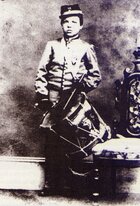
Willie Johnston Drummer Co. D 3d Vermont Infantry. Was 11 years old when he enlisted with his father who was a corporal in the color guard for company B. During the retreat of his division from Malvern Hill to Harrison's landing he was the only drummer to hold on to his drum and was the only drummer for the division's 4th of July parade. When Lincoln was there to review his division on the 8th story has it he heard the story and thought he deserved a medal. Willie was 11 years 11 months old at the time of the battle. He was awarded the Medal of Honor Sept. 16th 1863 at 13 years old the youngest medal winner and just the second ever Medal of Honor winner. After the battle he was transferred to the 20th Regiment Veteran Reserve Corps. His father was wounded during the Seven Days Battles.
Cavalry Charger
Major
- Joined
- Jan 24, 2017
Wow! Makes you wonder what impact the horrors of war had on such young children...I love this story btw. It's very inspirational. Thanks for sharing @captaindrewWillie Johnston Drummer Co. D 3d Vermont Infantry. Was 11 years old when he enlisted with his father who was a corporal in the color guard for company B. During the retreat of his division from Malvern Hill to Harrison's landing he was the only drummer to hold on to his drum and was the only drummer for the division's 4th of July parade. When Lincoln was there to review his division on the 8th story has it he heard the story and thought he deserved a medal. Willie was 11 years 11 months old at the time of the battle. He was awarded the Medal of Honor Sept. 16th 1863 at 13 years old the youngest medal winner and just the second ever Medal of Honor winner. After the battle he was transferred to the 20th Regiment Veteran Reserve Corps. His father was wounded during the Seven Days Battles.View attachment 138219

Zack
Sergeant Major
- Joined
- Aug 20, 2017
- Location
- Los Angeles, California
Gonna see if I can revive this thread or not.
I remember reading somewhere that singing on the march was more common with newer soldiers than veterans. I also remember reading that after the first mile or so, the soldiers were far too tired to sing. I want to say that was in either Bruce Catton's works or Bell Wiley's but I'd have to double check.
I wonder too about the kinds of songs they would have sung. I'm sure we all know the patriotic ditties - "Battle Cry of Freedom" and such - and the melancholy ones - "Weeping Sad and Lonely", "Home Sweet Home" - but deep down I've always doubted that these were the only songs that soldiers would sing. I have always been curious about what I would call the pop songs of the day - was minstrel music popular enough and widespread enough that soldiers would have sung these songs? Songs like "Miss Lucy Long"? What about the dirty music - songs like "John Harrolson"?
Bruce Catton seems to suggest that melancholy songs were so popular because the mores of the time forced the soldiers to suppress their feelings. They would then give vent to them via melancholy songs. However, this seems like speculation (though well-researched) on his part. Can anyone back this up?
This thread has quite a lot of minstrel songs: https://civilwartalk.com/threads/music-played-in-camp.133735/#post-1522358 but I wonder how well known they would have been at the time. I remember reading that minstrel music was starting its decline around the time of the Civil War. Though for 21-year-olds who would have been teenagers in the 1850s it might still have been popular enough during their lives they would know some of it.
I'm just wondering - would they have been well-known enough that soldiers hailing from the farms of New York, the slums of the city, farms in the Midwest, and so on would know the words and sing them? Would they have learned them in camp?
I remember reading somewhere that singing on the march was more common with newer soldiers than veterans. I also remember reading that after the first mile or so, the soldiers were far too tired to sing. I want to say that was in either Bruce Catton's works or Bell Wiley's but I'd have to double check.
I wonder too about the kinds of songs they would have sung. I'm sure we all know the patriotic ditties - "Battle Cry of Freedom" and such - and the melancholy ones - "Weeping Sad and Lonely", "Home Sweet Home" - but deep down I've always doubted that these were the only songs that soldiers would sing. I have always been curious about what I would call the pop songs of the day - was minstrel music popular enough and widespread enough that soldiers would have sung these songs? Songs like "Miss Lucy Long"? What about the dirty music - songs like "John Harrolson"?
Bruce Catton seems to suggest that melancholy songs were so popular because the mores of the time forced the soldiers to suppress their feelings. They would then give vent to them via melancholy songs. However, this seems like speculation (though well-researched) on his part. Can anyone back this up?
This thread has quite a lot of minstrel songs: https://civilwartalk.com/threads/music-played-in-camp.133735/#post-1522358 but I wonder how well known they would have been at the time. I remember reading that minstrel music was starting its decline around the time of the Civil War. Though for 21-year-olds who would have been teenagers in the 1850s it might still have been popular enough during their lives they would know some of it.
I'm just wondering - would they have been well-known enough that soldiers hailing from the farms of New York, the slums of the city, farms in the Midwest, and so on would know the words and sing them? Would they have learned them in camp?
My GG Grandfather was a Midwest farmer and a German immigrant. I also wonder if he and fellow immigrants introduced their own songs to the camp.I'm just wondering - would they have been well-known enough that soldiers hailing from the farms of New York, the slums of the city, farms in the Midwest, and so on would know the words and sing them? Would they have learned them in camp?

kevikens
2nd Lieutenant
- Joined
- Jun 7, 2013
- Location
- New Jersey
My daughter, who teaches at Stanford, has contracted to write a book about this very phenomenon, physical performance and the effects of music and just recently I have been talking to her about martial music and marching to cadence as a means of increasing one's stamina. I am going to tell her to read all this information and ask her to share what she may have found in her own research. Thanks to the OP and all who have responded with anecdotal experience of their own.
Zack
Sergeant Major
- Joined
- Aug 20, 2017
- Location
- Los Angeles, California
Bruce Catton writes in Mr. Lincoln's Army that, "This was a deeply sentimental army, and it sang a great deal; not stirring patriotic songs, full of rally-round-the-flag heroism - they were for stay-at-home civilians - but slow, sad tunes that could express the loneliness and homesickness of boys who had been uprooted and sent out to face hardship and danger and death. Their favorite was a song called 'When This Cruel War is Over,' by Charles Carroll Sawyer....Men would sing that song and cry. More than any other possession of the army, it expressed the deep inner feeling of the boys who had gone to war so blithely in an age when no one would speak the truth about the realities of war."
Bell Wiley chimes in in Life of Billy Yank, "An impressive proportion of war favorites had extremely doleful notes, but this does not necessarily mean that the ranks were filled with melancholy soldiers. Paradoxical as it may seem, carefree campaigners apparently derived satisfaction from dwelling on themes of suffering and death, enjoying their misery as it were, and emerging from excursions into gloom with hearts lighter than before."
That said, Wiley notes that there were many ribald and vulgar songs such as a twist on the ballad "Joe Bowers." That said, they are far more often referenced than actually written out, which is frustrating to those like me who want to know what the soldiers sang about when they weren't being so darn melancholy.
I just find it hard to believe that ALL they sang were super sad songs....I mean, we are talking about 21-year-old boys away from home and women for extended periods of time.....but maybe I have too much of a 21st Century frame of mind.
Bell Wiley chimes in in Life of Billy Yank, "An impressive proportion of war favorites had extremely doleful notes, but this does not necessarily mean that the ranks were filled with melancholy soldiers. Paradoxical as it may seem, carefree campaigners apparently derived satisfaction from dwelling on themes of suffering and death, enjoying their misery as it were, and emerging from excursions into gloom with hearts lighter than before."
That said, Wiley notes that there were many ribald and vulgar songs such as a twist on the ballad "Joe Bowers." That said, they are far more often referenced than actually written out, which is frustrating to those like me who want to know what the soldiers sang about when they weren't being so darn melancholy.
I just find it hard to believe that ALL they sang were super sad songs....I mean, we are talking about 21-year-old boys away from home and women for extended periods of time.....but maybe I have too much of a 21st Century frame of mind.

Wherever you read that, it perhaps only meant that the first stylings of Minstrel music were being overshadowed by much more sophisticated Minstrel performances by CW timeframe, and by then spread all over the world. Minstrel sheet music enabled a publishing boom bigger than ever before. Minstrelry stage performance was still very much on the rise during the CW, and within merely a decade or so Minstrel performances were characterized by performing troupes of dozens of performers rather than the traditional pre-war six or so players.I remember reading that minstrel music was starting its decline around the time of the Civil War.
Last edited:
Zack
Sergeant Major
- Joined
- Aug 20, 2017
- Location
- Los Angeles, California

Peace Society
First Sergeant
- Joined
- Jun 25, 2019
- Location
- Ark Mo line
This is an old but interesting thread. Something I read recently seems appropriate to it.
Feb. 24, 1862
Routed out at daylight and ordered to make Nashville, a distance of thirty-two miles.
The martial band of the regiment is doing its utmost to keep the boys in good spirits; the base drum sounds like distant thunder, and the wind of Hughes, the fifer, is inexhaustible; he can blow five miles at a stretch. The members of the band are in good pluck, and when not playing, either sing, tell stories, or indulge in reminiscences of a personal character.
John Beatty
Lt. Col., 3 OH
The Citizen-Soldier; or, Memoirs of a Civil War Volunteer
1879
Feb. 24, 1862
Routed out at daylight and ordered to make Nashville, a distance of thirty-two miles.
The martial band of the regiment is doing its utmost to keep the boys in good spirits; the base drum sounds like distant thunder, and the wind of Hughes, the fifer, is inexhaustible; he can blow five miles at a stretch. The members of the band are in good pluck, and when not playing, either sing, tell stories, or indulge in reminiscences of a personal character.
John Beatty
Lt. Col., 3 OH
The Citizen-Soldier; or, Memoirs of a Civil War Volunteer
1879
Similar threads

- Replies
- 5
- Views
- 135
- Replies
- 12
- Views
- 528
- Replies
- 0
- Views
- 117
- Replies
- 0
- Views
- 94
- Replies
- 0
- Views
- 114
Similar threads
- Replies
- 4
- Views
- 5

- Replies
- 0
- Views
- 1
- Learn About Us
- ►About CivilWarTalk
- ►Contact the Webmaster
- ►Meet the Staff
- ►Link to CivilWarTalk
- Join Our Community
- ►Register
- ►Browse Forums
- ►View Today's Discussions
- ►Search the Forum
- Get Help
- ►FAQ
- ►Student Guide
- ►Forum Rules & Etiquette
- ►Copyright / DMCA
 Bringing the