Diarrhea Treated with Silver Nitrate

JohnW.

2nd Lieutenant
Joined
Sep 12, 2016
Location
Philadelphia, Pennsylvania
Source text: The Medical and Surgical History of the War of the Rebellion., Part 2, Volume 1 (Washington, DC: Government Printing Office, 1879), 49.
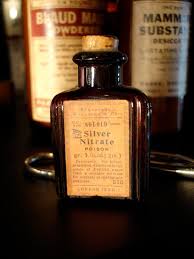
Silver%2BNitrate.jpg


Case entered in the book is signed by Assistant Surgeon A. Hartsuff, U. S. A., temporarily acting as surgeon in charge,⃰ by whom it is understood the majority if not all the cases were treated. To the account of each case as recorded in the case-book the subsequent history of the patient, whenever it has been possible to obtain it, is appended. ⃰In the absence of Assistant Surgeon E. J. Marsh, U. S. A.

CASE 11.—Private David Watson, company D, 16th Massachusetts volunteers; admitted June 17, 1863. Diarrhœa of ten weeks' standing, with from six to eight discharges per day. Gave astringents, such as tannic acid, acetate of lead, &c., with opium, but effected no change in his condition. June 30th: Ordered the following: ℞. Nitrate of silver ten grains, laudanum twenty-five drops, water one ounce. To be used as an enema. The injection was retained an hour. June 21st: The patient seems much better, and has had but one passage from the bowels since the last note. The fæces are more consistent. July 1st: There has been but one stool per day since the injection. The diarrhœa may be considered cured. The patient is transferred to a northern hospital to recruit his strength. [The register of Lovell hospital, Portsmouth Grove, Rhode Island, shows that this man was admitted to that hospital July 3d—diagnosis, diarrhœa—and that he was transferred to the Veteran Reserve Corps March 31, 1864, on account of the loss of his left thumb by amputation.]
 
Silver nitrate is a caustic chemical compound used as an antiseptic, in the industrial preparation of other silver salts, and as a reagent in analytical chemistry.When applied to the skin and mucous membranes, it is used either in stick form as a caustic pencil or in solutions of 0.01 percent to 10 percent silver nitrate in water.

The stick is used by doctors and vets for removing granulation tissue in healing wounds -especially lower leg wounds on horses. It can also be used to remove warts and to cauterize wounds and ulcerations. Veterinarians also use it to cauterize nails that have been cut too short when styptic powder wont do the trick.

Very dilute solutions are astringent and mildly antiseptic. A 1 percent or 2 percent solution is effective against gonococcal bacteria - this treatment is commonly applied to the eyes of newborn infants to ensure against blindness from gonorrhea.

Ingestion of silver nitrate causes violent abdominal pains, vomiting, and diarrhea, with the development of gastroenteritis. Treatment includes oral administration of milk (or white of egg and water), common salt solutions, and soap in water to protect the mucous membranes of the esophagus and stomach and precipitate the poisonous free silver ions as silver chloride. Large oral doses of Silver Nitrate can cause severe GI irritation due to its caustic action. https://www.britannica.com/science/silver-nitrate
138800-004-24ECFA07.jpg

  • Silver nitrate sticks.
    © Rick's Photography/Shutterstock.com
 
Last edited:
Silver nitrate is a caustic chemical compound used as an antiseptic, in the industrial preparation of other silver salts, and as a reagent in analytical chemistry.

When applied to the skin and mucous membranes, it is used either in stick form as a caustic pencil or in solutions of 0.01 percent to 10 percent silver nitrate in water. The stick is used for removing granulation tissue in healing wounds, removing warts, and for cauterizing wounds and ulcerations. Very dilute solutions are astringent and mildly antiseptic. A 1 percent or 2 percent solution is effective against gonococcal bacteria - this treatment is commonly applied to the eyes of newborn infants to ensure against blindness from gonorrhea.

Ingestion of silver nitrate causes violent abdominal pains, vomiting, and diarrhea, with the development of gastroenteritis. Treatment includes oral administration of milk (or white of egg and water), common salt solutions, and soap in water to protect the mucous membranes of the esophagus and stomach and precipitate the poisonous free silver ions as silver chloride. Large oral doses of Silver Nitrate can cause severe GI irritation due to its caustic action.
View attachment 136141
  • Silver nitrate sticks.
    © Rick's Photography/Shutterstock.com
Thanks for the information! To your knowledge, was there any awareness at the time of the danger of dehydration? Just curious if they paid attention to fluids.
 
When applied to the skin and mucous membranes, it is used either in stick form as a caustic pencil or in solutions of 0.01 percent to 10 percent silver nitrate in water. The stick is used for removing granulation tissue in healing wounds, removing warts, and for cauterizing wounds and ulcerations.

It also burns like hell when applied. Just sayin'. :frantic:
 
Last edited:
Thanks for the information! To your knowledge, was there any awareness at the time of the danger of dehydration? Just curious if they paid attention to fluids.

I think some doctors and nurses knew that loss of fluids was a concern. Nurses often administered ale, milk-punch, egg-nog, chicken and beef broth, and a variety of teas but these were probably not particularly appealing to a patient suffering from nausea. Patients with diarrhea dehydrated rapidly and there was no effective way to rehydrate them. No way to administer IV fluids and no knowledge of what fluids to use.

Luckily (?) diarrhea was often accompanied by pain and the go to treatment for pain was opium and opium mixtures, such as "Dover's powders," a crystallized combination of ipecac and morphine dissolved in liquid. Opium is effective in slowing the gut and so it worked (to an extent) to combat diarrhea. The biggest problem was, they were treating the symptom - diarrhea- but not the cause. Whatever it was that was causing the diarrhea - ulceration, infection, and/or inflammation of the gut from eating improperly cooked food or drinking contaminated water or milk - ran its course without effective treatment.
 
Last edited:
I think some doctors and nurses knew that loss of fluids was a concern. Nurses often administered ale, milk-punch, egg-nog, chicken and beef broth, and a variety of teas but these were probably not particularly appealing to a patient suffering from nausea. Patients with diarrhea dehydrated rapidly and there was no effective way to rehydrate them. No way to administer IV fluids and no knowledge of what fluids to use.

Luckily (?) diarrhea was often accompanied by pain and the go to treatment for pain was opium and opium mixtures, such as "Dover's powders," a crystallized combination of ipecac and morphine dissolved in liquid. Opium is effective in slowing the gut and so it worked (to an extent) to combat diarrhea. The biggest problem was, they were treating the symptom - diarrhea- but not the cause. Whatever it was that was causing the diarrhea - ulcers, infection, or inflammation of the gut from drinking contaminated water or milk - ran its course without effective treatment.
Thanks @lelliott19! Frightening stuff to consider...
 
Isn't ingestion of silver nitrate also responsible for the infamous "Blue Man?" He took doses over a long period of time and turned himself permanently blue.
 
CASE 11.—Private David Watson, company D, 16th Massachusetts volunteers; admitted June 17, 1863. Diarrhœa of ten weeks' standing, with from six to eight discharges per day. Gave astringents, such as tannic acid, acetate of lead, &c., with opium, but effected no change in his condition. June 30th: Ordered the following: ℞. Nitrate of silver ten grains, laudanum twenty-five drops, water one ounce. To be used as an enema. The injection was retained an hour. June 21st: The patient seems much better, and has had but one passage from the bowels since the last note. The fæces are more consistent. July 1st: There has been but one stool per day since the injection. The diarrhœa may be considered cured. The patient is transferred to a northern hospital to recruit his strength. [The register of Lovell hospital, Portsmouth Grove, Rhode Island, shows that this man was admitted to that hospital July 3d—diagnosis, diarrhœa—and that he was transferred to the Veteran Reserve Corps March 31, 1864, on account of the loss of his left thumb by amputation.]


A mild case of diarrhea only lasts a few days. Ten weeks is a long time with these symptoms and I suspect Private Watson was suffering from dysentery.

Dysentery was first discovered in 1897 and I wonder how many cases of Civil War diarrhea were actually dysentery.


I had e coli in 2014. I lost 12 pounds in a week. Couldn't eat or sleep. I didn't stop sweating for more than an hour at a time for 3 or 4 days. I never got dehydrated, but I drank so much diluted gatorade that I can't stand the taste of it anymore.
Doctor gave me an antibiotic to cure me, and I was better in 3 days. He said I would probably have died 100 years ago.
 

Learn About Us
About CivilWarTalk
Contact the Webmaster
Meet the Staff
Link to CivilWarTalk
Join Our Community
Register
Browse Forums
View Today's Discussions
Search the Forum
Get Help
FAQ
Student Guide
Forum Rules & Etiquette
Copyright / DMCA

     Contact Us CivilwarTalk on Facebook CivilWarTalk on YouTube CivilWarTalk on Twitter RSS Feed

Bringing the American Civil War and More to Life.
© 1999 - , CIVILWARTALK, LLC - Site Version 10.0

SlaveryTalk.com - SecessionTalk.com - CivilWarTalk.com - ReconstructionTalk.com
Back
Top