
wuzreb
Private
- Joined
- Jun 11, 2026
- Location
- Northern Nevada
It is my honor to present herewith a possibly over-long set of contemplations.
Lately I've been digging into an esoteric little corner of Civil War history; women soldiers who joined the ranks and fought. Numerically there were not many of them. They represent a percent of a percent, out of the millions who served. But the point remains, they also served.
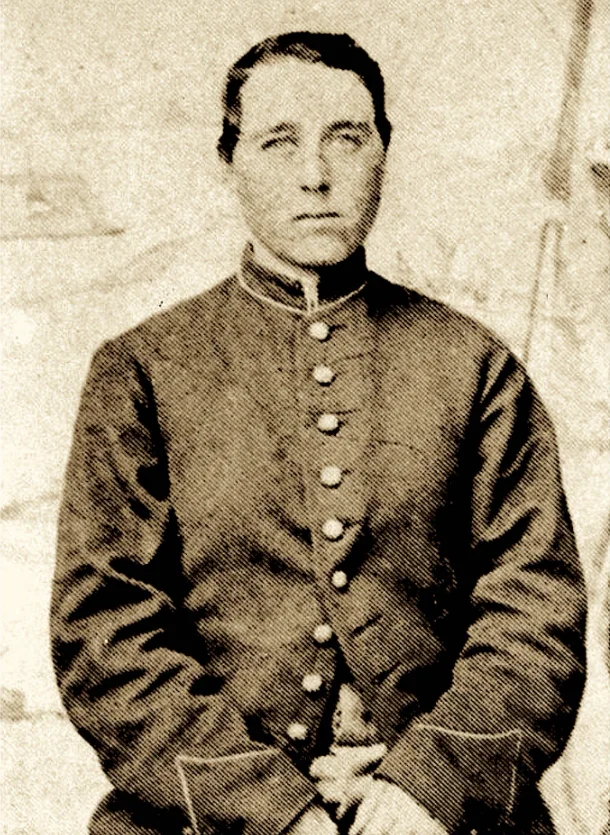
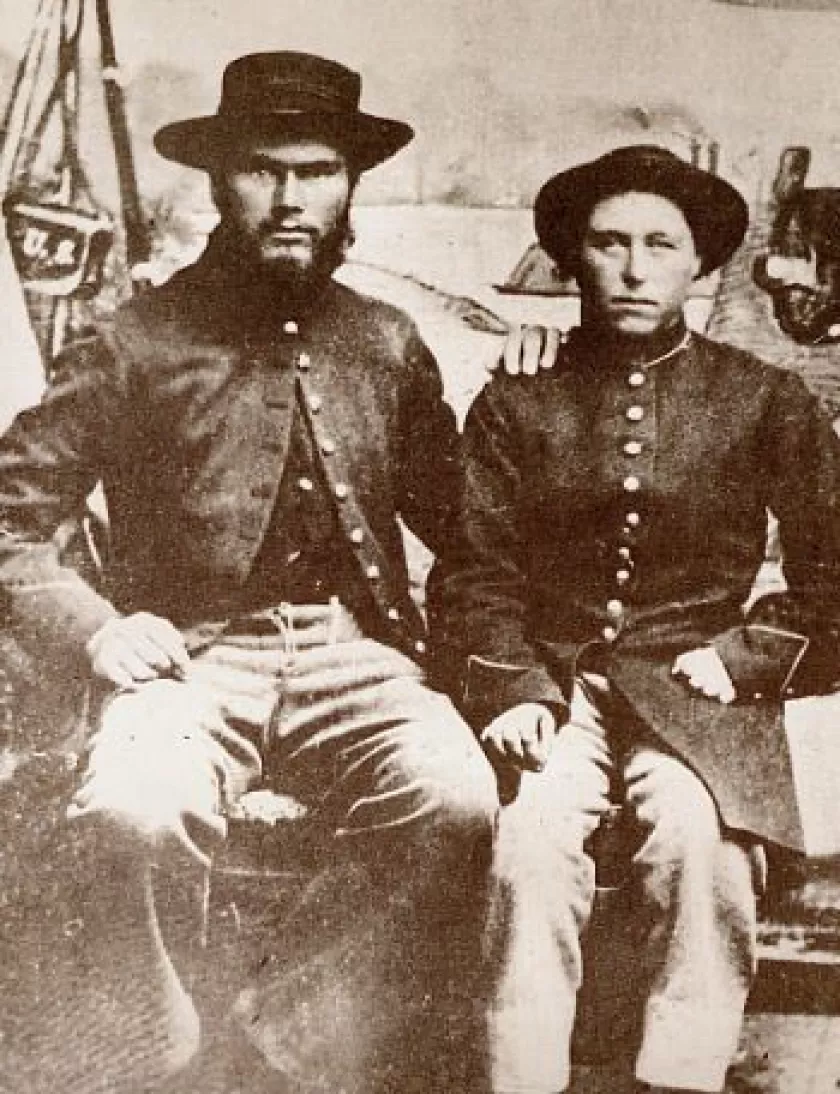
The individual I'm taking a deep dive on now is perhaps the best known of these, Private Albert D.J. Cashier. At least that's the name he gave. Nobody really knows a lot about him - or her - because Albert never told the same story twice.
What is known is that an 18 or 19 year old Irish immigrant walked out of the shadows of history and down a dusty road in Illinois in early 1862. This solitary "boy" found a recruiting station in Belvidere and said, in a notable Irish accent, "Is this where we sign up to go for a soldier?"
If she had once been Jennie Hodgers, as later investigation seemed to reveal, that person disappeared forever.
According to enlistment records, the new recruit stood only about 5 ft 3, a sturdy kid who could neither read nor write. But somehow, quite probably due to an early life of working hard in other physical labor, Albert fit in and Albert kept up. Accounts by fellow soldiers many years later never once indicated he weakened or failed in any way. On the contrary.
I don't know how many people have picked up a Civil War musket, but they measure about 55 inches long and weigh approximately 10 lbs. Any of us can pick up a 10 lb bag of cat food and carry it around without effort. Now machine that out the length of a shovel or broom, with most of the weight in wood and steel, hanging out there on the end of your arms. That dang thing is heavy. And as a soldier, you're going to live with it. You're going to handle that more than you do your toothbrush.
That's only part of what these women Civil War soldiers had to deal with. They were subject to everything their male counterparts were. Which is words on paper, but think about it.
You live outside now. You don't get to go in the house. You don't even get to go wash your hands and take a pee indoors. Heat, rain, snow, slush, mud, bugs. You're in it. You live there. If you're lucky, you might have a tent or a shelter half shared with a buddy, to keep the weather off at night. If you're in garrison, maybe you and a few pals will cobble sticks and logs together into a half-assed shebang that only leaks part of the time. And when it comes to the calls of nature, you either go to the stinky, nasty, company latrine or you find a convenient spot out in the woods. With the guys.
And by the way, you have to make sure nobody ever sees you pee. For like 3 or 4 years. Among other things.
You're a single female amongst all these dudes, who are doing dude things. They belch, they fart, they tell crude jokes, they make disparaging remarks about whoever displeases them, they are profane, they are pious, they are crude, they are kind. They are dudes in their complete dudeness, with absolutely no thought towards tempering their words or behaviors to favor a female presence.
Most of us don't really think about that. Most men tend to alter or somewhat moderate their behaviors when around women. There's none of that in the Civil War armies. And these women soldiers had to just suck it up and dude it out along with them.
Or not. A large part of the documentation consists of women who failed in their disguise, either by giving it up, or doing something that got them caught. Which is what makes the few like Albert Cashier so extraordinary. Most of the evidence is found in letters from other soldiers, occasionally from officers, only sparingly in any official accounts, and occasionally in somewhat garbled newspaper reports.
The old newspapers can make tracking this stuff difficult, because you could have five different newspapers at the same time, trying to report on the same thing, but each of them has a different slant or set of details. Victorian fancy loved a romantic story, so it was common for reporters to spin things in a flowery or romanticized way. And a lot of untruths or speculations get perpetuated.
Fortunately we have authors and researchers like Shelby Harriel -Hidlebaugh who do the collating and compiling for us. I just finished her book, "Behind the Rifle," which does a prodigious job of covering women soldiers known and reported during the campaigns in Mississippi, and particularly the Vicksburg campaign. My next read is "They Fought Like Demons: Women Soldiers in the American Civil War," by DeAnne Blanton and Lauren M. Cook. I read it years ago but lost my old copy.
It almost feels like women are coming out of the woodwork, there. Again, numerically minut compared to the greater scope of tens of thousands of soldiers. But the stories are intriguing and compelling.
Albert Cashier was there. That little soldier, slogging in the mud and the crud and the swamps, along with everyone else. If one reads of the brutal assaults on Vicksburg, or Sturgis's cock-up at Guntown, it gives one pause to realize that wee Irish lass was right there, slugging it out with with her brothers in arms.
There were other women soldiers in other units. There were other stories of other women, that may or may not carry the whole truth; some may be fabricated. Some are tantalizingly legit, like mention of someone the papers called Soldier Tom, giving realistic details - but then the trail goes cold. We never know what happened to the people later, or even who they truly were.
And some of them are only found when their bodies were discovered in the field. Others died in hospital of illness or wounds. There are accounts from nurses saying they found women soldiers, but kept their secrets and buried the women undisclosed.
Right now, it's the physicality of these women soldiers that amazes me. We can read the great, sweeping battlefield accounts of armies doing this and brigades and battalions doing that, and commanders and generals doing something else. But when you get down to regiment and company levels, when you read regimental histories, or letters from the soldiers, you're in the trenches.
When you're listening to .58 caliber musket balls whiz past your head, like swarms of really ticked off 1.14 ounce, bone-cracking lead wasps, or watching the guy next to you vaporize due to a close range blast of canister fire, or your regiment rises up in one great terrible moment and charges into a firestorm of shot and shell, because you're brothers and that's what you do ... that physicality starts getting real.
The women who fought were not many. But those who did, the few we know of and the greater numbers we don't, like the two dead women at Gettysburg, the dead girl at Antietam, the female body found after the Crater at Petersburg ... I'm in awe.
Those women could, and some few did, just call it quits and say oh hell no, I'm not cut out for this. There's a story of two female soldiers who heard their company was about to go up against Nathan Bedford Forrest, and they turned themselves in. We're out. And who can blame them?
But these few others did not. In my mind, although numerically inferior, they share, deservedly, in the leonine accolades earned by their male counterparts.
Albert is notable because that was a d@mned long game. She lived as a man until senility and disability took over. Speculation as to why has required the deployment of thousands if not millions of words. Personally, I think a poor, illiterate, familyless Irish kid could find better employment and freedom of opportunity wearing the britches of a male. Nowhere in the course of years did that change.
What I'm grateful for is that, at the end of life, when Albert's secret became the play thing of the national press, her old comrades in arms closed ranks. Okay, Albert is a woman, that's a little weird. But that's still our Albert, who never faltered from beginning to end.
Her old comrade Robert Horan probably said it best;
"She was a soldier with us, doing faithfully and well."


Lately I've been digging into an esoteric little corner of Civil War history; women soldiers who joined the ranks and fought. Numerically there were not many of them. They represent a percent of a percent, out of the millions who served. But the point remains, they also served.
The individual I'm taking a deep dive on now is perhaps the best known of these, Private Albert D.J. Cashier. At least that's the name he gave. Nobody really knows a lot about him - or her - because Albert never told the same story twice.
What is known is that an 18 or 19 year old Irish immigrant walked out of the shadows of history and down a dusty road in Illinois in early 1862. This solitary "boy" found a recruiting station in Belvidere and said, in a notable Irish accent, "Is this where we sign up to go for a soldier?"
If she had once been Jennie Hodgers, as later investigation seemed to reveal, that person disappeared forever.
According to enlistment records, the new recruit stood only about 5 ft 3, a sturdy kid who could neither read nor write. But somehow, quite probably due to an early life of working hard in other physical labor, Albert fit in and Albert kept up. Accounts by fellow soldiers many years later never once indicated he weakened or failed in any way. On the contrary.
I don't know how many people have picked up a Civil War musket, but they measure about 55 inches long and weigh approximately 10 lbs. Any of us can pick up a 10 lb bag of cat food and carry it around without effort. Now machine that out the length of a shovel or broom, with most of the weight in wood and steel, hanging out there on the end of your arms. That dang thing is heavy. And as a soldier, you're going to live with it. You're going to handle that more than you do your toothbrush.
That's only part of what these women Civil War soldiers had to deal with. They were subject to everything their male counterparts were. Which is words on paper, but think about it.
You live outside now. You don't get to go in the house. You don't even get to go wash your hands and take a pee indoors. Heat, rain, snow, slush, mud, bugs. You're in it. You live there. If you're lucky, you might have a tent or a shelter half shared with a buddy, to keep the weather off at night. If you're in garrison, maybe you and a few pals will cobble sticks and logs together into a half-assed shebang that only leaks part of the time. And when it comes to the calls of nature, you either go to the stinky, nasty, company latrine or you find a convenient spot out in the woods. With the guys.
And by the way, you have to make sure nobody ever sees you pee. For like 3 or 4 years. Among other things.
You're a single female amongst all these dudes, who are doing dude things. They belch, they fart, they tell crude jokes, they make disparaging remarks about whoever displeases them, they are profane, they are pious, they are crude, they are kind. They are dudes in their complete dudeness, with absolutely no thought towards tempering their words or behaviors to favor a female presence.
Most of us don't really think about that. Most men tend to alter or somewhat moderate their behaviors when around women. There's none of that in the Civil War armies. And these women soldiers had to just suck it up and dude it out along with them.
Or not. A large part of the documentation consists of women who failed in their disguise, either by giving it up, or doing something that got them caught. Which is what makes the few like Albert Cashier so extraordinary. Most of the evidence is found in letters from other soldiers, occasionally from officers, only sparingly in any official accounts, and occasionally in somewhat garbled newspaper reports.
The old newspapers can make tracking this stuff difficult, because you could have five different newspapers at the same time, trying to report on the same thing, but each of them has a different slant or set of details. Victorian fancy loved a romantic story, so it was common for reporters to spin things in a flowery or romanticized way. And a lot of untruths or speculations get perpetuated.
Fortunately we have authors and researchers like Shelby Harriel -Hidlebaugh who do the collating and compiling for us. I just finished her book, "Behind the Rifle," which does a prodigious job of covering women soldiers known and reported during the campaigns in Mississippi, and particularly the Vicksburg campaign. My next read is "They Fought Like Demons: Women Soldiers in the American Civil War," by DeAnne Blanton and Lauren M. Cook. I read it years ago but lost my old copy.
It almost feels like women are coming out of the woodwork, there. Again, numerically minut compared to the greater scope of tens of thousands of soldiers. But the stories are intriguing and compelling.
Albert Cashier was there. That little soldier, slogging in the mud and the crud and the swamps, along with everyone else. If one reads of the brutal assaults on Vicksburg, or Sturgis's cock-up at Guntown, it gives one pause to realize that wee Irish lass was right there, slugging it out with with her brothers in arms.
There were other women soldiers in other units. There were other stories of other women, that may or may not carry the whole truth; some may be fabricated. Some are tantalizingly legit, like mention of someone the papers called Soldier Tom, giving realistic details - but then the trail goes cold. We never know what happened to the people later, or even who they truly were.
And some of them are only found when their bodies were discovered in the field. Others died in hospital of illness or wounds. There are accounts from nurses saying they found women soldiers, but kept their secrets and buried the women undisclosed.
Right now, it's the physicality of these women soldiers that amazes me. We can read the great, sweeping battlefield accounts of armies doing this and brigades and battalions doing that, and commanders and generals doing something else. But when you get down to regiment and company levels, when you read regimental histories, or letters from the soldiers, you're in the trenches.
When you're listening to .58 caliber musket balls whiz past your head, like swarms of really ticked off 1.14 ounce, bone-cracking lead wasps, or watching the guy next to you vaporize due to a close range blast of canister fire, or your regiment rises up in one great terrible moment and charges into a firestorm of shot and shell, because you're brothers and that's what you do ... that physicality starts getting real.
The women who fought were not many. But those who did, the few we know of and the greater numbers we don't, like the two dead women at Gettysburg, the dead girl at Antietam, the female body found after the Crater at Petersburg ... I'm in awe.
Those women could, and some few did, just call it quits and say oh hell no, I'm not cut out for this. There's a story of two female soldiers who heard their company was about to go up against Nathan Bedford Forrest, and they turned themselves in. We're out. And who can blame them?
But these few others did not. In my mind, although numerically inferior, they share, deservedly, in the leonine accolades earned by their male counterparts.
Albert is notable because that was a d@mned long game. She lived as a man until senility and disability took over. Speculation as to why has required the deployment of thousands if not millions of words. Personally, I think a poor, illiterate, familyless Irish kid could find better employment and freedom of opportunity wearing the britches of a male. Nowhere in the course of years did that change.
What I'm grateful for is that, at the end of life, when Albert's secret became the play thing of the national press, her old comrades in arms closed ranks. Okay, Albert is a woman, that's a little weird. But that's still our Albert, who never faltered from beginning to end.
Her old comrade Robert Horan probably said it best;
"She was a soldier with us, doing faithfully and well."
Last edited:


 Bringing the