Confederate flag design stolen?

GenLenny

Private
Joined
Mar 20, 2024
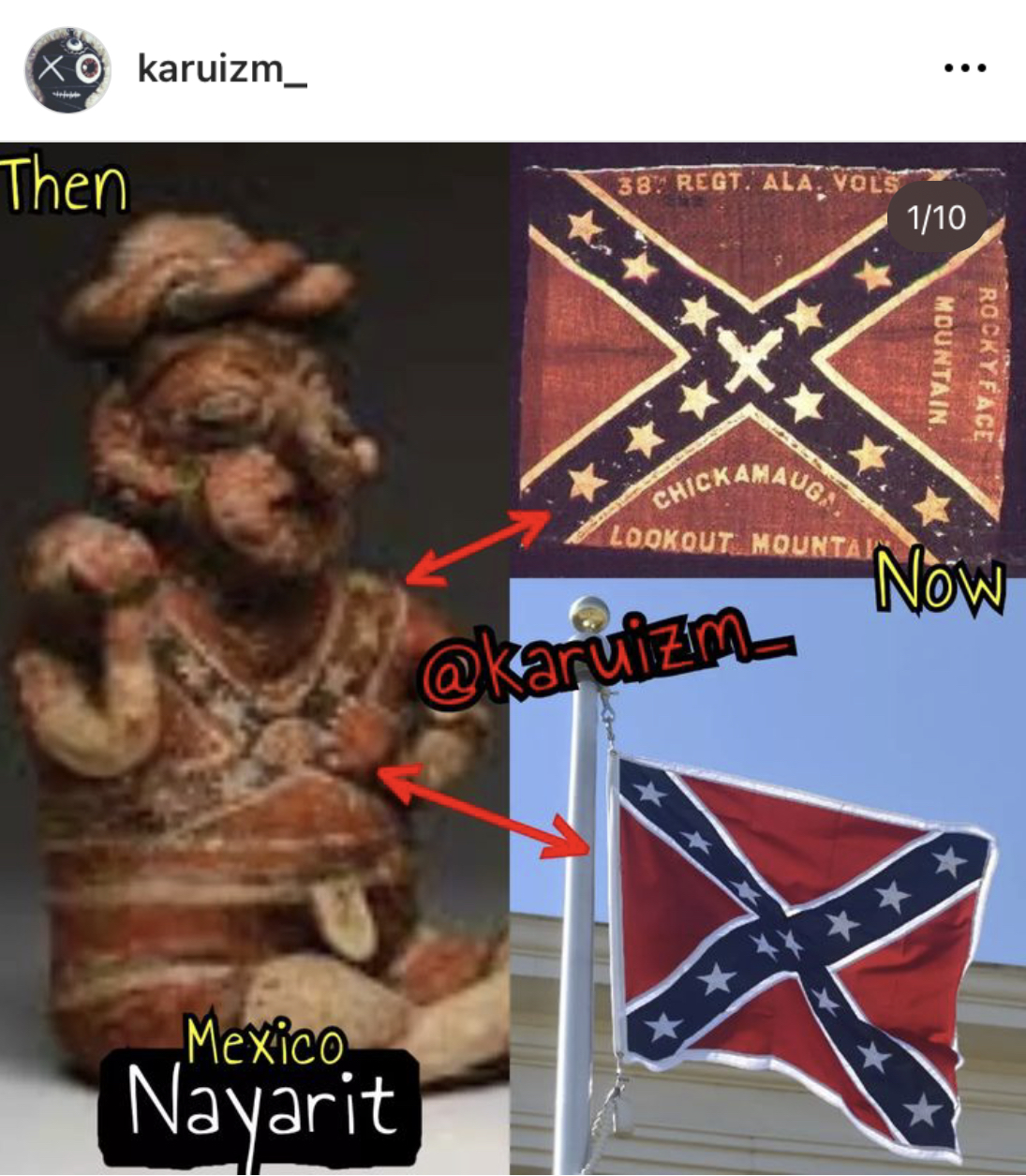
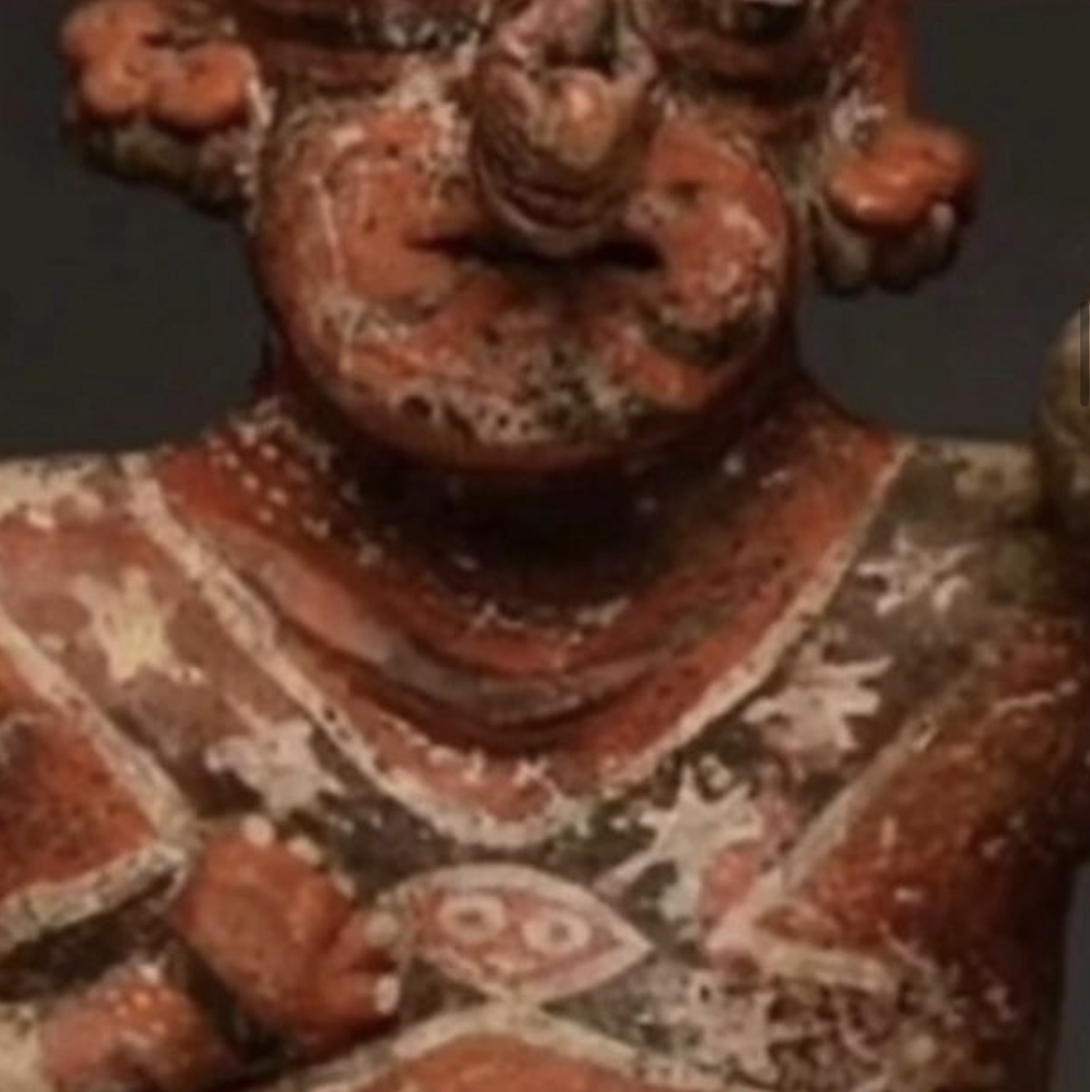
I came across the following post that made the claim that the confederate flag design was stolen from Nayarit figures made from Native Americans. I don't believe this to be true, I actually believe it to be a far outreaching claim, but I am curious to know what truths exist. Is the figure real? Did the confederate flag design exist before it was adopted by the Confederacy? I did a reverse image search and found no museum or anyone that had the image, outside of the original poster. Please aid my struggle in finding the truth.


IMG_0330.jpeg
I
IMG_0334.jpeg


My questions that I hope are answered is:
1.) What inspired the confederate flag design (particularly the battle flag not the national confederate flag)?

2.) is this figure/statue real?

3.) if the statue/figure is real, is it a reproduction or an original piece?

4.) where is it, the figure, now? A museum? Or someone bought it off Ebay?
 
Heraldic, cultural and religious symbols have been repeated over the duration of mankind. Some similar, some exact that many have no actual relation or influence from the other.

In brief...
The CS First National Flag it was quickly noted that at a distance it could not easily be determined from the US National. One can see red-white and a dark color canton, features they both had. No quick fix was at hand so various commands adopted their own. Hence we find the assortments of the Hardee, Van Dorn, Magruder etc. The desire to have something totally different and easily distinguishable from the US flag. Efforts were made to establish a single unique battle flag for use of all, which saw resistance and sporadic adoption beyond the ones agreed upon within the ANV ranks. Later war it became a bit more common in the Western theater too.

The "X" shape pattern is known in heraldic terms as a Saltire. Which is also the term utilized in its 1861 proposal. A design feature that predates medieval times, despite others claims that it copied the Scottish Flag (St Andrews Cross) which also uses it as well as host of other nations.

The likely hood of the battle flag being directly related and intentionally copied from some ceremonial voodoo clay doll reportedly found in Mexico is a bit of a stretch to connect the dots upon.
 
The likely hood of the battle flag being directly related and intentionally copied from some ceremonial voodoo clay doll reportedly found in Mexico is a bit of a stretch to connect the dots upon.
That's what I figured, but I guess you cannot convince a fool. As what confederate even knew of Mexican native Americans let alone any of their culture/pottery.
 
My questions that I hope are answered is:

2.) is this figure/statue real?

3.) if the statue/figure is real, is it a reproduction or an original piece?

4.) where is it, the figure, now? A museum? Or someone bought it off Ebay?
I believe this to be Braxton Bragg during his Mexican War period...before he grew his beard.

I recognized him right off. ;-)
 
the figure reminds me of Evel Kneivel:

1714059163526.png


The Confederate battleflag was adopted by General P.G.T. Beauregard in 1861.


1714059967559.png

1714060034272.png

1714060070769.png

1714060115432.png


From 1861:

1714060223555.png

1714060267744.png

1714060316987.png


1714062066260.png

William Porcher Miles of South Carolina, 1822-1899.


1714059805779.png


Did a "saltire" or Greek cross with stars exist before 1861? Not exactly in the heraldic form adopted by the Confederates.


There was the late Roman Imperial troops battle standards and shields in with the "chi rho" insignia.
1714060772183.png


1714060489425.png


The flags of Scotland also bears a saltire, or St. Andrews' cross, as does the rather crowded Union Jack of England.

1714061225184.png


1714061186345.png
 
I came across the following post that made the claim that the confederate flag design was stolen from Nayarit figures made from Native Americans. I don't believe this to be true, I actually believe it to be a far outreaching claim, but I am curious to know what truths exist. Is the figure real? Did the confederate flag design exist before it was adopted by the Confederacy? I did a reverse image search and found no museum or anyone that had the image, outside of the original poster. Please aid my struggle in finding the truth.


View attachment 505678I View attachment 505677


My questions that I hope are answered is:
1.) What inspired the confederate flag design (particularly the battle flag not the national confederate flag)?

2.) is this figure/statue real?

3.) if the statue/figure is real, is it a reproduction or an original piece?

4.) where is it, the figure, now? A museum? Or someone bought it off Ebay?
I've seen this before, it is nothing more than a conspiracy theory which explaining would require going into unnecessary modern political discussion. I recommend not engaging with anyone spreading this stuff because they have a deeper racial supremacist agenda.
 
I came across the following post that made the claim that the confederate flag design was stolen from Nayarit figures made from Native Americans. I don't believe this to be true, I actually believe it to be a far outreaching claim, but I am curious to know what truths exist. Is the figure real? Did the confederate flag design exist before it was adopted by the Confederacy? I did a reverse image search and found no museum or anyone that had the image, outside of the original poster. Please aid my struggle in finding the truth.


View attachment 505678I View attachment 505677


My questions that I hope are answered is:
1.) What inspired the confederate flag design (particularly the battle flag not the national confederate flag)?

2.) is this figure/statue real?

3.) if the statue/figure is real, is it a reproduction or an original piece?

4.) where is it, the figure, now? A museum? Or someone bought it off Ebay?
Saint Andrew's Cross. Many Scott's Irish in the South.
 
the figure reminds me of Evel Kneivel:

View attachment 505686

The Confederate battleflag was adopted by General P.G.T. Beauregard in 1861.


View attachment 505688
View attachment 505689
View attachment 505690
View attachment 505691

From 1861:

View attachment 505692
View attachment 505693
View attachment 505694

View attachment 505700
William Porcher Miles of South Carolina, 1822-1899.


View attachment 505687


Did a "saltire" or Greek cross with stars exist before 1861? Not exactly in the heraldic form adopted by the Confederates.


There was the late Roman Imperial troops battle standards and shields in with the "chi rho" insignia.
View attachment 505697

View attachment 505695

The flags of Scotland also bears a saltire, or St. Andrews' cross, as does the rather crowded Union Jack of England.

View attachment 505699

View attachment 505698
The British United Kingdom flag is a combination of 3 crosses. St. George, St. Andrew, and St. Patrick.
 
I've seen this before, it is nothing more than a conspiracy theory which explaining would require going into unnecessary modern political discussion. I recommend not engaging with anyone spreading this stuff because they have a deeper racial supremacist agenda.
Already made that mistake. I tried disproving the claim, but he wouldn't listen. I believe you to be right though, just a conspiracy theory.
 
When the Anglican Church in revolutionary America broke off, there was a necessity for apostolic succession for legitimacy. That meant an uninterrupted laying on of hands from St Paul.

Scottish bishops agreed to bless the new Episcopal church with one caveat. Saint Andrew & the Scottish cross of St Andrew had to be the symbol of the new church.

As a result, Saint Andrew's Cross became ubiquitous in the United States.

It was curious that Generals Beauregard, Johnston & Bragg came up with essentially the same design. The square Beauregard / Johnston design was derided as looking like trouser suspenders. Initially, due to red being a trim color & thus not available in bulk, many of the first issue was pink.

Bragg's corps flag was a narrow rectangle for the same reason. The stars were proper heraldic six pointed gold stars derived from the golden rowels of knightly spurs. The Bragg battle flag also had a six inch border of pink.

IMG_5416.jpeg

Seen waving over the grave of General Cheatham's mount, Old Isham, is General Bishop Polk's cross with stars battle flag.

The full moon battle flag that Hardee's Corps & then Cleburne flew throughout the way was designed & sewn by Mrs. Breckinridge.

At Stones River, the CSA was what we would call an army group. There were six distinctly different battle flags representing various army & corps commands.

Each of the 29 CSA army commands was authorized to create his own battle flag. For whatever reason, Bragg did not order one for the Army of Tennessee.

As was Beauregard & Johnston's custom, the many tattered A of TN battle flags were replaced by a version of the rectangular naval jack. The square A of NV flags didn't fly gracefully, so rectangular became the norm. Cleburne's division famously refused the suspender flag & kept their full moons to the bitter end.

The first national flag was deemed too similar to the U.S. flag derived from the Washington family coat of arms. In a design failure of epic proportions, the "Stainless Banner" consisting of a white flag with an Army of Northern Virginia battle flag in one corner became the CSA's national flag. In anything but a stiff breeze it was mistaken for a parley or surrender flag… what were they thinking?

Note: The Washington family coat of arms has golden six pointed Star of David rowels on it. Tasked with sewing Washington's battle flag, Betsy Ross showed the general how laborious the six pointed stars are to cut & sew. By contrast, a five pointed star can be made with a single straight cut.

 
Last edited:
When the Anglican Church in revolutionary America broke off, there was a necessity for apostolic succession for legitimacy. That meant an uninterrupted laying on of hands from St Paul.

Scottish bishops agreed to bless the new Episcopal church with one caveat. Saint Andrew & the Scottish cross of St Andrew had to be the symbol of the new church.

As a result, Saint Andrew's Cross became ubiquitous in the United States.

It was curious that Generals Beauregard, Johnston & Bragg came up with essentially the same design. The square Beauregard / Johnston design was derided as looking like trouser suspenders. Initially, due to red being a trim color & thus not available in bulk, many of the first issue was pink.

Bragg's corps flag was a narrow rectangle for the same reason. The stars were proper heraldic six pointed gold stars derived from the golden rowels of knightly spurs. The Bragg battle flag also had a six inch border of pink.

View attachment 505703
Seen waving over the grave of General Cheatham's mount, Old Isham, is General Bishop Polk's cross with stars battle flag.

The full moon battle flag that Hardee's Corps & then Cleburne flew throughout the way was designed & sewn by Mrs. Breckinridge.

At Stones River, the CSA was what we would call an army group. There were six distinctly different battle flags representing various army & corps commands.

Each of the 29 CSA army commands was authorized to create his own battle flag. For whatever reason, Bragg did not order one for the Army of Tennessee.

As was Beauregard & Johnston's custom, the many tattered A of TN battle flags were replaced by a version of the rectangular naval jack. The square A of NV flags didn't fly gracefully, so rectangular became the norm. Cleburne's division famously refused the suspender flag & kept their full moons to the bitter end.

The first national flag was deemed too similar to the U.S. flag derived from the Washington family coat of arms. In a design failure of epic proportions, the "Stainless Banner" consisting of a white flag with an Army of Northern Virginia battle flag in one corner became the CSA's national flag. In anything but a stiff breeze it was mistaken for a parley or surrender flag… what were they thinking?

Note: The Washington family coat of arms has golden six pointed Star of David rowels on it. Tasked with sewing Washington's battle flag, Betsy Ross showed the general how laborious the six pointed stars are to cut & sew. By contrast, a five pointed star can be made with a single straight cut.
That "Stainless Banner" was a real cluster wasn't it.
 

Learn About Us
About CivilWarTalk
Contact the Webmaster
Meet the Staff
Link to CivilWarTalk
Join Our Community
Register
Browse Forums
View Today's Discussions
Search the Forum
Get Help
FAQ
Student Guide
Forum Rules & Etiquette
Copyright / DMCA

     Contact Us CivilwarTalk on Facebook CivilWarTalk on YouTube CivilWarTalk on Twitter RSS Feed

Bringing the American Civil War and More to Life.
© 1999 - , CIVILWARTALK, LLC - Site Version 10.0

SlaveryTalk.com - SecessionTalk.com - CivilWarTalk.com - ReconstructionTalk.com
Back
Top