-
Welcome to CivilWarTalk, a forum about the American Civil War! - Join today! It's fast, simple, and FREE!
You are using an out of date browser. It may not display this or other websites correctly.
You should upgrade or use an alternative browser.
You should upgrade or use an alternative browser.
Coehorn mortar?
- Thread starter bamaman
- Start date

Best Answer

Yes, both sides used forms of hand grenades, landmines and rockets.Another question is that was there any type of hand grenade used during the Civil War?

- Joined
- Feb 18, 2013
- Location
- Hoover, Alabama
As unfortunately many American military personnel found out when they placed them on their knees when they fired them.Japanese "knee mortars" in WW2 Pacific.
Speaking of smallish very portable mortars, these should be considered.
The name is misleading.

52ndFandS
First Sergeant
- Joined
- May 20, 2024
- Location
- Pennsylvania
I'd have hate to have been the guy who found out just how misleading the name was.Japanese "knee mortars" in WW2 Pacific.
Speaking of smallish very portable mortars, these should be considered.
The name is misleading.

 Forum Host
- Joined
- May 3, 2013
- Location
- Pennsylvania
The Coehorn mortar was invented by Menno, Baron van Coehoorn, during the War of Spanish Succession in the 1701 - 1702 time period. One of its early appearances in American history occurred during the Siege of Fort Niagara in September 1759. The commander of the British forces, BG John Prideaux was standing near the British artillery line when one of the mortar rounds exploded prematurely. A fragment of the round struck Prideaux in the head and killed him instantly. Sir William Johnson took command of the British army and successfully concluded the siege.

7thWisconsin
1st Lieutenant
- Joined
- Nov 21, 2014
Absolutely! Johnson had no authority to command royal troops with his colonial commission, but it was probablly all for the best as far as the British were concerned that he took command. One of the most capable American leaders of the 18th century.The Coehorn mortar was invented by Menno, Baron van Coehoorn, during the War of Spanish Succession in the 1701 - 1702 time period. One of its early appearances in American history occurred during the Siege of Fort Niagara in September 1759. The commander of the British forces, BG John Prideaux was standing near the British artillery line when one of the mortar rounds exploded prematurely. A fragment of the round struck Prideaux in the head and killed him instantly. Sir William Johnson took command of the British army and successfully concluded the siege.
- Joined
- Aug 25, 2012
The Summer 2026 "The Civil War Monitor" "Salvo Department" covered the Coehorn Mortar. To quote the article "Both sides relied more heavily on Coehorns as the opposing armies increasing dug in over the war's final year."
It says that from February 1862 and January 1865 the Federal government ordered 248 Coehorn Mortars. When the armies dug in was the Coehorn Mortars a game changer?
It says that from February 1862 and January 1865 the Federal government ordered 248 Coehorn Mortars. When the armies dug in was the Coehorn Mortars a game changer?

gary
Major
- Joined
- Feb 20, 2005
The mortar's high trajectory enabled one side to fire from an unseen position and a drop a shell atop an equally unseen opponent. They were very useful in siege warfare. Sometimes they were used in cooperation with waiting marksmen who shot at the enemy when he flushed.
There were mortar batteries back in the Civil War but imperfect spotting and communication for adjustment hampered their effectiveness. Also there was no ToT (time on target) like the British developed later (WW I).
There were mortar batteries back in the Civil War but imperfect spotting and communication for adjustment hampered their effectiveness. Also there was no ToT (time on target) like the British developed later (WW I).
7thWisconsin
1st Lieutenant
- Joined
- Nov 21, 2014
Oh yeah absolutely. The Army of the Potomac increased the number of mortars on the line by hundreds of percents in the last year of the war. I think it had 15 in May of 64. The coehorn mortar is ideal for antipersonnel fire in fortifications. High angle fire delivered over a fairly short range while being able to remain largely concealed is a great advantage. And it's man-packable. 4 guys can pick it up and move it, which means that it's less prone to counterbattery fire than a larger gun, or a wheeled field piece. The coehorn is very good for delivering a harassing fire. The target is a fortification, It's not going anywhere, and anywhere you drop a round is likely to do some damage and mortally disturb somebody.The Summer 2026 "The Civil War Monitor" "Salvo Department" covered the Coehorn Mortar. To quote the article "Both sides relied more heavily on Coehorns as the opposing armies increasing dug in over the war's final year."
It says that from February 1862 and January 1865 the Federal government ordered 248 Coehorn Mortars. When the armies dug in was the Coehorn Mortars a game changer?
- Joined
- Aug 25, 2012
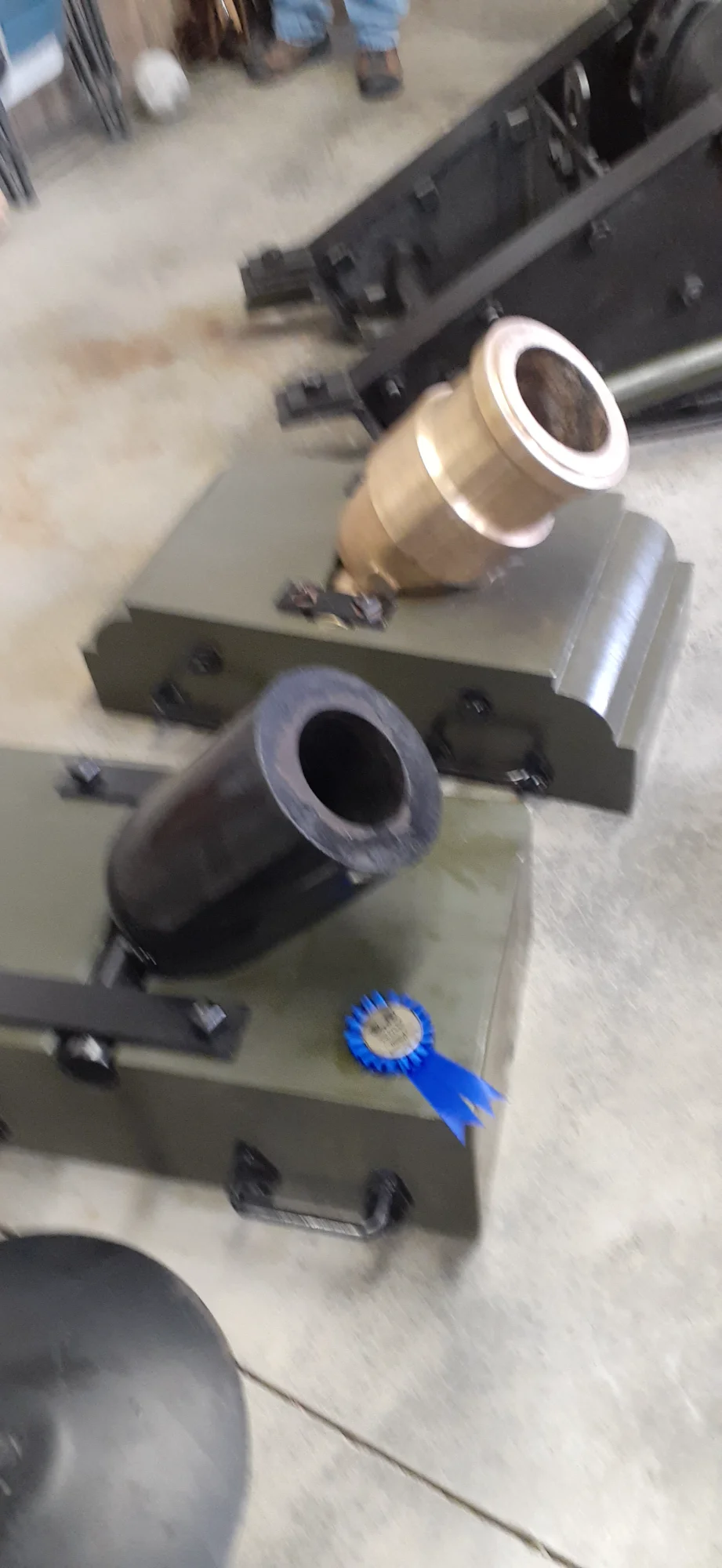
At a show. What have we here?
gary
Major
- Joined
- Feb 20, 2005
I should add that they were tactical weapons and not figured in as break-through (concentration at one point to enable a successful infantry assault).
During the F&I War Siege of Fort William Henry, the artillery concentrated at one point and once that bastion was reduced and the fort could be stormed, terms were offered and accepted. The same was being tried against the twin ravelins that constituted the Priest Cap at Port Hudson; but the Confederates surrendered after: (1) food was near exhaustion; (2) supply of percussion caps were low, and; (3) knowledge that Vicksburg capitulated and (4) Nextflix and social media was cut off from the garrsion.
During the F&I War Siege of Fort William Henry, the artillery concentrated at one point and once that bastion was reduced and the fort could be stormed, terms were offered and accepted. The same was being tried against the twin ravelins that constituted the Priest Cap at Port Hudson; but the Confederates surrendered after: (1) food was near exhaustion; (2) supply of percussion caps were low, and; (3) knowledge that Vicksburg capitulated and (4) Nextflix and social media was cut off from the garrsion.

Rhea Cole
Colonel
- Joined
- Nov 2, 2019
- Location
- Murfreesboro, Tennessee
At a show. What have we here?View attachment 583097
Is the cylindrical cast iron version from a Southern foundry? The 12 pound gun-howitzer Napoleons really do look like a length of cast iron pipe.
Admittedly, I am most fond of the Vicksburg tree trunk versions.
7thWisconsin
1st Lieutenant
- Joined
- Nov 21, 2014
Are those tubes original or reproductions? Coehorn mortar reproductions used to be very inexpensive. Partly because of their affordability, they ended up in the hands of people with a sense of safety which was, shall we say, "flexible." That got them banned from many reenacting events outright, or event organizers adding some justification like "this is an early war event, so no coehorn mortars are allowed on the field."
- Joined
- Aug 25, 2012
The two in the photo were at the Civil War and artillery show in Ohio. They were on display in the artillery building and not with the reenactors. I did not talk to their owner.Are those tubes original or reproductions? Coehorn mortar reproductions used to be very inexpensive. Partly because of their affordability, they ended up in the hands of people with a sense of safety which was, shall we say, "flexible." That got them banned from many reenacting events outright, or event organizers adding some justification like "this is an early war event, so no coehorn mortars are allowed on the field."
7thWisconsin
1st Lieutenant
- Joined
- Nov 21, 2014
They are lovely pieces. Ft Ligonier in Pennsylvania has a wonderful collection of 18th century artillery including a bunch of Coehorn mortars. Every time I see them it awakens mortar envy in my heart.

13 IL Cav & 64 GA Inf
Captain
- Joined
- Jan 29, 2024
- Location
- Florida & Alabama (also GA & VA)
Great post.At a show. What have we here?View attachment 583097
Similar threads
- Replies
- 0
- Views
- 55

- Replies
- 48
- Views
- 3K

- Replies
- 3
- Views
- 289
- Replies
- 5
- Views
- 166

Similar threads
- Learn About Us
- ►About CivilWarTalk
- ►Contact the Webmaster
- ►Meet the Staff
- ►Link to CivilWarTalk
- Join Our Community
- ►Register
- ►Browse Forums
- ►View Today's Discussions
- ►Search the Forum
- Get Help
- ►FAQ
- ►Student Guide
- ►Forum Rules & Etiquette
- ►Copyright / DMCA
 Bringing the