
lelliott19
Brigadier General
★ Moderator
* OFFICIAL *
CWT PRESENTER
CWT PRESENTER
 Forum Host
Silver Patron
Regtl. Staff Chickamauga 2018
- Joined
- Mar 15, 2013
NOTE: This thread is not for the squeamish.
AMPUTATION 101 - In this thread, I'll explain basic Civil War amputation methods and the instruments used to perform them. Ill cover two basic types of amputation - circular and flap amputation. Different knives were used and the skin was cut differently, depending on which amputation method was used (circular or flap) so we will cover each one individually, in subsequent posts. If there is interest, I'll cover some other kinds of Civil War surgery in future threads. NOTE: There are some GRAPHIC images below, so if you are squeamish, you may want to stop here. All the images by the author are photos of "swine patients" - not real humans.
ANESTHESIA
The first step in performing an amputation was to administer chloroform, ether, or a combination of chloroform/ether so that the patient lost consciousness. Surgeons routinely made note of the patient's heart rate and respiration to determine whether he might be reacting poorly to the sedation. Some patients even died from anesthesia - sometimes before the operation could get underway.
TOURNIQUET
Provided all was well, a tourniquet was applied above the wound/intended amputation site. The tourniquet did not always arrest blood flow completely. This is a Petit's screw tourniquet, commonly used during the Civil War, and included in many period surgical instrument kits.


It's important to note, that even though some of the images below show gloved hands, civil war surgeons did not wear gloves. They didn't know about germs and rarely even washed their hands. Usually, they just wiped off the blood from the previous patient on their apron, before moving on to the next. Instrument were not sterilized or even really cleaned. Knives were wiped across the surgeon's apron, before being used on the next patient.
FLAP vs. CIRCULAR AMPUTATION
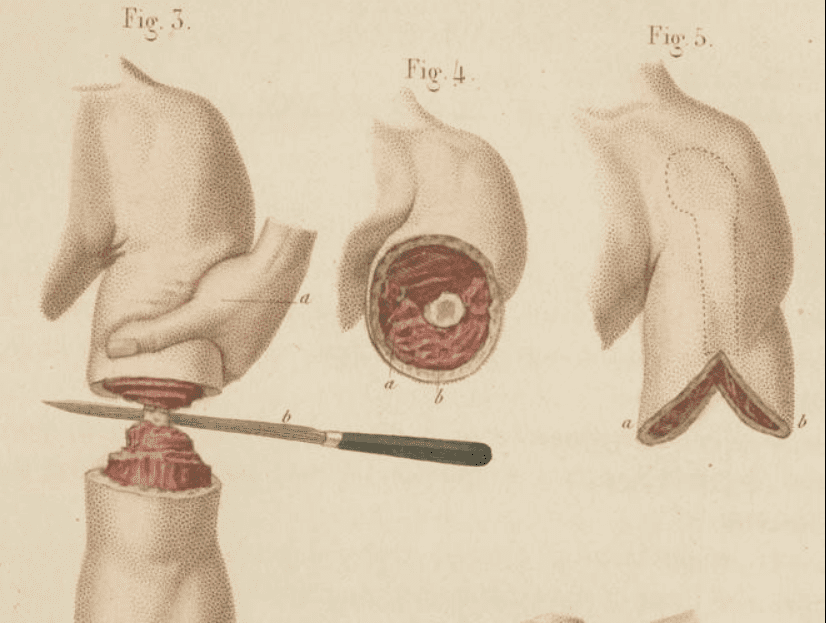
As mentioned above, there were two basic methods of amputation. For the flap method, a V-shaped incision was made, leaving flaps of skin and muscle which were used to cover the stump. Circular amputation was much more clear cut (pardon the pun.) The surgeon basically made an incision encircling the limb. Different knives were used, depending on the kind of amputation being performed and I'll cover them in subsequent posts in this thread so, if this is of interest to you, be sure to check back often.


Flap Amputation vs. Circular Ampuation
https://www.20minutos.es/fotos/imagen/arm-amputation-methods-from-claude-bernard-illustrated-manual-of-operative-surgery-and-surgical-anatomy-new-york-1864-157376/
For for both amputation procedures (circular and flap) prior to using the saw, the surgeon retracted the flesh above the incision in order to prevent the saw from damaging the skin. For flap amputation, the V-shaped cut was made, the skin and flesh retracted, and then the bone was cut a few inches above the flaps. In circular amputation, the circular incision was made, the skin draw back or retracted slightly, and the surgeon cut straight across the bone.

Image by the author for https://civilwartalk.com/threads/civil-war-surgery-amputation-101.156250/
The next step was to use a bone saw to cut through the bone. A bone saw looks like this - kind of like a hack saw.

Once the bone was cut through, the limb was removed.

Image by the author for https://civilwartalk.com/threads/civil-war-surgery-amputation-101.156250/
Next, the surgeon used a tenaculum and tissue forceps (tweezers) to fish out the blood vessels so they could be tied off. The tenaculum looks like a dental pick and with the hook end, the surgeon was able to pull out the cut ends of the veins and arteries. Next, the surgeon "tied off" the cut blood vessels using silk thread.


For both the circular amputation and the flap amputation procedures, the surgeon next needed to remove the sharp protruding edges of the bone. This cross section below is through a joint, so the edges are basically smooth, except for a couple of places where the saw impacted bone. When cutting through a long bone, there would have been numerous sharp edges to remove.


Images by the author for https://civilwartalk.com/threads/civil-war-surgery-amputation-101.156250/
For the rough edges of bone, the surgeon used an instrument called a ronguer to snip away any sharp, rough edges. The ronguer looks kind of like wire cutters, but for bone. Sharp edges left behind after amputation irritated the flap and had a negative impact on healing of the stump.

Next, the surgeon used a bone file to really smooth away all the roughness on the edges of the cut bone. A bone file is like a thick metal nail file....heavy enough to file bone. Again, the smoother the bone end, the faster the healing of the stump, the less chance of infection, and the more positive the eventual outcome.

Finally, the flaps of skin were closed using sutures. The specific method of closing depended on whether the circular or flap method had been used. I'll cover both methods in subsequent posts in this thread.

In both types of amputation, the surgeon might leave an opening for drainage. Then the stump was bandaged.
Images from:
The author for https://civilwartalk.com/threads/civil-war-surgery-amputation-101.156250/
www.civilwarmed.org
http://www.campsiteartifacts.com/surgicalbonefile.html
and other sources noted above.
AMPUTATION 101 - In this thread, I'll explain basic Civil War amputation methods and the instruments used to perform them. Ill cover two basic types of amputation - circular and flap amputation. Different knives were used and the skin was cut differently, depending on which amputation method was used (circular or flap) so we will cover each one individually, in subsequent posts. If there is interest, I'll cover some other kinds of Civil War surgery in future threads. NOTE: There are some GRAPHIC images below, so if you are squeamish, you may want to stop here. All the images by the author are photos of "swine patients" - not real humans.
ANESTHESIA
The first step in performing an amputation was to administer chloroform, ether, or a combination of chloroform/ether so that the patient lost consciousness. Surgeons routinely made note of the patient's heart rate and respiration to determine whether he might be reacting poorly to the sedation. Some patients even died from anesthesia - sometimes before the operation could get underway.
TOURNIQUET
Provided all was well, a tourniquet was applied above the wound/intended amputation site. The tourniquet did not always arrest blood flow completely. This is a Petit's screw tourniquet, commonly used during the Civil War, and included in many period surgical instrument kits.
It's important to note, that even though some of the images below show gloved hands, civil war surgeons did not wear gloves. They didn't know about germs and rarely even washed their hands. Usually, they just wiped off the blood from the previous patient on their apron, before moving on to the next. Instrument were not sterilized or even really cleaned. Knives were wiped across the surgeon's apron, before being used on the next patient.
FLAP vs. CIRCULAR AMPUTATION
As mentioned above, there were two basic methods of amputation. For the flap method, a V-shaped incision was made, leaving flaps of skin and muscle which were used to cover the stump. Circular amputation was much more clear cut (pardon the pun.) The surgeon basically made an incision encircling the limb. Different knives were used, depending on the kind of amputation being performed and I'll cover them in subsequent posts in this thread so, if this is of interest to you, be sure to check back often.
Flap Amputation vs. Circular Ampuation
https://www.20minutos.es/fotos/imagen/arm-amputation-methods-from-claude-bernard-illustrated-manual-of-operative-surgery-and-surgical-anatomy-new-york-1864-157376/
For for both amputation procedures (circular and flap) prior to using the saw, the surgeon retracted the flesh above the incision in order to prevent the saw from damaging the skin. For flap amputation, the V-shaped cut was made, the skin and flesh retracted, and then the bone was cut a few inches above the flaps. In circular amputation, the circular incision was made, the skin draw back or retracted slightly, and the surgeon cut straight across the bone.
Image by the author for https://civilwartalk.com/threads/civil-war-surgery-amputation-101.156250/
The next step was to use a bone saw to cut through the bone. A bone saw looks like this - kind of like a hack saw.
Once the bone was cut through, the limb was removed.
Image by the author for https://civilwartalk.com/threads/civil-war-surgery-amputation-101.156250/
Next, the surgeon used a tenaculum and tissue forceps (tweezers) to fish out the blood vessels so they could be tied off. The tenaculum looks like a dental pick and with the hook end, the surgeon was able to pull out the cut ends of the veins and arteries. Next, the surgeon "tied off" the cut blood vessels using silk thread.
For both the circular amputation and the flap amputation procedures, the surgeon next needed to remove the sharp protruding edges of the bone. This cross section below is through a joint, so the edges are basically smooth, except for a couple of places where the saw impacted bone. When cutting through a long bone, there would have been numerous sharp edges to remove.
Images by the author for https://civilwartalk.com/threads/civil-war-surgery-amputation-101.156250/
For the rough edges of bone, the surgeon used an instrument called a ronguer to snip away any sharp, rough edges. The ronguer looks kind of like wire cutters, but for bone. Sharp edges left behind after amputation irritated the flap and had a negative impact on healing of the stump.
Next, the surgeon used a bone file to really smooth away all the roughness on the edges of the cut bone. A bone file is like a thick metal nail file....heavy enough to file bone. Again, the smoother the bone end, the faster the healing of the stump, the less chance of infection, and the more positive the eventual outcome.
Finally, the flaps of skin were closed using sutures. The specific method of closing depended on whether the circular or flap method had been used. I'll cover both methods in subsequent posts in this thread.
In both types of amputation, the surgeon might leave an opening for drainage. Then the stump was bandaged.
Images from:
The author for https://civilwartalk.com/threads/civil-war-surgery-amputation-101.156250/
www.civilwarmed.org
http://www.campsiteartifacts.com/surgicalbonefile.html
and other sources noted above.
Last edited:


 Bringing the