
- Joined
- May 18, 2005
- Location
- Spring Hill, Tennessee
This is another rough draft of the 16th Tennessee's history. Still working and have to edit.
It was nearly 12:30 P.M. when the corps had aligned and advanced to within a short distance south of the resting Federal troops. If all had gone as planned, there would be no Yankees confronting this attack, but luck would not play in the hands of the Rebels that day. Earlier in the day, General McPherson had noted the heavily occupied Rebel works in the distance to his front, and any belief that Atlanta was being evacuated had been quickly squashed that morning. Sherman was also surprised. Sherman believed that Hood wouldn't risk another punishing fight for Atlanta. As the morning wore on however, McPherson began to express concern for what he believed might be a heavy attack on his left. Owing to this, he had a number of Sherman's orders cancelled in view of the Rebel's possible moves on his left. But when noon came, Sherman ordered McPherson to proceed with the orders received earlier in the morning that included detaching some of his troops to help destroy the Decatur railroad in his rear. When no attack had come by noon, McPherson appears to have eased his concern as well, and a number of his troops were sent to the rear.
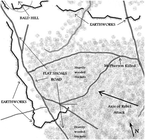
This had not stopped McPherson from bolstering the forces to his southern flank however. Two divisions of Yankee troops under Fuller and Sweeny had been moved into position on the left and rear of the southernmost flank of the Union Army of the Tennessee. These two divisions proved to play a pivotal role in the unfolding of events that day. The Yankee divisions—coupled with a poor reconnaissance of the Rebel axis of advance and nearly impassable terrain—complicated the already exhausted Rebel troops of Hardee's corps. Shortly before 1 P.M., artillery in support of Maney's extreme left division began firing at the Federal lines atop Bald Hill. At the same time on the extreme right of the corps, skirmish lines from Bate's division began to break through the thick underbrush and swamps of Terry's Mill Pond. They had been horribly delayed by the natural and man-made obstacles that turned the ground into mushy knee deep quicksand. As the lines fought their way through the muck, all semblance of line formation was lost. When the line broke through the foliage and vines to a shallow valley that ran perpendicular to the Federal troops along their front, Bate's men came under a sporadic picket fire. They quickly attempted to organize for a charge, but hardly before they were aligned, the enemy opened on them from their main line with rifle and artillery fire. Bate's troops immediately charged in a pell-mell manner. When they were less than two-hundred yards from the enemy positions, the fusillade caused his troops break and run. Their fight was already practically over.
General W. H. T. Walker's division advanced to Bate's left. Minutes after Bate's repulse, the head of Walker's column broke through the briar thickets and was about to form when a sharpshooter's ball dropped General Walker dead from his horse. His brigades rushed forward, but still broken by foliage and briars, the line suffered a similar fate to that of Bate's men. Stevens' brigade of this division was immediately blasted by canister fire from the 14th Ohio Battery. The brigade broke only to return minutes later to suffer a worse fate when the flanks of the brigade were counter-charged by Federal troops. Stevens' brigade lost over five-hundred men captured in their brief engagement. Gist's brigade—also of Walker's division—advanced to Stevens' left toward a gap that they spied in the Federal line. This too was thwarted when the quick thinking of a brigade commander realigned his forces to enfilade the right flank of the approaching Rebels of Gist's brigade. This Rebel brigade was struck so suddenly that Gist was wounded in the opening minutes while trying to rally his men against the enemy fire. These Johnnies also quickly broke and rushed to the tree line in their rear. Minutes later, Walker's last brigade under General Mercer advanced to find heavy lines of enemy troops on a hill in their front supported by artillery. Almost without an attempt, the brigade retired to the rear after losing less than twenty men in the entire day's attack.

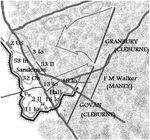
Cleburne's success far excelled that of either Walker or Bate. His division, with Granbury and Govan in the front line followed by Lowery and Carter's detached brigade several hundred yards in their rear, broke through the brush. Cleburne unknowingly—but luckily—marched into the one and only gap in the Federal lines on the southern flank. The gap between Dodge's 16th Corps and Blair's 17th Corps was probably less than four hundred yards wide but more than sufficient to create a dangerous hole through which the Rebels were about to take advantage. As Granbury's Texas brigade broke through the rough brush, the 5th Confederate Regiment stumbled into General McPherson himself—alone with a signal officer and an orderly. Hailed to surrender, the general tipped his hat and turned his reins to gallop away. A volley was fired, and with it, the Yankee general was dismounted and fell to the ground. He died within minutes. Granbury's men pressed on into the gap.
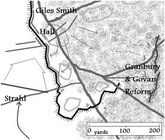
On the left-front of Cleburne's position, the Federals occupied a salient point that they had fortified. This position was occupied by Federal Colonel William Hall's veteran brigade of Iowans from Giles Smith's division of the 17th Corps. That morning, at the angle in the Federal works that veered to the east, they had cleared the ground of trees and shrubbery for more than fifty yards in front of their fieldworks and used the debris to construct an abatis of felled trees that created—what looked to be—a nearly impenetrable obstacle. This Yankee brigade was additionally supported by eight cannon. When they saw the advance of Govan's Arkansas brigade, they let them struggle into the obstruction of trees and brush and then unleashed a punishing fire that staggered the Rebel troops. The rifle and artillery fire dropped dozens of men in the opening moments of the fight near the angle.

It looked as if the assault would fail, when suddenly the Texans of Granbury's brigade to Govan's right—unobstructed and unopposed—rushed into the flank and rear of the Iowa brigade causing a complete stampede of the Yankee troops. Although the Federal works had been refused in the hours prior to the attack, Granbury's boys had sought the gap between Dodge's and Blair's Union corps and rushed into it turning to their left as they did so. This entrapped many of the Yankees, and within minutes, a large number of enemy troops, wagons and cannon were captured. Colonel Francis M. Walker, commanding Maney's brigade, had apparently veered to the left of the swamp after failing to locate General Bate. He had then followed in rear and to the left of Walker's division. Walker's brigade followed in rear of Granbury's attack and helped in the initial breakthrough behind the enemy lines. Granbury, Govan and F. M. Walker's brigades then attempted to exploit their success, but as they rushed in rear of the enemy positions, the Union troops hopped over their works and fought from the exterior side of their earthworks. With these three brigades reaching far in rear of the enemy line, the attack suddenly lost momentum due to losses and exhaustion. In this charge, Colonel F. M. Walker—commanding Maney's brigade—was killed when a sudden counter-attack was made by the blue-coats. The Federal brigades that were initially routed were rallied and poured a devastating fire of rifle and musketry into the victorious Confederates. Losing cohesion as they had rushed so far in rear of the enemy lines, and exhausted from the heat and previous night's march, the Rebel attack finally sputtered to a halt. Line officers tried to consolidate the units, but their enthusiasm had badly scattered any semblance of organization. Cleburne's and F. M. Walker's remnants were slowly forced back by the hottest fire a few hundred yards. Although the Rebel brigades had initially pressed the enemy more than a quarter of a mile, they were now forced back nearly that distance to regroup.[1]
[1] Castel, Decision in the West, p. 391-402; Worhsam, J. W., The Old Nineteenth Tennessee Regiment, C.S.A.; Reprint by The Guild Bindery Press, Oxford, MS, 1992, p. 129.
It was nearly 12:30 P.M. when the corps had aligned and advanced to within a short distance south of the resting Federal troops. If all had gone as planned, there would be no Yankees confronting this attack, but luck would not play in the hands of the Rebels that day. Earlier in the day, General McPherson had noted the heavily occupied Rebel works in the distance to his front, and any belief that Atlanta was being evacuated had been quickly squashed that morning. Sherman was also surprised. Sherman believed that Hood wouldn't risk another punishing fight for Atlanta. As the morning wore on however, McPherson began to express concern for what he believed might be a heavy attack on his left. Owing to this, he had a number of Sherman's orders cancelled in view of the Rebel's possible moves on his left. But when noon came, Sherman ordered McPherson to proceed with the orders received earlier in the morning that included detaching some of his troops to help destroy the Decatur railroad in his rear. When no attack had come by noon, McPherson appears to have eased his concern as well, and a number of his troops were sent to the rear.
This had not stopped McPherson from bolstering the forces to his southern flank however. Two divisions of Yankee troops under Fuller and Sweeny had been moved into position on the left and rear of the southernmost flank of the Union Army of the Tennessee. These two divisions proved to play a pivotal role in the unfolding of events that day. The Yankee divisions—coupled with a poor reconnaissance of the Rebel axis of advance and nearly impassable terrain—complicated the already exhausted Rebel troops of Hardee's corps. Shortly before 1 P.M., artillery in support of Maney's extreme left division began firing at the Federal lines atop Bald Hill. At the same time on the extreme right of the corps, skirmish lines from Bate's division began to break through the thick underbrush and swamps of Terry's Mill Pond. They had been horribly delayed by the natural and man-made obstacles that turned the ground into mushy knee deep quicksand. As the lines fought their way through the muck, all semblance of line formation was lost. When the line broke through the foliage and vines to a shallow valley that ran perpendicular to the Federal troops along their front, Bate's men came under a sporadic picket fire. They quickly attempted to organize for a charge, but hardly before they were aligned, the enemy opened on them from their main line with rifle and artillery fire. Bate's troops immediately charged in a pell-mell manner. When they were less than two-hundred yards from the enemy positions, the fusillade caused his troops break and run. Their fight was already practically over.
General W. H. T. Walker's division advanced to Bate's left. Minutes after Bate's repulse, the head of Walker's column broke through the briar thickets and was about to form when a sharpshooter's ball dropped General Walker dead from his horse. His brigades rushed forward, but still broken by foliage and briars, the line suffered a similar fate to that of Bate's men. Stevens' brigade of this division was immediately blasted by canister fire from the 14th Ohio Battery. The brigade broke only to return minutes later to suffer a worse fate when the flanks of the brigade were counter-charged by Federal troops. Stevens' brigade lost over five-hundred men captured in their brief engagement. Gist's brigade—also of Walker's division—advanced to Stevens' left toward a gap that they spied in the Federal line. This too was thwarted when the quick thinking of a brigade commander realigned his forces to enfilade the right flank of the approaching Rebels of Gist's brigade. This Rebel brigade was struck so suddenly that Gist was wounded in the opening minutes while trying to rally his men against the enemy fire. These Johnnies also quickly broke and rushed to the tree line in their rear. Minutes later, Walker's last brigade under General Mercer advanced to find heavy lines of enemy troops on a hill in their front supported by artillery. Almost without an attempt, the brigade retired to the rear after losing less than twenty men in the entire day's attack.
Cleburne's success far excelled that of either Walker or Bate. His division, with Granbury and Govan in the front line followed by Lowery and Carter's detached brigade several hundred yards in their rear, broke through the brush. Cleburne unknowingly—but luckily—marched into the one and only gap in the Federal lines on the southern flank. The gap between Dodge's 16th Corps and Blair's 17th Corps was probably less than four hundred yards wide but more than sufficient to create a dangerous hole through which the Rebels were about to take advantage. As Granbury's Texas brigade broke through the rough brush, the 5th Confederate Regiment stumbled into General McPherson himself—alone with a signal officer and an orderly. Hailed to surrender, the general tipped his hat and turned his reins to gallop away. A volley was fired, and with it, the Yankee general was dismounted and fell to the ground. He died within minutes. Granbury's men pressed on into the gap.
On the left-front of Cleburne's position, the Federals occupied a salient point that they had fortified. This position was occupied by Federal Colonel William Hall's veteran brigade of Iowans from Giles Smith's division of the 17th Corps. That morning, at the angle in the Federal works that veered to the east, they had cleared the ground of trees and shrubbery for more than fifty yards in front of their fieldworks and used the debris to construct an abatis of felled trees that created—what looked to be—a nearly impenetrable obstacle. This Yankee brigade was additionally supported by eight cannon. When they saw the advance of Govan's Arkansas brigade, they let them struggle into the obstruction of trees and brush and then unleashed a punishing fire that staggered the Rebel troops. The rifle and artillery fire dropped dozens of men in the opening moments of the fight near the angle.
It looked as if the assault would fail, when suddenly the Texans of Granbury's brigade to Govan's right—unobstructed and unopposed—rushed into the flank and rear of the Iowa brigade causing a complete stampede of the Yankee troops. Although the Federal works had been refused in the hours prior to the attack, Granbury's boys had sought the gap between Dodge's and Blair's Union corps and rushed into it turning to their left as they did so. This entrapped many of the Yankees, and within minutes, a large number of enemy troops, wagons and cannon were captured. Colonel Francis M. Walker, commanding Maney's brigade, had apparently veered to the left of the swamp after failing to locate General Bate. He had then followed in rear and to the left of Walker's division. Walker's brigade followed in rear of Granbury's attack and helped in the initial breakthrough behind the enemy lines. Granbury, Govan and F. M. Walker's brigades then attempted to exploit their success, but as they rushed in rear of the enemy positions, the Union troops hopped over their works and fought from the exterior side of their earthworks. With these three brigades reaching far in rear of the enemy line, the attack suddenly lost momentum due to losses and exhaustion. In this charge, Colonel F. M. Walker—commanding Maney's brigade—was killed when a sudden counter-attack was made by the blue-coats. The Federal brigades that were initially routed were rallied and poured a devastating fire of rifle and musketry into the victorious Confederates. Losing cohesion as they had rushed so far in rear of the enemy lines, and exhausted from the heat and previous night's march, the Rebel attack finally sputtered to a halt. Line officers tried to consolidate the units, but their enthusiasm had badly scattered any semblance of organization. Cleburne's and F. M. Walker's remnants were slowly forced back by the hottest fire a few hundred yards. Although the Rebel brigades had initially pressed the enemy more than a quarter of a mile, they were now forced back nearly that distance to regroup.[1]
[1] Castel, Decision in the West, p. 391-402; Worhsam, J. W., The Old Nineteenth Tennessee Regiment, C.S.A.; Reprint by The Guild Bindery Press, Oxford, MS, 1992, p. 129.
Attachments
Last edited:


 Bringing the