
vmicraig
Sergeant
- Joined
- Mar 12, 2018
- Location
- Midlothian, VA
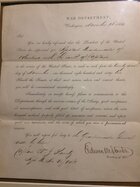
This is a photo of the appointment letter of William J. Kountz as Assistant Quartermaster of Volunteers with the rank of Captain. It was given to me as a repayment for a personal loan. (Lucky me!) The Military Appointment was signed by Edwin M. Stanton, Secretary of War. The appointment is inscribed on official War Department letterhead, Washington, November 26, 1862.
WILLIAM J. KOUNTZ (1817- unknown) A pre-civil war businessman and waterman between Pittsburg and Cincinnati, Kountz had many business associates, friends, and customers up and down the Ohio River Valley, among them, George B. McClellan of the Illinois Central and the Ohio and Mississippi railroads. It was through this friendship and association that McClellan, a Major General in command of the Department of the Ohio at the outbreak of the Civil War, selected Kountz to assist him in the problems of river transportation. Given the rank of Captain, Kountz gained notoriety during the war by becoming a thorn in the side of none other than Ulysses S. Grant.
In 1861, Captain Kountz was sent with a steamboat fleet and an inflated sense of self-importance down the Ohio Rover with St. Louis as his ultimate destination. En route, Kountz criticized everything he saw in terms of government supply contracts and made numerous recommendations for change. Quartermaster McClernand was initially impressed and sent the recommendations to Grant, who was not. Grant issued a cease and desist order to Captain Kountz, stating he had acted in great ignorance, an insult at best. What followed were several complaints by Kountz and others against Grant, most notably that Grant was a drunkard. In January, 1862, Grant ordered the arrest of Kountz for disregarding his orders and for generally being impossible to work with. More likely, Grant was simply getting back at Kountz for his prior accusations. He was eventually released from confinement after approximately 10 days, never receiving a formal notice of the reason for his arrest. Kountz appealed to General McClernand, after which Grant responded that charges had not been preferred, but would be provided if they were preferred in the future.
Kountz had made plenty of enemies besides Grant. Over 31 professional Boatmen described Kountz as impossible to work with. On April 2, 1962, his name was officially dropped from the army rolls. During the following winter, General McClernand apparently made an effort to have Kountz join his command preparatory to his assuming charge of the "Army of the Mississippi." An appointment in blank as an assistant quartermaster of volunteers was sent to him on November 1, 1862. This was followed by several form letters until January 28, 1863, when he was ordered to report to General McClernand in person. His appointment was revoked on May 18, 1863, after Kountz had refused to comply with General Meig's orders.
This incident terminated the military career of Captain Kountz. Although he remained active as a civilian until the end of the war, he refused to re-enter the army. Obstinately, he had retired to his steamboats. Yet, the army was not solely to blame. Kountz was a valuable man, but wholly unsuited by temperament and disposition to work with the military commanders. An ardent crusader, he set out to destroy the many-headed dragon that was preying on the strength and efficiency of the Northern armies. He had the courage and compulsion to expose fraud when and where he found it. He refused to compromise with anyone, and his inability to work with other people thwarted his efforts to reduce the evils he detected with such avidity. As a result, he was able to contribute but little of permanent value, other than to denounce those profiteers with whom he clashed during his brief period of service
Kountz returned to the waterways along the Missouri River with various steamboat lines for the remainder of his life.
WILLIAM J. KOUNTZ (1817- unknown) A pre-civil war businessman and waterman between Pittsburg and Cincinnati, Kountz had many business associates, friends, and customers up and down the Ohio River Valley, among them, George B. McClellan of the Illinois Central and the Ohio and Mississippi railroads. It was through this friendship and association that McClellan, a Major General in command of the Department of the Ohio at the outbreak of the Civil War, selected Kountz to assist him in the problems of river transportation. Given the rank of Captain, Kountz gained notoriety during the war by becoming a thorn in the side of none other than Ulysses S. Grant.
In 1861, Captain Kountz was sent with a steamboat fleet and an inflated sense of self-importance down the Ohio Rover with St. Louis as his ultimate destination. En route, Kountz criticized everything he saw in terms of government supply contracts and made numerous recommendations for change. Quartermaster McClernand was initially impressed and sent the recommendations to Grant, who was not. Grant issued a cease and desist order to Captain Kountz, stating he had acted in great ignorance, an insult at best. What followed were several complaints by Kountz and others against Grant, most notably that Grant was a drunkard. In January, 1862, Grant ordered the arrest of Kountz for disregarding his orders and for generally being impossible to work with. More likely, Grant was simply getting back at Kountz for his prior accusations. He was eventually released from confinement after approximately 10 days, never receiving a formal notice of the reason for his arrest. Kountz appealed to General McClernand, after which Grant responded that charges had not been preferred, but would be provided if they were preferred in the future.
Kountz had made plenty of enemies besides Grant. Over 31 professional Boatmen described Kountz as impossible to work with. On April 2, 1962, his name was officially dropped from the army rolls. During the following winter, General McClernand apparently made an effort to have Kountz join his command preparatory to his assuming charge of the "Army of the Mississippi." An appointment in blank as an assistant quartermaster of volunteers was sent to him on November 1, 1862. This was followed by several form letters until January 28, 1863, when he was ordered to report to General McClernand in person. His appointment was revoked on May 18, 1863, after Kountz had refused to comply with General Meig's orders.
This incident terminated the military career of Captain Kountz. Although he remained active as a civilian until the end of the war, he refused to re-enter the army. Obstinately, he had retired to his steamboats. Yet, the army was not solely to blame. Kountz was a valuable man, but wholly unsuited by temperament and disposition to work with the military commanders. An ardent crusader, he set out to destroy the many-headed dragon that was preying on the strength and efficiency of the Northern armies. He had the courage and compulsion to expose fraud when and where he found it. He refused to compromise with anyone, and his inability to work with other people thwarted his efforts to reduce the evils he detected with such avidity. As a result, he was able to contribute but little of permanent value, other than to denounce those profiteers with whom he clashed during his brief period of service
Kountz returned to the waterways along the Missouri River with various steamboat lines for the remainder of his life.
Last edited:


 Bringing the