Can't Have A War Without Music.

Robert Gray

Sergeant Major
Joined
Jul 24, 2012
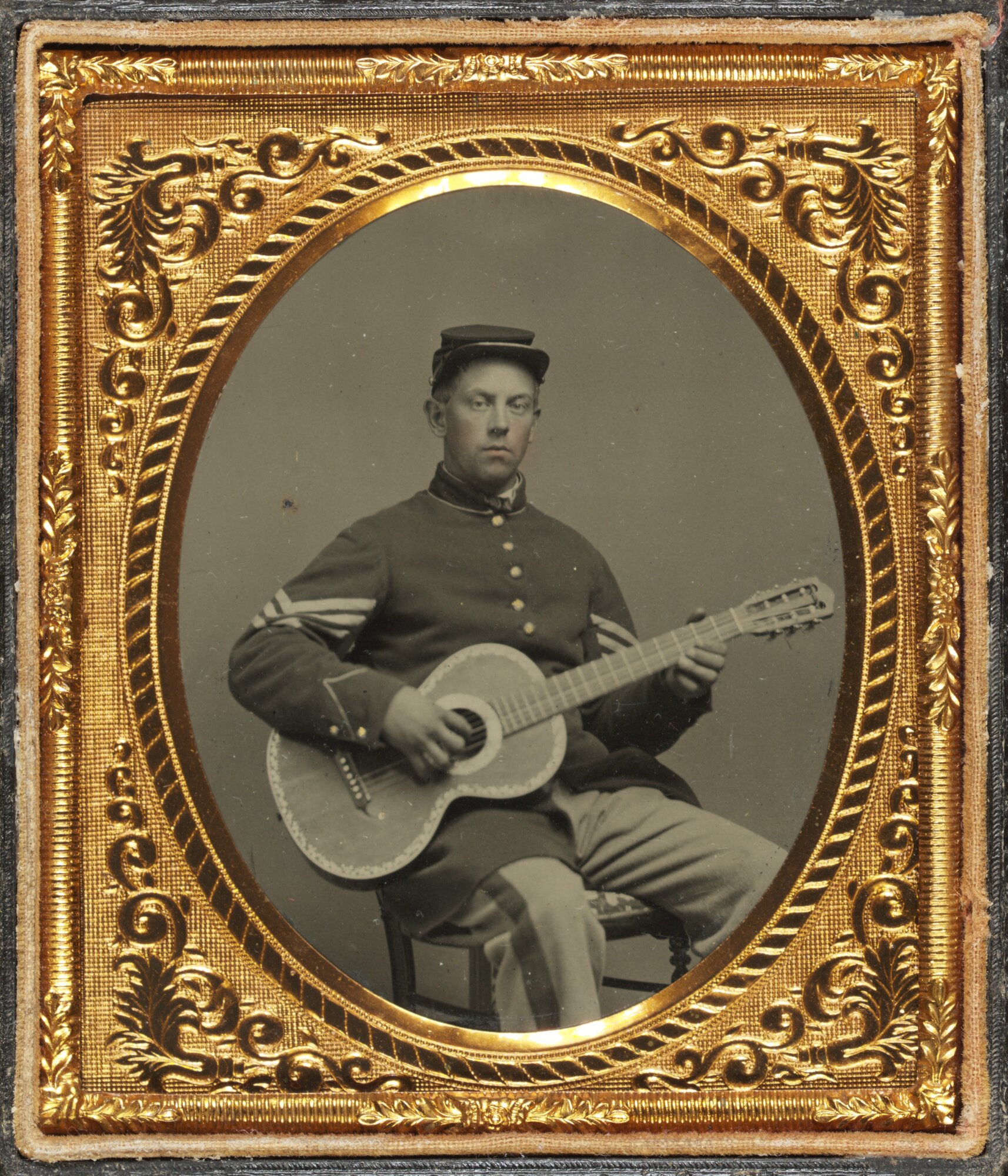
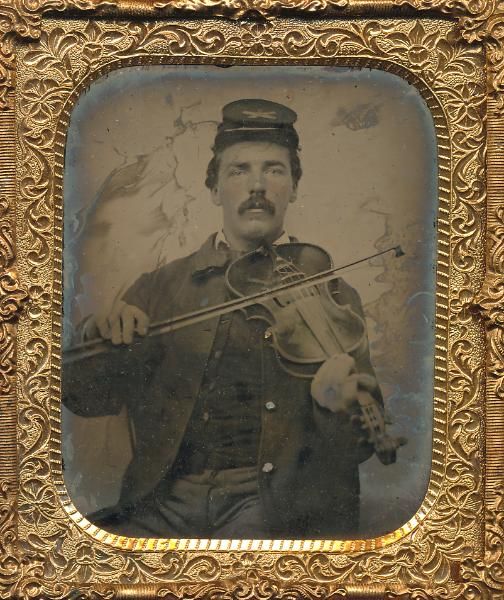
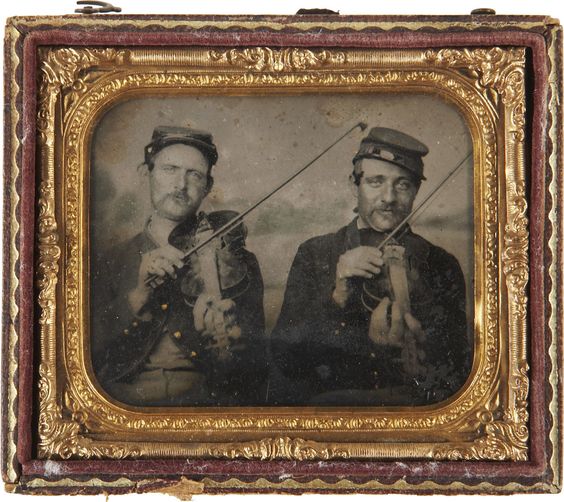
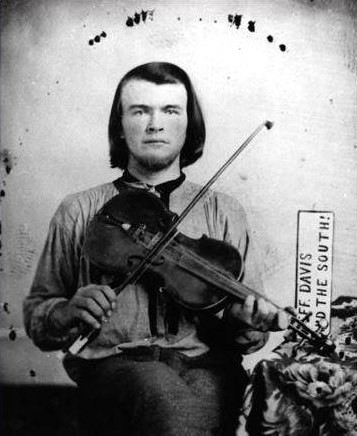
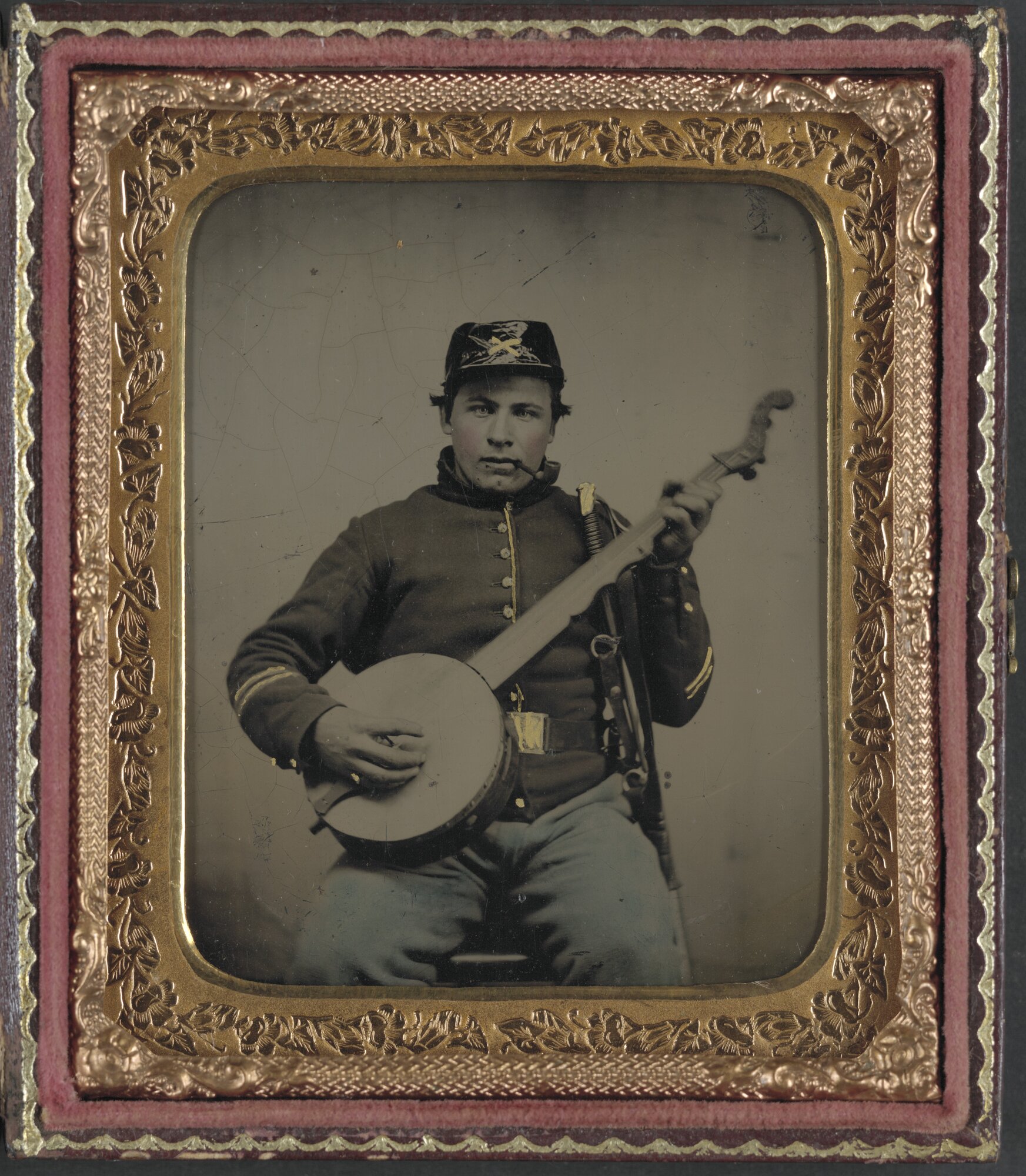
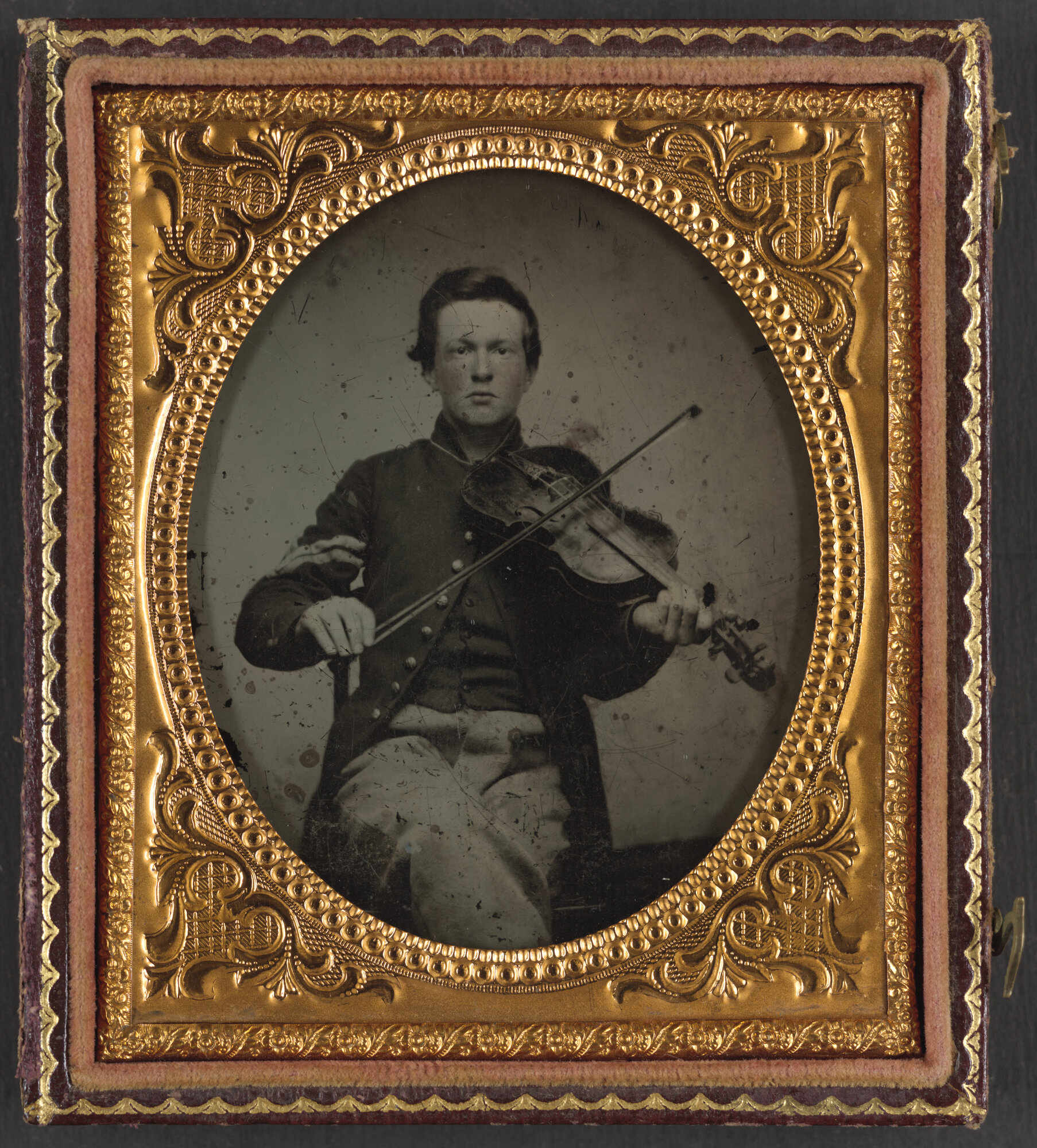
As more than three million men and boys from the North and the South marched to war in the 1860s, so did America's music. General Robert E. Lee, commander of the Confederate Army, reportedly said, "I don't believe we can have an army without music." From marching music to camp songs, from concerts to "Taps," music moved the armies through daily activities, rallied morale, incited conflict, and defused tensions. Soldiers also sang their own music, often at their evening encampments, for comfort and camaraderie. They used instruments brought from home or crafted while on duty, like fiddles, guitars, fifes, drums, and bones (a rhythm instrument made from animal rib and leg bones). Soldiers who didn't play instruments joined in singing and dancing.

Publishers supplied the troops on both sides with a variety of songsters—books that included lyrics to dozens of popular songs. Songs soldiers performed and sang ranged from lighthearted jingles to rousing patriotic anthems to tender love songs. Among civilians, music not only rallied public opinion about the war, but also provided a link between what was happening on the battlefield and what they were experiencing at home. On numerous occasions, songs powerfully united public sentiment behind the war effort.

Against the background of the misery and the bloodshed of the American Civil War stands a rich and vibrant body of music, much of which is still familiar to us today. Music drew people into the war, it was put to functional use within the Union and Confederate forces, and it helped soldiers and civilians alike cope with the war's brutal realities.

Edited from the Kennedy Center Education Digital Learning.

Photo credits:

Library of Congress
The Horse Soldier
Heritage Auctions
New Hampshire Historical Society
1.jpg


2.jpg


3.jpg


4.jpg


5.jpg


6.jpg


7.jpg


8.jpg
 
As more than three million men and boys from the North and the South marched to war in the 1860s, so did America's music. General Robert E. Lee, commander of the Confederate Army, reportedly said, "I don't believe we can have an army without music." From marching music to camp songs, from concerts to "Taps," music moved the armies through daily activities, rallied morale, incited conflict, and defused tensions. Soldiers also sang their own music, often at their evening encampments, for comfort and camaraderie. They used instruments brought from home or crafted while on duty, like fiddles, guitars, fifes, drums, and bones (a rhythm instrument made from animal rib and leg bones). Soldiers who didn't play instruments joined in singing and dancing.

Publishers supplied the troops on both sides with a variety of songsters—books that included lyrics to dozens of popular songs. Songs soldiers performed and sang ranged from lighthearted jingles to rousing patriotic anthems to tender love songs. Among civilians, music not only rallied public opinion about the war, but also provided a link between what was happening on the battlefield and what they were experiencing at home. On numerous occasions, songs powerfully united public sentiment behind the war effort.

Against the background of the misery and the bloodshed of the American Civil War stands a rich and vibrant body of music, much of which is still familiar to us today. Music drew people into the war, it was put to functional use within the Union and Confederate forces, and it helped soldiers and civilians alike cope with the war's brutal realities.

Edited from the Kennedy Center Education Digital Learning.

Photo credits:

Library of Congress
The Horse Soldier
Heritage Auctions
New Hampshire Historical Society
View attachment 491521

View attachment 491522

View attachment 491523

View attachment 491524

View attachment 491525

View attachment 491526

View attachment 491527

View attachment 491528
I love that accordion dude.
 
Music drew people into the war, it was put to functional use within the Union and Confederate forces, and it helped soldiers and civilians alike cope with the war's brutal realities.

Plato once said, 'Music is the medicine for the soul.'

Can appreciate that playing music was not only a form of pre-occupation and entertainment for soldiers in camp, but that it also had a soothing effect for those struggling with their own fears and uncertainties about upcoming battles.

Bands playing stirring musical tunes were also inspirational for troops engaged in the field.
 
We´ve lived with recorded music of some fashion for such a long time now that it´s easy to overlook the simple fact that it didn´t exist at that time. If you wanted music, you had to make it yourself, or know somebody who could. The advent of personal music devices that began with the transistor radio, continued through the Walkman and lives now in noise-cancelling headphones has transformed us from a playing and singing culture to a listening culture. We all have a soundtrack in our heads; I´m not certain they did.
 
Regarding the importance of music in lifting the spirits of the troops: I've always loved this little excerpt from Cox's reminiscences about retreating his forces to Flat Top mountain to avoid being cut off from supply lines following Union defeat at the battle of Pigeon Roost in the Spring of 1862.

"Our retreat to Flat-top Mountain had been made without loss of material, except one baggage-wagon, which broke down irreparably, and was burned by my order. At the crossing of Bluestone River we were beyond the junction of roads by which our flank could be turned, and we halted there as the end of the first march. As the men forded the stream, the sun broke through the clouds, which had been pretty steadily raining upon us, the brass band with the leading brigade struck up the popular tune, "Aren't you glad to get out of the wilderness?" and the soldiers, quick to see the humorous application of any such incident, greeted it with cheers and laughter. All felt that we were again masters of the situation."
 
Last edited:
@Robert Gray were is the brass section? Where are the Rebs in your band?


IMG_0721.jpeg
 
Maybe well-known hymns more than popular songs?
I´m not sure. Hymnody at that time was kinda stodgy. A lot of the great hymns that we now refer to as the ¨old hymns¨ came out of the revival movement after the War. P.P Bliss, George F Root, Horatio Spafford, William Bradbury and the like (although some of those composers wrote patriotic music during the War.). There were a lot of popular songs from the 1840s-1850s that have become obscure to us now as they´ve faded away. Stephen Foster is still with us, but who knows ¨Captain Jenks of the Horse Marines¨ anymore? I tracked down that song because Laura Ingalls Wilder mentions it frequently. It was apparently a family favorite.
 
Music could be used to demoralize the enemy, as well.

"the main body of Sherman's army now began to pass by in martial array, with flags flying, the field officers on horseback prancing at the head of the column, the soldiers proudly keeping step to the music of the band! and the very first band that went by played "Dixie." This was too much - the drop that over-ran our already brimming cup; one and all we burst out crying, and sat around pouring out floods of tears as if our hearts would break."

 
@Robert Gray were is the brass section? Where are the Rebs in your band?


View attachment 491617
I realize there are dozens of band photos and images of individual soldiers with their brass instruments. For this post I was focusing on soldiers holding their personal, civilian instruments. These are much rarer. As for the reb, did you miss this guy?

20430097_10213162315159717_1543161827138280120_n.jpg
 
If you look at the banjos, most of them don't have fret marks on them at that time period. That came in later.

Also, with the photo of the Confederate with the soprano saxhorn in post #9 - it is possibly attributed to Isaac Fiske of Worcester, Mass. How did that happen? Did a Rebel come up here to pose? Did Isaac have a studio down South? That seems unusual.
 
I love that accordion dude.
Ambrose Bierce's definition in "the Devil's Dictionary" of a "gentleman" was (i paraphrase a bit, maybe) "someone who plays the accordion and doesn't." Bierce's Civil War career makes interesting reading too. " His grimly realistic cycle of 25 war stories has been called "the greatest anti-war document in American literature" (from wikipedia)
 
Ambrose Bierce's definition in "the Devil's Dictionary" of a "gentleman" was (i paraphrase a bit, maybe) "someone who plays the accordion and doesn't." Bierce's Civil War career makes interesting reading too. " His grimly realistic cycle of 25 war stories has been called "the greatest anti-war document in American literature" (from wikipedia)
I´ve heard that paraphrased to include the word ¨bagpipes¨ instead of ¨accordion, also. Here are a couple of my favorite instrument jokes (the second one I use quite often):
Q:What´s the difference between a dead skunk in the road and a banjo in the road?
A: There are skidmarks in front of the skunk.

Q: What´s the difference between a violin and a viola?
A: Viola burns longer.
 
I´ve heard that paraphrased to include the word ¨bagpipes¨ instead of ¨accordion, also. Here are a couple of my favorite instrument jokes (the second one I use quite often):
Q:What´s the difference between a dead skunk in the road and a banjo in the road?
A: There are skidmarks in front of the skunk.

Q: What´s the difference between a violin and a viola?
A: Viola burns longer.
I had a friend who did a traveling one woman show that involved playing the bagpipes. When she stayed over at chez moi she got up in the morning and played it. It took me three days to get my dog from out under the bed.
Q; What do you call someone who likes to hang out with musicians?
A: A drummer.
 
I had a friend who did a traveling one woman show that involved playing the bagpipes. When she stayed over at chez moi she got up in the morning and played it. It took me three days to get my dog from out under the bed.
Q; What do you call someone who likes to hang out with musicians?
A: A drummer.
:bounce: I play the hurdy gurdy too, which I sometimes describe as the ¨unholy love child of the bagpipes and the violin.¨ It´s often played sitting down, with a strap around your back. I think that´s so you can´t run away. I played recently in church, where I also offered that ¨when you play weird instruments, you don´t really have to be good, just brave.¨
 

Learn About Us
About CivilWarTalk
Contact the Webmaster
Meet the Staff
Link to CivilWarTalk
Join Our Community
Register
Browse Forums
View Today's Discussions
Search the Forum
Get Help
FAQ
Student Guide
Forum Rules & Etiquette
Copyright / DMCA

     Contact Us CivilwarTalk on Facebook CivilWarTalk on YouTube CivilWarTalk on Twitter RSS Feed

Bringing the American Civil War and More to Life.
© 1999 - , CIVILWARTALK, LLC - Site Version 10.0

SlaveryTalk.com - SecessionTalk.com - CivilWarTalk.com - ReconstructionTalk.com
Back
Top