Call for Soldier-Produced Artwork

Joined
Jun 17, 2025
Hello! I am an intern with the Virginia Museum of History and Culture, and my job is to collate artwork produced by soldiers during the Civil War for a planned exhibition. This post is a call for any information about material in personal collections which meets that criteria.

This could mean pencil drawings, like those of Lieutenant William Hedge: (Held at The University of North Carolina)
post1.jpg


Or soldier-made comics, like those of John J. Omenhausser: (Held at Allegheny College)
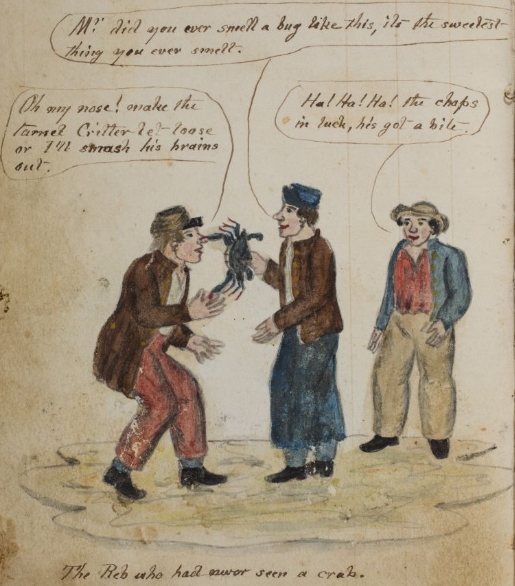
Post3.png


Or even just tiny sketches on the margins of a letter or diary, like in Henry Stark Seage's journal: (Held at The University of Michigan)
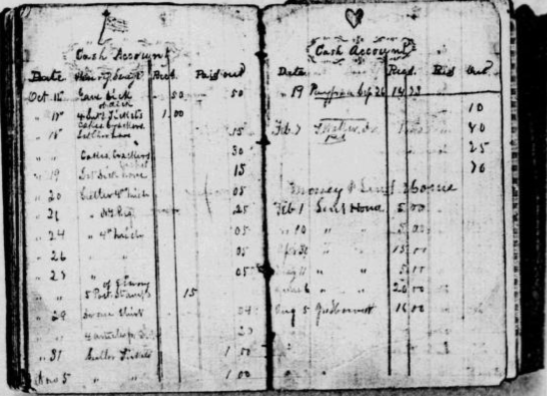
post2.png


We are looking for works produced specifically during the war, by soldiers on either side. This includes individuals held as prisoners of war. Textual works (letters, diaries, and post-war memoirs) by soldiers which discuss visual art are also acceptable. There is no restriction in topic, a Valentine's Day drawing is as valid as a battlefield sketch for our purposes.

Please reach out to this account if you have anything in a personal collection which matches this description that you would be interested in exhibiting, or if you are aware of any especially rare and hard-to-find items our own searching might miss.
 

How about a painting of Libby Prison by Martin B. Leisser? I don't know who Leisser was or when it was painted, but I seem to recall reading that it was the view out of his office window during the war. That could be totally wrong.
 
A brief survey of the Web suggests that the Leisser painting does not qualify to be in the artwork for which you are searching. Leisser was born in 1845 to immigrant parents on the south side of Pittsburgh. He might have been able to enlist during the war but I haven't come across anything that suggests military service. Obviously, he wasn't sitting in an office across the street from Libby Prison during the war. Leisser seems to be known to the Internet so there are a number of hits that pop up when you google his name.


Interestingly, there are a couple of versions of his painting. One is in color. Another is in shades of gray with an inset of the commandant's house in the upper left corner.


If you expand your image search, you find other pictures of a similar nature, including a lithograph:
"Libby Prison, Richmond, Virginia / sketched by W.C. Schwartzburg, Co. A, 24th Wis. Vols. ; lith. by E. Sachse & Co. "


Is the lithograph based on Leisser's work or is it the other way around? There are other lithographs too.


This last lithograph seems to have been the inspiration for the poster:


One thing that might be noticed when comparing the paintings and lithographs of the prison with photographs of the prison is that in photographs the bottom floor of the prison/warehouse is whitewashed. This raises the question of when the whitewashing occurred. There is an image that shows the whitewashing having mostly worn off and its presence/absence is remarked upon in the text describing the image. The poster places the image in the 1870's to 1880's period.


Was the lithograph above from Schwartzburg's sketch made from a post-war view of the prison or was the whitewash just omitted?

Finally, comparison of the Leisser paintings with the maps of the area show they do not agree when it comes to the small buildings on the left side of the pictures.


So the Leisser paintings don't qualify as having been made by a soldier, or a person at the time of the war, or probably even once removed of an image by soldier who was there during the war either as a prisoner or observer in the army of occupation. They do offer some possible interest to someone documenting the history of Libby Prison from it's creation to its eventual existence in Chicago including how it was promoted as a museum and remembered as history by those living in the North.
 
Adolph Metzner was a German immigrant who served as a Captain in the 32nd Indiana Infantry, he drew a lot of camp life, but also some fairly realistic (and to that extent gruesome) combat scenes.

Metzner's work is very unique compared to his contemporaries. Most work I have seen that depicts death, which is already in the minority compared with landscapes, does so bloodlessly and without many visible wounds. The only equivalent that I have found is by Ensign John W. Grattan: (Held at The Naval History and Heritage Command)

post4.jpg


Edgar H. Klemroth provides a much more typical example of how soldiers would depict death in visual art: (Held at The University of Michigan)

post6.jpg
 
That blown up artillery emplacement looks like how we would draw battle scenes in first grade with our Crayola crayons. We had never seen a real battlefield with casualties. I wonder if the artist of the scene above had either.
 

Learn About Us
About CivilWarTalk
Contact the Webmaster
Meet the Staff
Link to CivilWarTalk
Join Our Community
Register
Browse Forums
View Today's Discussions
Search the Forum
Get Help
FAQ
Student Guide
Forum Rules & Etiquette
Copyright / DMCA

     Contact Us CivilwarTalk on Facebook CivilWarTalk on YouTube CivilWarTalk on Twitter RSS Feed

Bringing the American Civil War and More to Life.
© 1999 - , CIVILWARTALK, LLC - Site Version 10.0

SlaveryTalk.com - SecessionTalk.com - CivilWarTalk.com - ReconstructionTalk.com
Back
Top