Calef at Gettysburg, Battery A

eBrowne

Sergeant
Joined
Jan 12, 2016
Anyone know what source this author used for Calef's first-person Gettysburg account? Calef's battery fired the first artillery round at the battle.

 
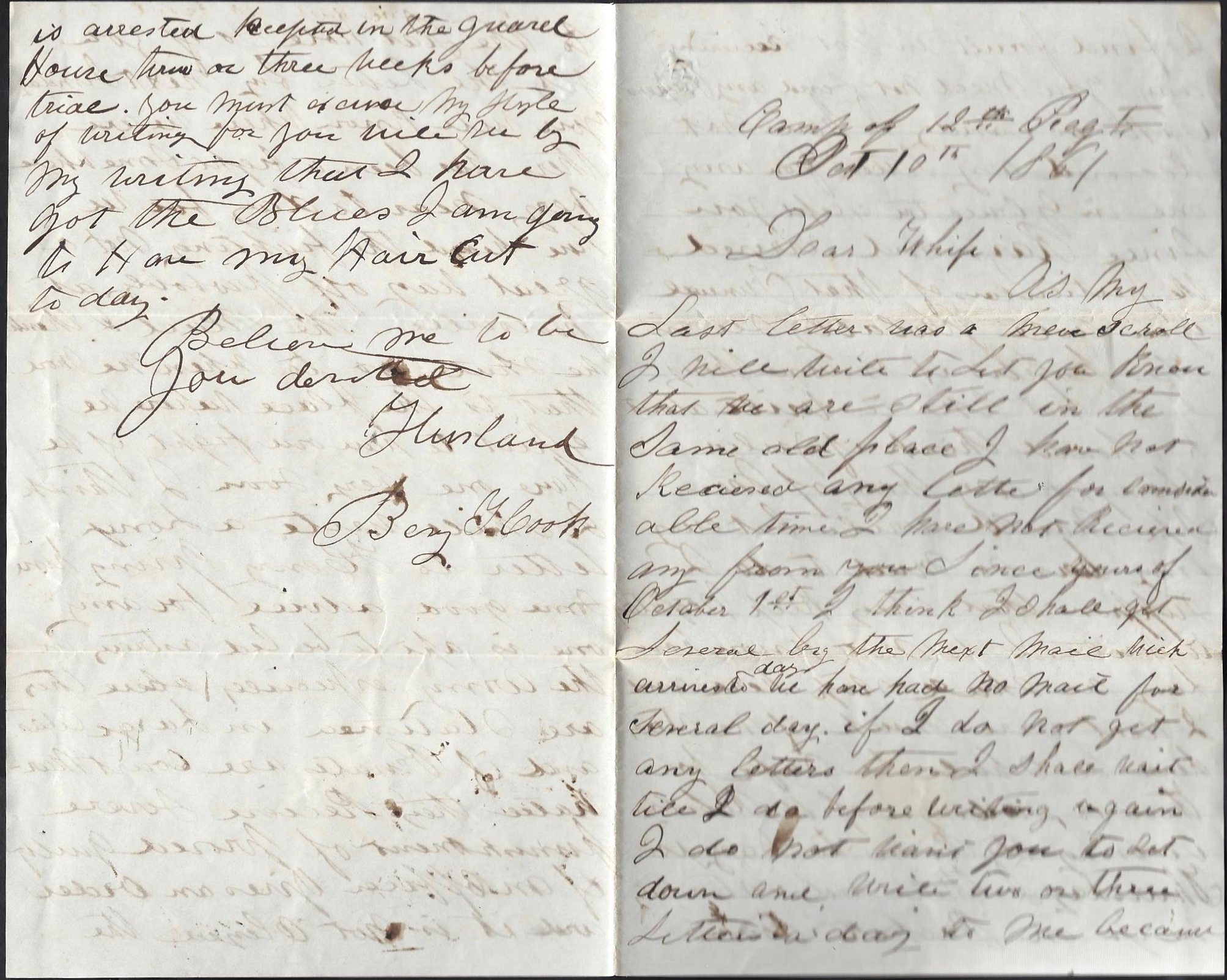
The reason I was "on Calef" was that I was researching the 1909, 1911 and 1912 War Games fought between the Red and Blue Armies. These were massive war games that included both infantry and naval forces. In 1909, the war game was fought on the South Shore of Massachusetts.Commanding the defending Blue Army was Gen. William A. Pew. Later that year, he gave a talk at the Gloucester, Mass Armory about that game. Sitting in a place of Honor were three Civil War veterans from Gloucester, two of whom were famous, Calef and Col. Benjamin Franklin Cook of the 12th Massachusetts Infantry. Cook fought in the bloody Cornfield at Antietam where the 12th took the highest casualty rate of any Union regiment in that battle. At Gettysburg, the 12th Mass was in Baxter's brigade, and the 12th participated in the destruction of Iverson's brigade. It would have been great to have talked to both of those veterans. I believe Cook's Civil War letters are in an archive. Has anyone read them or have transcripts?
 
Here is the archive holding the Cook letters. Seems like there might be one that gives a good description of Antietam, but not so sure aboiut Gettysburg.
 
Anyone know what source this author used for Calef's first-person Gettysburg account? Calef's battery fired the first artillery round at the battle.

Thanks for this eBrown. It's quite an article I've made a favorite. I know the land well and look forward to reading it more carefully with some of the great detail or enough detail allowing me to put/piece it together. If I read it, it was some time ago. Thx!
 
Some reflections based on Calef's description from post #2 above.

Attached map shows estimated positions of Calef's battery. The six guns spent the night of June 30 in the hollow as shown, according to a drawing prepared by K. P. Scott of Company H, 1st Pennsylvania. That location happens to be about 600 yards from the position taken by the right and center sections on the morning of July 1, which is the same distance mentioned by Calef in his official report.

The Scott drawing has the three sections placed as indicated on my map (right under Lt. Roder, center under 1Sgt Newman and left under Sgt Pergel). While posting his right and center sections, Calef writes that he noticed Generals Buford and Reynolds with their staffs on the pike, and received detailed instructions from Buford on how to precisely place his three sections. When Calef went to the left to place Sgt Pergel's section south of Herbst woods, Lt. Roder opened fired with his left piece. Calef rode back to direct his right and center sections for a time.

Later on, Calef was returning to Pergel's section when he encountered Buford again, as he memorably describes. Continuing on, Calef states that just as he arrived at Pergel's section, he saw Archer's brigade advancing from "McPherson woods" ... "not over a thousand yards distant." Those woods we call "Herbst woods," however, as shown on the map, given the distance quoted by Calef, Archer must have just emerged from the woods on Herr's ridge; I figure the time was about 9:55 a.m. At that moment, the Iron Brigade was still on Seminary Ridge, but was soon hastened westward for their epic encounter. In the meantime, we know Archer was slowed up a bit by thick vegetation encountered at Willoughby Run. I'm guessing Pergel's section was withdrawn at about the time Archer reached the Run and thus passed by Meredith's oncoming lead regiments, although Calef's account expresses the sequence somewhat differently.

McPhersonCalefAccount.jpg
 
Looking back at my files, it was perhaps 30 years ago when someone (name not preserved) sent me copies from Col. James K. P. Scott's, The Story of the Battles at Gettysburg, printed by The Telegraph Press, Harrisburg, Pa., 1927. It was this individual who added the descriptions of "Calef's Arty." and "1st cannon shot fired" onto the map, so I cannot say, however I would not put too much stock into the latter location.

Luckily, this source is accessible online: https://archive.org/details/storyofbattlesat00001stp
 
Some reflections based on Calef's description from post #2 above.

Attached map shows estimated positions of Calef's battery. The six guns spent the night of June 30 in the hollow as shown, according to a drawing prepared by K. P. Scott of Company H, 1st Pennsylvania. That location happens to be about 600 yards from the position taken by the right and center sections on the morning of July 1, which is the same distance mentioned by Calef in his official report.

The Scott drawing has the three sections placed as indicated on my map (right under Lt. Roder, center under 1Sgt Newman and left under Sgt Pergel). While posting his right and center sections, Calef writes that he noticed Generals Buford and Reynolds with their staffs on the pike, and received detailed instructions from Buford on how to precisely place his three sections. When Calef went to the left to place Sgt Pergel's section south of Herbst woods, Lt. Roder opened fired with his left piece. Calef rode back to direct his right and center sections for a time.

Later on, Calef was returning to Pergel's section when he encountered Buford again, as he memorably describes. Continuing on, Calef states that just as he arrived at Pergel's section, he saw Archer's brigade advancing from "McPherson woods" ... "not over a thousand yards distant." Those woods we call "Herbst woods," however, as shown on the map, given the distance quoted by Calef, Archer must have just emerged from the woods on Herr's ridge; I figure the time was about 9:55 a.m. At that moment, the Iron Brigade was still on Seminary Ridge, but was soon hastened westward for their epic encounter. In the meantime, we know Archer was slowed up a bit by thick vegetation encountered at Willoughby Run. I'm guessing Pergel's section was withdrawn at about the time Archer reached the Run and thus passed by Meredith's oncoming lead regiments, although Calef's account expresses the sequence somewhat differently.

View attachment 531140
Excellent stuff. I would add a few isolated points. In both the article and his report Calef points out that Gamble told Calef to select his own initial position - something Henry Hunt would have strongly favored. In both Calef then states that Buford directed him on where to post his three sections - something Hunt would have objected to. Regarding the left section, Calef in his report makes a gunner's observation - that the "woods occupied by the enemy extend[ed] up within 200 yards of the right of the section", prompting Calef to withdraw the section rather than waiting for the enemy to reach canister range. His decision was a good application of artillery doctrine. One thing missing from his report is amount and type of ordnance expended. That was one of the items Hunt wanted battery commanders subject to his control to include in their reports. It seems to have not been the routine practice in the horse batteries. Calef does state that after withdrawing his battery he had the chests "replenished".
 

Learn About Us
About CivilWarTalk
Contact the Webmaster
Meet the Staff
Link to CivilWarTalk
Join Our Community
Register
Browse Forums
View Today's Discussions
Search the Forum
Get Help
FAQ
Student Guide
Forum Rules & Etiquette
Copyright / DMCA

     Contact Us CivilwarTalk on Facebook CivilWarTalk on YouTube CivilWarTalk on Twitter RSS Feed

Bringing the American Civil War and More to Life.
© 1999 - , CIVILWARTALK, LLC - Site Version 10.0

SlaveryTalk.com - SecessionTalk.com - CivilWarTalk.com - ReconstructionTalk.com
Back
Top