
Hi everyone,
General(ly) insignia is often not so easy to find. See what I did there the amount of reproduction pieces are plentiful and the amount of fakes are downright overwhelming. Although it's not the most studied by any means these items give great insight to how pieces were made and materials available at the time. You see firsthand the talent and craftsmanship from the makers hand done work. Variations are seemingly endless but more importantly the designs, colors and ranks give us important insight to the wearers responsibilities on and off the field.
You can gleam a sense of who they were and why they may have been chosen to wear that insignia plus who was flashy buying 5 borders or frugal at 1 border. Although not regulation, the officer was allowed to customize his insignia with false embroidered or embroidered numbers and letters designating his regiment or home state.
There are by estimates, fewer than 600 union generals on record both brigadier and major. I don't recall if they include breveted men. The brigadier general was in command of the brigade which when broken down was 4-6 regiments and ranged at full strength around 2500-5000 men. At times he could command a division comprised of 3-4 brigades. Averages put the strength at 4,000-12,000 men.
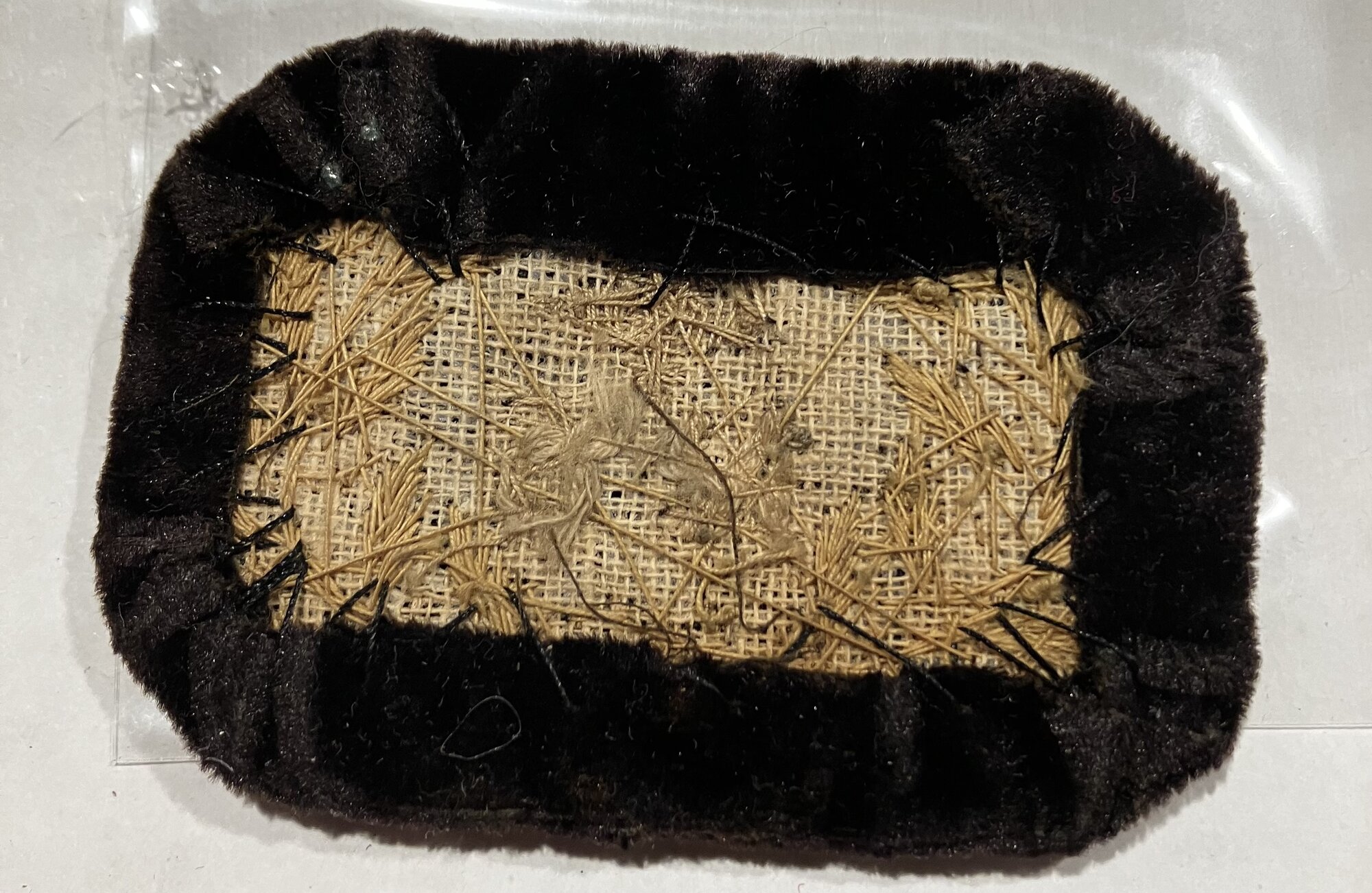
Now for the insignia, I can go on and on boring you to death and probably do at times so here is the breakdown fast and easy. It's mid to late war and still was used post war as insignia had a major change in 1872. We know this from the lack of stiffener and reduced size made to fit on caps with smaller crowns. It has the correct velvet face and gothic style US surrounded by a gold wreath that has the added tiny detail of silver stems when you look past the oxidation. It's cut into a rectangular sheet unlike the oval shapes you commonly see. The one thing that sets it apart, the one thing that lets us know that this was for no ordinary soldier is the star in the middle! Notice how much it sticks up and has height, that's what you have to look for. Indian war pieces have less height to them and appear flatter.
There you have it, a super rare piece for sharing and my very first piece belonging to such a high rank.

General(ly) insignia is often not so easy to find. See what I did there
the amount of reproduction pieces are plentiful and the amount of fakes are downright overwhelming. Although it's not the most studied by any means these items give great insight to how pieces were made and materials available at the time. You see firsthand the talent and craftsmanship from the makers hand done work. Variations are seemingly endless but more importantly the designs, colors and ranks give us important insight to the wearers responsibilities on and off the field. You can gleam a sense of who they were and why they may have been chosen to wear that insignia plus who was flashy buying 5 borders or frugal at 1 border. Although not regulation, the officer was allowed to customize his insignia with false embroidered or embroidered numbers and letters designating his regiment or home state.
There are by estimates, fewer than 600 union generals on record both brigadier and major. I don't recall if they include breveted men. The brigadier general was in command of the brigade which when broken down was 4-6 regiments and ranged at full strength around 2500-5000 men. At times he could command a division comprised of 3-4 brigades. Averages put the strength at 4,000-12,000 men.
Now for the insignia, I can go on and on boring you to death and probably do at times so here is the breakdown fast and easy. It's mid to late war and still was used post war as insignia had a major change in 1872. We know this from the lack of stiffener and reduced size made to fit on caps with smaller crowns. It has the correct velvet face and gothic style US surrounded by a gold wreath that has the added tiny detail of silver stems when you look past the oxidation. It's cut into a rectangular sheet unlike the oval shapes you commonly see. The one thing that sets it apart, the one thing that lets us know that this was for no ordinary soldier is the star in the middle! Notice how much it sticks up and has height, that's what you have to look for. Indian war pieces have less height to them and appear flatter.
There you have it, a super rare piece for sharing and my very first piece belonging to such a high rank.

 Forum Host


 Bringing the