Brig. Gen. James Lane

Billy1977

Sergeant
Joined
Mar 18, 2016
Location
Flippin, Arkansas (near Yellville)
Hello everybody, I was wondering if anyone has ever seen any photos of Brig. Gen. James (Jim) Lane in an actual Army uniform? This is the fellow I'm talking about, from Kansas.
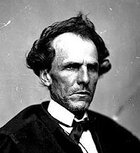
Civil War; Union.commanders- Brig.Gen.Lane,James.Henry........jpg


Because I've looked and looked and all I can find are pictures of him in civilian clothes. This is the closest I could find to what I'm looking for
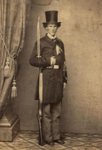
Civil War; Union.commanders- Brig.Gen.Lane,James.Henry.............jpg
and even here he's in civvies, just holding a firearm. Has anyone seen Brig. Gen. Lane in an actual uniform? I can't imagine a commissioned brigadier general would be allowed to walk around all the time in civilian clothes, right? Even back in that era. There must exist at least one picture of him in his uniform. If anyone has one is there any way you could post it here? Many many thanks in advance. I'm trying to put together pictures of all the generals of the Civil War and have gotten to the names that start with L and Jim Lane is proving a problem to find. Thanks again.
 
Hello everybody, I was wondering if anyone has ever seen any photos of Brig. Gen. James (Jim) Lane in an actual Army uniform? This is the fellow I'm talking about, from Kansas.
View attachment 166430


Because I've looked and looked and all I can find are pictures of him in civilian clothes. This is the closest I could find to what I'm looking for
View attachment 166431
and even here he's in civvies, just holding a firearm. Has anyone seen Brig. Gen. Lane in an actual uniform? I can't imagine a commissioned brigadier general would be allowed to walk around all the time in civilian clothes, right? Even back in that era. There must exist at least one picture of him in his uniform. If anyone has one is there any way you could post it here? Many many thanks in advance. I'm trying to put together pictures of all the generals of the Civil War and have gotten to the names that start with L and Jim Lane is proving a problem to find. Thanks again.
I can't help. In fact, you've posted the only picture I've ever seen of Lane with his hair more or less combed--let alone wearing a uniform! But there are several of him looking somewhat Senatorial. I'm sure you've seen those.
 
I can't help. In fact, you've posted the only picture I've ever seen of Lane with his hair more or less combed--let alone wearing a uniform! But there are several of him looking somewhat Senatorial. I'm sure you've seen those.

Ditto; as many period photos as I've looked at over the past half-century I don't remember seeing Lane look any more martial than in these, his most-often-reproduced likenesses.
 
There were many generals in the Trans-Mississippi, especially in the early part of the war, who eschewed uniforms (or did not have access or the chance to get them). I know that Ben McCulloch preferred a velvet civilian suit to a uniform and there were many officers, as James N. has previously discussed here, who didn't have uniforms when they were photographed and had to wear a borrowed coat. I think in this case it more due to Lane's personality than the lack of available uniforms (other Kansas volunteers-turned-officers, such as James Blunt, had no trouble getting photographed in their uniforms).
 
Last edited:
Lane's rank as brigadier general was not entirely official. He received the offer for the commission, primarily to recruit soldiers in Kansas. He exaggerated the assignment and placed himself in command.

The catch was that he was a sitting U.S. senator, and not allowed to hold his seat and a military assignment at the same time. Observers noted that he often waved the commission paper around in speeches as evidence of his authority, but never showed anyone the document. Later, when the governor of Kansas, Charles Robinson, attempted to appoint a senator to fill Lane's apparently vacant seat, Lane quickly denied that he had resigned. It also seems he admitted that he never formally signed and accepted the commission. By this time, his expedition in Missouri was over. So he rushed back to Washington and saved his seat.

Thus, there probably are no photos of him in uniform during the Civil War.
 
Thanks everybody! Wow, I only posted that earlier today and so much help already! I was wondering why I never saw him in a uniform. So would it be more correct to refer to him as not ever having actually been a brigadier general at all comparable in rank to say Brig. Gen. Frederick Lander or Brig. Gen. Joseph Knipe etc. if one was listing generals of the Civil War and trying to get pictures of them (and if said person had O.C.D. for example... like me for example)? A better question, did he ever actually operate as a brigadier general during the war in the sense of directing a brigade or a division or division equivalent? Because I'm getting the impression he was more of a loudmouth rather than actually operating as a B.G. And even staff officers who were B.G.s and B.G.s in the Ordnance Dept. and Medical Dept. etc. I'm listing with their separate departments and having the "commanders" section of my Civil War Visual Reference File dedicated to combat commanders anyway so if he didn't really operate as a genuine brigadier general in the field as a field commander then I'm not going to list him with the others.

Thanks again everybody!!
 
Lane did command troops in the field. He led the "Kansas Brigade," also known as the "Lane Brigade," into Missouri in the late summer of 1861. Whether he wore a uniform during that expedition, I don't know.

The brigade did not participate in any major fights relatively minor, but it did engage in some skirmishes. Its most famous incident involved the destruction of the town of Osceola.

Lane took command by his force of personality. He did have legitimate military experience, having served as an officer in an Indiana regiment during the Mexican War, which saw combat at the battle of Buena Vista. (By all accounts I have seen, he and the regiment performed very well in combat there.). When he arrived in Kansas in 1855, he sought political advancement, but eagerly fell into a military leadership role as well during the skirmishes of "Bleeding Kansas."

Thus, at the outbreak of the Civil War, he was one of the relatively few people in Kansas with legitimate command experience and the political connections to raise local regiments. Most importantly, he really wanted to be involved in both military and political matters. He was particularly frustrated with the delays other Union officers asked for, and used his influence and connections to put himself in the field in front of "his" brigade.

Overall, Lane did lead troops in the field. But he was the kind of quasi-official military commander found outside of the closely managed war effort in the east. In short, he managed to maneuver between politics and combat because he was part of the Kansas-Missouri border war and the Trans-Mississippi theater.
 
I think Lane was a total nut job...a whacko. He was predatory against his neighbors, too. Of that there can be no doubt.

Lane wasn't crazy. He may have been bipolar, which could explain his bouts of extreme energy and drive, followed by episodes of depression.

His mannerisms helped generate his wild image (which he also carefully crafted to incite fear in his enemies), but his words and deeds followed a surprisingly logical progression. He was accused of being a fanatic, which he was to some degree. Yet, this was in a time of civil war, where several states seceded due to a fanatical defense of slavery. Before that, Lane had watched an "army" of Missourians march to the outskirts of Lawrence because of differences over slavery. It was a time of extremism.

He advocated—and carried out—a hard war before Sherman rose to fame. And, like Sherman, Lane proved very forgiving to southerners and formersecessionists who swore loyalty to the Union.

Too many people have written off Lane as a lunatic or demagogue. He deserves much of that reputation. But such casual dismissal fails to understand his actions within their context.
 
Jim Lane? The former Pro-Slavery Democrat, Jim Lane, the guy who embraced the Republican Party in Kansas because he shot his carrer to hell in Indiana Jim Lane? The Jim Lane that suddenly was for abolition? That Jim Lane?

Yeah he was about 51 cards short of a full deck.

A common oversimplification of his career. Lane arrived in Kansas as a pro-Kansas-Nebraska Act Democrat. The vote had ended his political career in Indiana, just as voting for the act had tanked the careers of several other northern Democratic politicians. The fact that Stephen Douglas had made the Kansas-Nebraska bill a test of party loyalty placed young Democrat politicians like Lane—who was in his first term as a congressman—in a particularly difficult position. Vote for the bill and face a frustrated constituency; vote against it and lose the support and good graces of the party leadership (and the patronage that goes with it). He voted for it, like a good party man, and faced a fiercer backlash than expected—it would cost him at the re-election ballot box.

When Lane arrived in Kansas to revive his political fortunes, he was still a staunch Democrat. And he was as proslavery as Stephen Douglas was, which is to say professedly neutral—something northern Democrats meekly tried to maintain in order to preserve a national party integrity.

Lane's exit from the Democratic Party was neither quick nor flippant. Events in Kansas, and in particularly in Washington D.C. when he tried to get party backing for the Topeka Constitution, turned him against the Democrats. Even then, Lane did not officially join the Republican Party for two or three years.

Finally, he did not embrace abolitionism until several months after the Civil War had begun—six years after he had moved to Kansas. Like many other racial conservatives in the north, he became more radicalized against slavery in response to secession and the war.
 
A common oversimplification of his career. Lane arrived in Kansas as a pro-Kansas-Nebraska Act Democrat. The vote had ended his political career in Indiana, just as voting for the act had tanked the careers of several other northern Democratic politicians. The fact that Stephen Douglas had made the Kansas-Nebraska bill a test of party loyalty placed young Democrat politicians like Lane—who was in his first term as a congressman—in a particularly difficult position. Vote for the bill and face a frustrated constituency; vote against it and lose the support and good graces of the party leadership (and the patronage that goes with it). He voted for it, like a good party man, and faced a fiercer backlash than expected—it would cost him at the re-election ballot box.

When Lane arrived in Kansas to revive his political fortunes, he was still a staunch Democrat. And he was as proslavery as Stephen Douglas was, which is to say professedly neutral—something northern Democrats meekly tried to maintain in order to preserve a national party integrity.

Lane's exit from the Democratic Party was neither quick nor flippant. Events in Kansas, and in particularly in Washington D.C. when he tried to get party backing for the Topeka Constitution, turned him against the Democrats. Even then, Lane did not officially join the Republican Party for two or three years.

Finally, he did not embrace abolitionism until several months after the Civil War had begun—six years after he had moved to Kansas. Like many other racial conservatives in the north, he became more radicalized against slavery in response to secession and the war.

Yeah I don't think it can be over simplifed , Lane was an opportunist in politics, war, and life in general. His alluded to "field command" was mainly looting forays. He did distingush himself by scatting out of Lawrence in his drawers, to save is sorry butt.
He fuether distinguished himself post-war by suckin a pistol barrel till it went bang, .....but alas too little ....too late.
 
I think his cowardice at Lawrence is what finished him in every sense of the word. After that he pretty much just took up space. People do not forget such things or actions. He did not do much the rest of the war. Lane's actions had as much to do with Order No. 11 as the actions of Confederate guerrillas. During Price's Raid he was a volunteer ADC to General Curtis. Lane ended up as his kind do, and if he hadn't killed himself in such a dramatic fashion, shooting himself in the head as he jumped from a carriage. Lane may have ended up in prison for financial irregularities. Lane, Jennison and Ewing all had bad ends, and each had a hand in their own demise.
 
Yeah I don't think it can be over simplifed , Lane was an opportunist in politics, war, and life in general. His alluded to "field command" was mainly looting forays. He did distingush himself by scatting out of Lawrence in his drawers, to save is sorry butt.
He fuether distinguished himself post-war by suckin a pistol barrel till it went bang, .....but alas too little ....too late.

I'm not sure why people criticize Lane for fleeing to a cornfield during the Lawrence massacre. Quantrill's men rode into town in a surprise attack on a civilian population and murdered virtually every male over the age of 16 they could find. Lane, like most other men, had only minutes to react to several heavily armed men riding onto their property specifically to kill them.

Are you saying you would have stood your ground and fought them off singlehandedly?
 
Last edited:
I am pretty sure most of the citizens, including the loyalists, who got dispossessed and burned out during the execution of Order Number 11 would disagree.

Similarly, people in Georgia hated Sherman. That doesn't change the fact than in victory, both men were quick to put down the sword and welcome former secessionists into the Union.
 

Learn About Us
About CivilWarTalk
Contact the Webmaster
Meet the Staff
Link to CivilWarTalk
Join Our Community
Register
Browse Forums
View Today's Discussions
Search the Forum
Get Help
FAQ
Student Guide
Forum Rules & Etiquette
Copyright / DMCA

     Contact Us CivilwarTalk on Facebook CivilWarTalk on YouTube CivilWarTalk on Twitter RSS Feed

Bringing the American Civil War and More to Life.
© 1999 - , CIVILWARTALK, LLC - Site Version 10.0

SlaveryTalk.com - SecessionTalk.com - CivilWarTalk.com - ReconstructionTalk.com
Back
Top