
East Tennessee Roots
Major
- Joined
- Dec 31, 2010
- Location
- Kingsport, Tennessee
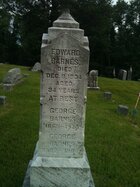
looking for John E Murrays DAD, John was born 1857 in.tower city P.A..His dad was born in England His mom Mom PA. looking for George A Barnes DAD. George was born 1864 Schuylkill P.A So were both parents. I have all info for them and there kids but cant get to either dads. AHHHHHHHHHH John was married to Sarah Banes and george to rose haslem (East tenn found roses granda pa for me yeeeeeeeee haaaaaaaa)
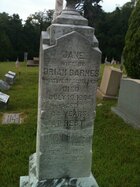
Only soldier I found with BARNES surname from Schuylkill County ! Note he was discharged on Jan 27, 1863. Son George was born in 1864.
Uriah Barnes
Residence Schuylkill County PA; 23 years old.
Enlisted on 9/5/1861 at Pottsville, PA as a Private.
On 9/23/1861 he mustered into "F" Co. PA 96th Infantry
He was discharged for disability on 1/27/1863
- History of Pennsylvania Volunteers, 1861-1865
- PA State Archives: Civil War Veterans' Card File 1861-1865
...................................................................
PENNSYLVANIA
96TH INFATRY
(Three Years)
Ninety-sixth Infantry.-Cols., Henry L. Cake, William H.
Lessig; Lieut.-Cols., Jacob G. Frick, Peter A. Filbert,
William H. Lessig, Majs., Lewis J. Martin, William H. Lessig,
Levi Huber. The 96th, whose nucleus was the National Light
Infantry of Pottsville, one of the original five companies,
was organized at Pottsville, and most of its members were
Schuylkill county men. Here it was mustered into the U. S.
service on Sept. 23-30, 1861, for a three years' term, and on
Nov. 8, proceeded to Washington; Slocum's brigade, to which it
was assigned, became the 2nd brigade, 1st division, 6th corps.
Winter quarters were made at Four mile run on the Loudoun &
Hampshire railroad, where the regiment remained until March
10, 1862, when it joined in the Manassas campaign and
subsequently in the campaign on the Peninsula. Engaged at
West Point in May, it was present during the Seven Days'
battles; was then ordered to Alexandria and from there to Bull
Run. After that battle the regiment was next engaged at
Crampton's gap, where it suffered severely; was active at
Antietam; fought at Fredericksburg in December, shared in the
discomforts of the "Mud March" and went into winter quarters
near White Oak Church until Feb. 1, when all but two companies
were posted at Windmill point on fatigue duty. On March 1,
the 86th rejoined the brigade, and took part in the
Chancellorsville campaign, being engaged at Salem Church. It
fought bravely at Gettysburg; joined in the pursuit which
followed, was active at Rappahannock Station in November, took
part in the Mine Run campaign, and made its winter quarters
near Rappahannock Station. Through the eventful month of May,
1864, the regiment was almost constantly engaged from the
battle of the Wilderness to Cold Harbor. It moved with the
Army of the Potomac to Petersburg, but on July 10, was sent to
the relief of Washington and continued with the Army of the
Shenandoah. On Sept. 22, the original members not reenlisted
were ordered home and the remaining battalion was consolidated
with the 95th Pa. infantry in October. It was mustered out
with the 95th at Washington on July 17, 1865.
Source: The Union Army, vol. 1
*******************************************************************************
Antietam after battle report:
Report of Col. Henry L. Cake, Ninety-sixth Pennsylvania
Infantry, of the battles of Crampton's Pass and Antietam.
HDQRS. NINETY-SIXTH REGIMENT PENNSYLVANIA VOLS.,
Camp near Williamsport, Md., September 23, 1862.
LIEUT.: I have the honor to submit the following report of the
engagements of the 14th and 17th instant so far as participated in by this
regiment:
After marching through Jefferson on Sunday morning, I was ordered out
upon the road to Burkittsville, the regiment having been indicated as the
advance guard. When within 2 miles of the latter village, the cavalry
advance came in and reported a skirmish with a superior force of the
enemy's cavalry. Companies A and F were deployed at once as skirmishers,
and moved forward, the balance of the regiment steadily moving on within
easy supporting distance. The enemy retired to the South Mountain through
Burkittsville, our two companies of skirmishers penetrating to within 1,000
yards of the base, the balance of the regiment halting at the entrance of the
village a little after 1 o'clock p.m. As the skirmishers entered the village
they drew the fire of the artillery posted on the heights, which was kept up
during the day, the shot being divided between the skirmishers and the main
body of the Ninety-sixth, drawn up in line of the Knoxville road, the enemy
revealing the position of at least five of their pieces.
At about 4 o'clock I was ordered to draw in the skirmishers and rejoin the
brigade with the regiment. Having posted a picket down the Knoxville road,
this required some time, and the brigade had commenced to move, as had
also the other two brigades of the division. Receiving an order from
Maj.-Gen. Slocum to move on in the rear of the New Jersey brigade, I
did so, forming where they formed and moving on the field to their right.
At about 5.30 o'clock the Ninety-sixth had marched to the line of
skirmishers, and I was ordered by Col. Bartlett, commanding the brigade,
to take my position on the extreme right. The base of the mountain was now
about 1,000 yards distant. At that point the road parallel to the mountain. On
one or the other side of this road a substantial stone fence furnished good
cover for the enemy's infantry, to say nothing of the woods on the side of
the mountain. Brisk musketry firing was in progress on our left, but the
good cover in possession of the enemy and the distance at which we stood
rendered it quite certain that we could gain nothing at a stand-off right,
while the artillery posted in the mountain was punishing us severely.
It was evident that nothing but a rush forward would win. The order to
charge came at last, and with a shout the entire line started. The fields
through which the Ninety-sixth charged presented many obstacles, and in
order not to meet the enemy with broken lines. I twice halted momentarily,
with a stone fence for a cover, for a great portion of my regiment to form.
The last of the series of fields through which we had to charge was meadow
and standing corn. As we emerged from the corn the enemy met us with a
murderous fire.
We were within 20 paces of the road, at the base of the mountain, the
stronghold of the enemy. It was here we met our great loss. Shocked, but
not repulsed, the men bounded forward, determined to end it with the
bayonet. The road was gained in a twinkling, the enemy leaving for the
mountain. Those of the enemy who were not hours, and who seemed too
much surprised to get away, begged lustily for mercy. I had seen Lieut.
John Dougherty, one of my best officers, fall, but without waiting to see
who were down or who were up, I hastily formed my line, Maj. Meginnis,
of the Eighteenth New York, promising to form on my left and follow, and
dashed on up the hill, keeping the line formed as well as possible, to guard
against a probable stand of the enemy at the crest of the hill. I let the men
advance nearly as fast as the as they could and wanted to.
It was a most exhausting charge. By the time we had ascended half way the
cannon had ceased firing on our left, and the enemy seldom replied to our
fire with their muskets. We made captures at every step. After passing the
crest of the mountain a lieutenant of the Fifteenth North Carolina delivered
himself up, I sent during the charge, 42 prisoners to the rear, including the
captain of Company G, Sixteenth Georgia, wounded, and other officers and
men most of them unhurt. Sergeant Anderson, of Company K, shot the
color-bearer of the Sixteenth Georgia, but did not stop to secure the colors,
which were secured by some of our forces afterward.
After advancing beyond the crest of the hill, I formed my line for the
purpose of resting the men, who were much exhausted by the march of the
day and the furious dash up the mountain. It is with much gratification that
I can report my companies all present in line, fully and fairly represented.
Col. Seaver, of the Sixteenth, as also the officers commanding portions
of the Eighteenth and Thirty-second New York, joined their lines to the
Ninety-sixth, and reported to me for orders. Having thrown our skirmishers
to the right and front. I rested until the reception of orders to return to
the foot of the mountain and go into camp, which order was promptly obeyed,
the brigade going into camp on the western side of the pass.
During the charge, and just at the moment when a splendid victory was
opened, Maj. Lewis J. Martin was mortally wounded by a musket-ball in the
head, and died while being carried off the field. He was an accomplished
and brave soldier; an unassuming and perfect gentleman, beloved by all the
regiment, and regretted beyond expression. One of the first to volunteer in
the this war, he has at least laid down his life while gallantly and bravely
fighting for his country--the only son of his mother, and she a widow. A
minute before, First Lieut. John Dougherty, commanding Company F, was shot
through the breast, at my side, while bravely leading his company to the final
struggle at the road. Sergeant Casey, seizing his sword as he fell,
valiantly raised it over his head and dashed forward at the head of his
company, which never faltered. There was no better or braver soldier than
Lieut. John Dougherty. The loss of these two officers falls heavily upon the
regiment. During the charge I had 2 color-bearers killed and 3 wounded.
Casualties: 20 killed, 71 wounded; total, 91.
The conduct of the regiment was excellent, my orders under fire being
obeyed promptly and with great cheerfulness. Capt. Lessing, Company C,
deserves especial mention for brave conduct. The prospect of a fight in the
wood and among the rocks on the side of the mountain stimulated him to
great exertions to gain that point, and he cheered on his fine company most
bravely. Capt. Hay, Company A, also preserved his excellent reputation
as a fighting officer, holding his company well in hand, always cool and in
line. His services were invaluable in the fight, as they always are on the
march, on picket, or in command of skirmishers. Capt. Budd, Company K,
also fought gallantly, leading his men bravely in the fight, capturing
prisoners with his own hands. Capt. Haas, Company G, also fought with
coolness and courage, leading his men into the fire with promptness. Capt.
Filbert, Boyle, and Royer, of B,D, and H, also did their duty. I must also
make special mention of Lieut. George G. Boyer, acting regimental
adjutant, who bravely encouraged the men throughout the lines up to the
time the road was gained. Upon the fall of Maj. Martin, Lieut. Boyer
was charged with his removal, hoping that prompt attention might save his
valuable life.
The conduct of Lieut. Byrnes, commanding Company I, and Lieut.
Oberrender, commanding Company E, was most praiseworthy. at the head
of their companies their courageous example was most conspicuous. Upon
the fall of Lieut. John Dougherty, Sergeant Casey assumed command of
Company F, and conducted it through the balance of the day with the
coolness of a veteran officer. Lieut. Sailor, Company A; Lieut.
Hannum, Company D; Lieut. Russell, Company C, and Lieut.
Huber, Company B, rendered marked services on the field. Lieut.
Russell, Company C, dispatched to bring Company B forward to the
regimental line on the side of the mountain, displayed promptness, courage,
and zeal in the discharge of his duty. Sergt. Maj. John Harlan deserves
especial mention for the great coolness he displayed in the fight. In forming
the lines to renew the charge after the enemy had been routed at the foot of
the hill his services were invaluable. It is truly gratifying to be able to
make this truthful statement. Companies A,F,I, C,K, and G were the first in
the road, Companies C,A, and K first and simultaneously. In taking the road we
lost 2 color-bearers killed and 3 wounded.
The names of those killed with the colors in their hands are Solomon
M. Minzi, Company C, color-bearer, and Charles B. Zeigler, Company H.
The wounded are Thomas Oliver, Company C, color-bearer; Sergeant
Johnson,Company H, and William Ortner, Company H.
I regret being compelled to report that our surgeons invariably leave upon the
bursting of the first shell near the regiment. This has always heretofore
deprived us of their services on the field, though I believe it is custom to
report for duty at the hospitals after engagements. This regiment would be
quite as well off if its surgeons were left at hospitals, Dr. Nugent having
been promoted to the One hundred and twenty-sixth.
Very respectfully, lieutenant, your obedient servant,
H.L. CAKE,
Col., Commanding.
Lieut. R.P. WILSON,
Acting Assistant Adjutant-Gen.
On the 17th the regiment moved from camp at daylight and crossed the
Antietam at 11 o'clock. With the balance of the brigade, it was sent to the
front to support batteries. While lying in position, a round shot struck in
Company G, killing Private Frank Treon and wounding Private McCoy
Sergent. I have, happily, no other casualties to record.
H.L.C.,
Col., Commanding.
Source: Official Records: Series I. Vol. 19. Part I, Reports. Serial No. 27
*******************************************************************************
Chancellorsville, VA after battle report:
No. 220.
Report of Maj. William H. Lessig, Ninety-sixth Pennsylvania Infantry.
HDQRS. 96TH Regt. PENNSYLVANIA VOLS., May 9, 1863.
CAPT.: I have the honor to make the following report of the part
which this regiment took in the recent engagement of May 3:
About 6.30 o'clock in the morning, I was ordered by Brig.-Gen.
Bartlett to take possession of the railroad, which I accordingly did,
under a heavy fire of musketry and artillery, and, after holding it for
one hour, I was ordered to retire, which I did without loss in doing so.
Our loss in taking the railroad and holding it was 1 officer wounded, 5
enlisted men killed, and 17 enlisted men wounded.
The part which the regiment took in the engagement of Salem Church
in the afternoon was as follows:
At 5 o'clock I was ordered to push though the woods on the left of the
One hundred and twenty-first New York Volunteers. As we entered
the woods we came on our skirmishers, who fell back to our rear. I
soon discovered the enemy's line within 100 yards, and opened a heavy
fire on it, and kept pressing on until near the edge of the woods, when
the line of the right broke and fell back, causing our whole line to retire
in disorder. The men were entirely though out and without spirit, having
been nearly sixteen hours under arms, the grater portion under a
burning sun.
The officers and men behaved well, with some few exceptions.
Actg. Adjt. John T. Annum and Sergt. Maj. E. J. Phillips afforded
me valuable assistance, and behaved with great gallantry.
I am sorry to say that the conduct of Second Lieut. Thomas H.
Reed (Company E) was cowardly and disgraceful, and I therefore
recommend that he be dishonorably discharged the service of the
United States. The following is a list of casualties:*
Officers and men. Killed. Wounded. Missing. Total.
Officers.................................... 1 2 .. 3
Enlisted men................................ 15 50 11 76
Total ................................. 16 52 11 79
I am, very respectfully, your obedient servant,
W. H. LESSIG,
Maj., Cmdg.
Capt. R. P. WILSON, Assistant Adjutant-Gen.
Source: Official Records Series I. Vol. 25. Part I, Reports. Serial No. 39
***********************************************************************************
Report of Capt. Francis J. Randall, commanding Ninety-fifth and
Ninety-sixth Pennsylvania Infantry, of operations September 19-27.
HDQRS. NINETY-FIFTH REGT. PENNSYLVANIA VOLS.,
Camp near Harrisonburg, Va., September 27, 1864.
SIR: In obedience to orders from headquarters Second Brigade of the
26th instant, I have the honor to report the movement of this command
at the late engagements at the Opequon and Fisher's Hill:
Conjointly with the Ninety-sixth Regt. Pennsylvania Volunteers, we
were, on the movement out to the Opequon, detailed as guard for
the corps wagon train, and consequently took no active part in the
operations at that place and in front of Winchester. On the morning of
the 21st of September we rejoined the brigade near Strasburg, and at
noon proceeded doubt to the front, throwing out skirmishers and coming
upon the enemy posted upon rising ground. We halted and remained in
line of battle until midnight, when we took up the line of march and
moved out to the right. Halted in the woods and constructed
breast-works, the two right companies being detailed for picket;
continuous skirmishing until the afternoon, when we moved forward and
took part in the charge upon the enemy's position on Fisher's Hill,
driving them in confusion. Our own loss, two men wounded. We
captured seven prisoners concealed in the bushes. Followed upon the
enemy's rear closely, marching all night, and at daylight halted at
Woodstock, whence, after rations had been issued, we resumed the
march, being again detailed as corps wagon guard jointly with the One
hundred and twenty-first New York Volunteers. Halted beyond Edenburg
and encamped for the night with the brigade. at 6 a. m. of the 24th
again moved forward, and after a very long and rapid march came upon
the enemy's rear guard a little distance beyond New Market. We were
immediately deployed as skirmisher to connect with the Third Division;
advanced out on the left of and through the town, skirmishing with the
enemy, who kept falling back until dark, when we established the line
for the night about-miles in advance of the town. During the night the
enemy fell back, and early the next morning we were relieved by the
Fourth New Jersey Volunteers, and, rejoining the brigade, we resumed
the march (with battalion Ninety-sixth Pennsylvania Volunteers
temporarily attached to the command) and proceeded to Harrisonburg,
where we encamped for the night, and are now remaining.
I append a list of casualties,* and am, sir, very respectfully, your
obedient servant,
F. J. RANDALL,
Capt., Comdg. 95th Regt. Penn. Vols., and Batt. 96th Penn. Vols.
Capt. W. P. ROOME,
Assistant Adjutant-Gen.
Source: Official Records
CHAP. LV.] THE SHENANDOAH VALLEY CAMPAIGN. PAGE 182-90



 Forum Host


 Bringing the