Seeing how the thread on that P-53 evolved i thought you guys might appreciate this too.
Background here is that i work on these guns. Due legislation where i live the old originals are often kept running, and that´s where i come in. When i do work i always try and do so with an imperative respect for the guns integrity.
..n see on occasion, as i´ve touched on previously, i see the occasional "special" gun in the door.

So. This new member shows up at the club and this while good friend Stefan is there airing his old NMA´s (yeah, he´s got a few). So the guy bursts out that "Hey! I´ve got one of them there at home, but it´s a replica that´s no firing!"
So Stefan tells him to call me up n show it to me, which he does and we agree on him showing at the shop the same day. In the door he comes. With this.
Yep.
Took all of like 10 secs to realize this is an old original, and of course there´s a story to that.
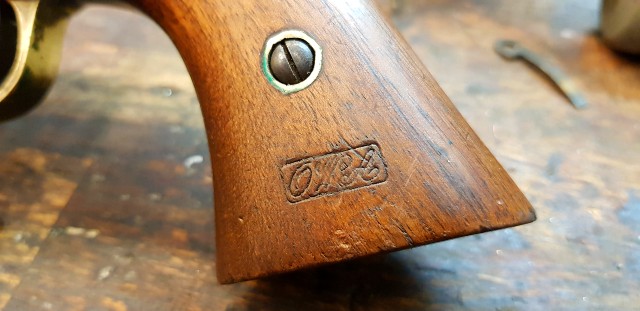
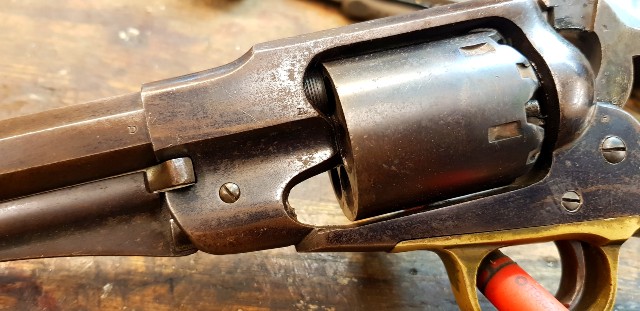
Yeah... on that.
Anywhoo... Where i live, it´s a coastal town right. So just slightly off downtown there´s a smaller suburb called Torslanda and see this mans great great great grandad was the captain of a ship right, so he brought this one home from New York back in the day (approx turn of the century) whereafter it lived its majority life in a sock drawer!
Used by the kids to play cowboy n indians when they were young!
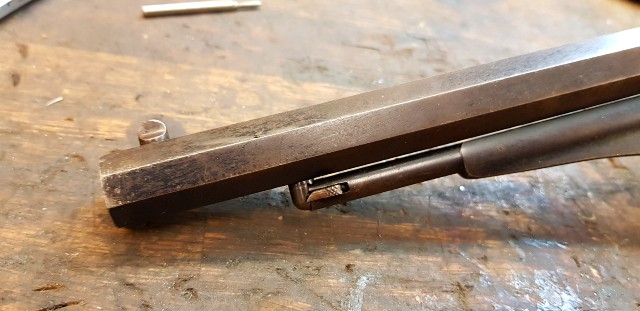
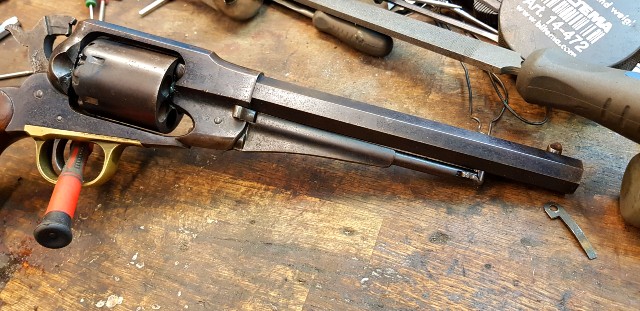
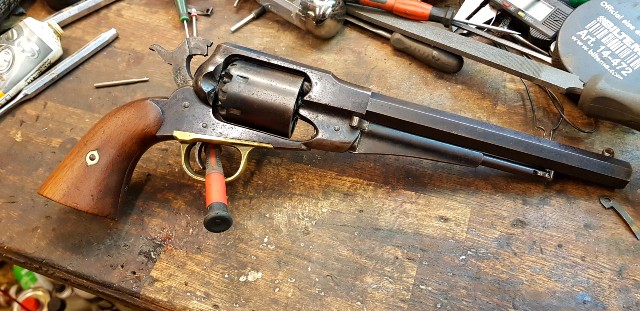
So in essence as we speak it´s starting to dawn on Michael what it is he brought me. That "non firing" replica, well.. barrels need a cleaning from time to time right.. so shoving a bronze brush through it, sure enough. Clean as you won´t believe (see further down).

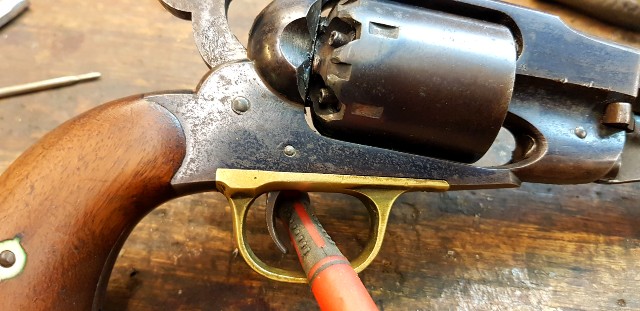
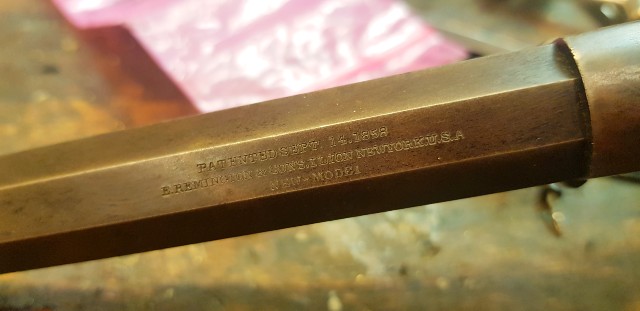
As this is a "collectors grade" NMA you don´t touch it right?
Wrong.
What i came to recommend Michael, and what was pulled, was a "conservation" of the piece. Real simple, i pick it entirely apart and boil it. Yes. In regular water.


FWIW the steel of the Remingtons take better to boiling than the Colts for instance. So an hour in the pot usually does it and done deal.
After that hour has come n gone i just rinse under the faucet whereafter i place the parts in in my case kerosene, but truth be told any petroleum based product will work.
The idea is to have the petroleum product put a halt to continued rusting. Point then that the boiling will turn the red rust into black oxide, while at the same time make more red rust appear (which comes off, all of it, very easily).
So. This is put to a halt by soaking the parts in kerosene for about an hr.
Then.. i CARD the parts. Yes. It looks like a rotary wire brush but the strands are WAY WAY WAY thinner which hands that a CARDING WHEEL is anything but aggressive. On the contrary. A carding wheel you can stick your fingers into as it´s running without any risks, that tells how anything BUT stiff it is.
I recap, we NEVER NEVER EVER come close to an antique gun with a rotary brush. EVER. This is an absolute cardinal sin!!
A carding wheel is anything but cheap but.. it is needed, and that´s just the way it is. Brownells stock them for those in need..
Then.. Worth it?
Make your own call.

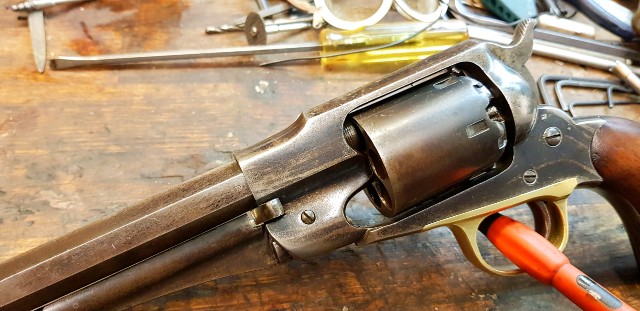

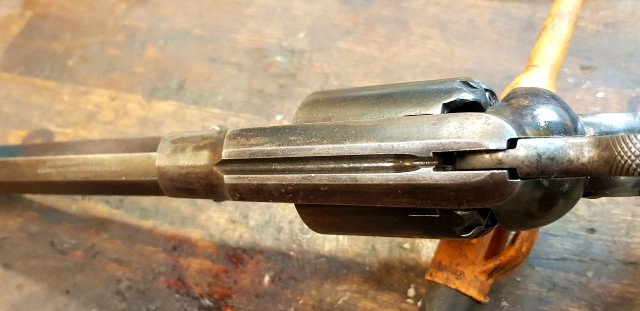
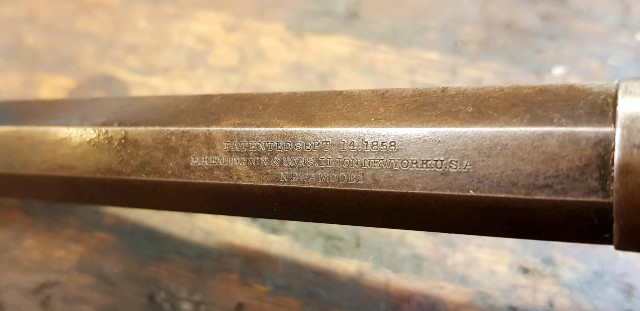
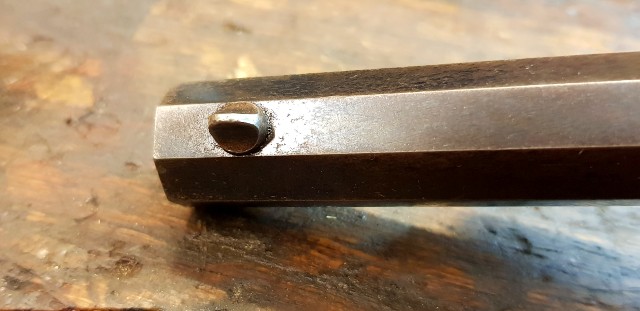
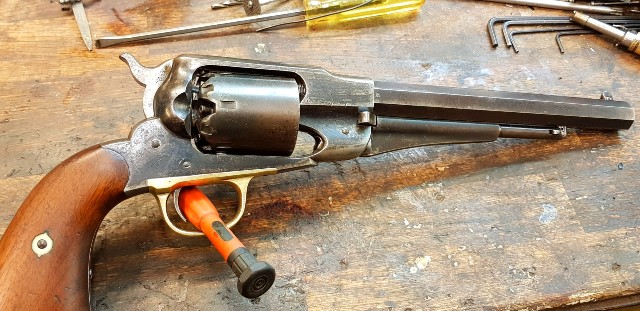
So. No chemicals, not aggressive approach what so ever. Just regular water set to a boil, followed by dunking in kerosene followed by carding the piece. What you see is what was underneath all them small rust specs, and as long as Michael treats and oils this piece up we´ve "conserved" this piece for generations coming for another 150yrs.
This is a VERY valid approach for a gun like this. In essence what we do is a in depth clean, and that´s it.
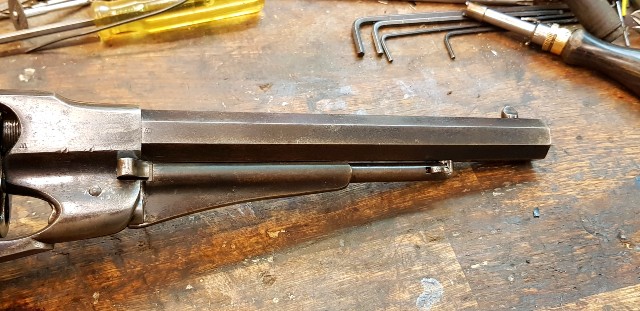
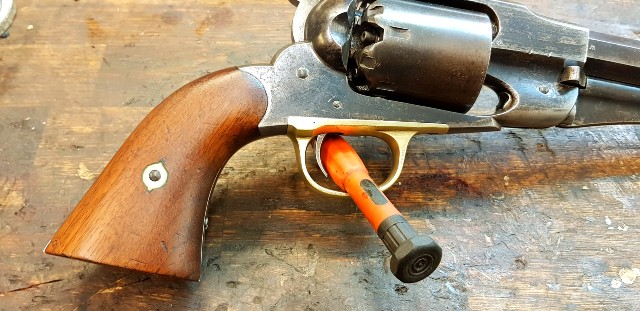
For the sake of argument, a rifle reacts the same to the job in case. I´ve had rifles through the door that looked like a million bux, the collector in case truly taking care of it, but as i lift the barrel out of the stock.. rust mayhem.
So yes.
Even collectors grade guns that are NOT intended for further use STILL needs attention on a regular basis, and no it does NOT suffice just "wiping it down with an oiled up rag". It does NOT.
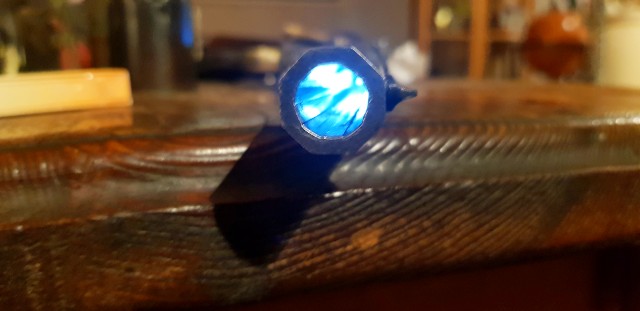

So the winners here are first up the gun and second of all.. Michael of course. He shoots it these days, albeit sparingly. Since that visit to the shop, he´s a hunter as well and knows his way around firearms per se, the old Remington sees the maintenance needed too.
So.. yep. Another one saved for the after world...
Background here is that i work on these guns. Due legislation where i live the old originals are often kept running, and that´s where i come in. When i do work i always try and do so with an imperative respect for the guns integrity.
..n see on occasion, as i´ve touched on previously, i see the occasional "special" gun in the door.
So. This new member shows up at the club and this while good friend Stefan is there airing his old NMA´s (yeah, he´s got a few). So the guy bursts out that "Hey! I´ve got one of them there at home, but it´s a replica that´s no firing!"
So Stefan tells him to call me up n show it to me, which he does and we agree on him showing at the shop the same day. In the door he comes. With this.
Yep.
Took all of like 10 secs to realize this is an old original, and of course there´s a story to that.
Yeah... on that.
Anywhoo... Where i live, it´s a coastal town right. So just slightly off downtown there´s a smaller suburb called Torslanda and see this mans great great great grandad was the captain of a ship right, so he brought this one home from New York back in the day (approx turn of the century) whereafter it lived its majority life in a sock drawer!
Used by the kids to play cowboy n indians when they were young!
So in essence as we speak it´s starting to dawn on Michael what it is he brought me. That "non firing" replica, well.. barrels need a cleaning from time to time right.. so shoving a bronze brush through it, sure enough. Clean as you won´t believe (see further down).
As this is a "collectors grade" NMA you don´t touch it right?
Wrong.
What i came to recommend Michael, and what was pulled, was a "conservation" of the piece. Real simple, i pick it entirely apart and boil it. Yes. In regular water.
FWIW the steel of the Remingtons take better to boiling than the Colts for instance. So an hour in the pot usually does it and done deal.
After that hour has come n gone i just rinse under the faucet whereafter i place the parts in in my case kerosene, but truth be told any petroleum based product will work.
The idea is to have the petroleum product put a halt to continued rusting. Point then that the boiling will turn the red rust into black oxide, while at the same time make more red rust appear (which comes off, all of it, very easily).
So. This is put to a halt by soaking the parts in kerosene for about an hr.
Then.. i CARD the parts. Yes. It looks like a rotary wire brush but the strands are WAY WAY WAY thinner which hands that a CARDING WHEEL is anything but aggressive. On the contrary. A carding wheel you can stick your fingers into as it´s running without any risks, that tells how anything BUT stiff it is.
I recap, we NEVER NEVER EVER come close to an antique gun with a rotary brush. EVER. This is an absolute cardinal sin!!
A carding wheel is anything but cheap but.. it is needed, and that´s just the way it is. Brownells stock them for those in need..
Then.. Worth it?
Make your own call.
So. No chemicals, not aggressive approach what so ever. Just regular water set to a boil, followed by dunking in kerosene followed by carding the piece. What you see is what was underneath all them small rust specs, and as long as Michael treats and oils this piece up we´ve "conserved" this piece for generations coming for another 150yrs.
This is a VERY valid approach for a gun like this. In essence what we do is a in depth clean, and that´s it.
For the sake of argument, a rifle reacts the same to the job in case. I´ve had rifles through the door that looked like a million bux, the collector in case truly taking care of it, but as i lift the barrel out of the stock.. rust mayhem.
So yes.
Even collectors grade guns that are NOT intended for further use STILL needs attention on a regular basis, and no it does NOT suffice just "wiping it down with an oiled up rag". It does NOT.
So the winners here are first up the gun and second of all.. Michael of course. He shoots it these days, albeit sparingly. Since that visit to the shop, he´s a hunter as well and knows his way around firearms per se, the old Remington sees the maintenance needed too.
So.. yep. Another one saved for the after world...


 Bringing the