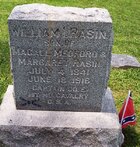
Flags 1st Maryland Cavalry CSA Co E flag

MarylandLine

Sergeant
Joined
Jul 31, 2009
Location
Northern California
Since today is Captain William Independence Rasin's birthday and he led Co E of the 1st Maryland Cavalry, I thought I would post this little gem about the unit's flag. This small band of men led the last charge at Appomattox and broke through the Union lines and headed south to meet up with Joe Johnston's command. One of the members of Co E named William Price may have been one of the last men killed at Appomattox.

[From the Richmond Enquirer, September 16, 1862.]
THE WINDER CAVALRY.

The gallant company of Marylanders, commanded by Captain William I. Rasin, has just been presented with a beautiful flag by the ladies of Kent county, Maryland, from which county many of the company have come to the Confederate service. The flag is a perfect bijou, almost too fine for our rough-and-ready cavalry. It displays the old Confederate colors—red, white, and red—dear to the hearts of true Maryland women. The union shown on one side the arras of Maryland; on the other a blue field with eleven golden stars and the legend, "Hope is Our Watchword and Truth our Guiding Star." It is richly ornamented with bullion fringe and tassels, and bears upon a silver plate on the flagstaff the inscription: "Presented to (the Winder cavalry), Company E, First Maryland cavalry, Confederate States of America, Captain William I. Rasin commanding, by the ladies of Kent county, Maryland. May its crimson folds burn fiercely through the storm of battle, till the brave men who bear it can wave it triumphantly over Kent county, Maryland."
For over twenty-two years this flag was folded away carefully by one of Virginia's daughters in Maryland, and yesterday one of the few survivors of Company E, Corporal George T. Hollyday, bore its folds proudly aloft through the streets of Richmond as one of the Maryland Line here to honor the memory of Virginia's great soldier, R. E. Lee. To the care and custody of James R. Wheeler and George T. Hollyday, both surviving members of this gallant company of Maryland cavalrymen, this relic of the past, valued beyond all measure, has been intrusted. This company was engaged in the last charge made by any portion of the Army of Northern Virginia at Appomattox Courthouse, Sunday, April 9, 1865.
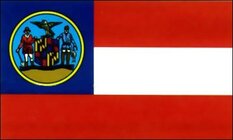
 
Here is a reproduction of the 1st Maryland Cavalry Co E' s flag. Co E was called the Winder Cavalry in honor of the slain Stonewall Brigade commander Charles S Winder of Maryland who was killed at Cedar Mountain.
 

Attachments

  • MarylandWinderCalvaryCSA.jpg
    MarylandWinderCalvaryCSA.jpg
    12.6 KB · Views: 1,392
Obituary that appeared in the Confederate Veteran magazine in 1916.

Capt. William I. Rasin.
On Sunday, June 18, Capt. William I. Rasin died at his home, in Newport News. Va. He was born on July 4, 1841, in Kent County, his father, Macall Medford Rasin, being an honored and influential citizen of that county. After his father's death, in 1848, William Rasin became a member of the family of his uncle, Unit Rasin, a merchant of St. Louis, Mo. He attended the city schools for several years, but in 1858 he went to Leavenworth, Kans., and began his business life. In the spring of 1861 he returned to Kent County, on his way to Richmond to enter the Southern army, and organized a cavalry company, of which he was chosen captain and which became Company E, of the 1st Maryland Regiment, C. S. A.
He was constantly engaged in the arduous duties of that branch of the service and participated in many severe engagements. Near Winchester, Va., his horse was shot, and ho received a dangerous saber wound in the head, but soon returned to his command. Rev. Dr. Randolph H. McKim, of Gen. Joseph E. Johnston's staff, in his "Soldier's Recollections," states that Captain Rasin at the head of his company led the last charge at Appomattox. He says: "This was handsomely made by the 1st Maryland Cavalry under the following circumstances as related to me by Col. Cary Breckenridge, of the 2d Virginia Cavalry. When the enemy in full charge was seen coming not one hundred yards distant, Capt.
William I. Rasin, commanding the first squadron and riding with Colonel Dorsey at the head of his regiment, said: 'Colonel, we must charge them; it is the only chance.' And as the words left his lips Dorsey, who had perceived the necessity, gave the command: 'Draw saber! Gallop! Charge!' And this little band of Marylanders hurled themselves against the heavy column and drove them back. This was the last blow struck by the Army of Northern Virginia."
Soon after the war Captain Rasin formed a partnership with Col. Harry McCoy as commission merchants in Baltimore, and a successful business was conducted for a number of years. Later he became deputy collector of internal revenue in that city. Still later he entered the service of an English steamship company of Newport News, Va., in which he remained until death. *
Captain Rasin was married in 1867 to Miss Mary A. Garnett, of Buckingham County, Va., who survives him. His force of character and personal attractions were recognized by all who truly knew him, and throughout his long life truth and honor were ever his guiding principles.
 
Here is a reproduction of the 1st Maryland Cavalry Co E' s flag. Co E was called the Winder Cavalry in honor of the slain Stonewall Brigade commander Charles S Winder of Maryland who was killed at Cedar Mountain.

Nice post Marylandline, I've seen a reproduction of this flag flying over the Confederate graves at Baltimore's Loudon Park Cemetery's "Confederate Hill".

image.jpg
 
William Rasin escapes Capitol Prison in Washington DC:

Captain William I. Rasin of the 1st Maryland Cavalry Co. E July 4th, 1841-June 18th 1916. Born near Still Pond Maryland in Kent County, Rasin was the youngest son of McCall Medford Rasin and Margaret Ann Boyer Rasin. Rasin lived in Maryland until the death of his father in 1848 and then Rasin and his older brother McCall were sent to live with their uncle Unit Rasin in St. Louis, MO. William attended school in St. Louis and then moved to Leavenworth, Kansas in 1858 to begin a business career.

When war broke out in 1861, Rasin volunteered to serve with Sterling Price in the State Guard however his unit is not known. After the battle of Lexington September 13th-20th, Rasin decided to head back to Maryland. Arriving in Maryland he finds out his native state is under martial law. While visiting the Price family at Stoneton near Unionville in Kent County, Maryland, Rasin is arrested February 12th, 1862 by detectives. From there Rasin was taken in a closed carriage to Elkton, MD and then on to Washington D.C. to be tried as a spy. Convicted by Military Courts as a spy, Rasin who is being held in Capitol Prison in Washington, D.C. is sentenced to be taken to Ft. Warren in Boston, MA for the duration of the war.

While in Capitol Prison, Rasin's roomates were Captain Harry Steuart and Rudolph Jenkins and Judson J Jarboe of St. Mary's County, Maryland. Rasin, Watkins and Steuart became fast friends and were determined to find an escape route. The three became aware of a rope made from an old manila doormat by a political prisoner (Mansfield Walworth) who was now in solitary confinement. Using a table knife fashioned into a saw, the three prisoners took turns and in two weeks had sawed through the heavy wooden bars. After about a month of waiting for the right time to try their escape, they decided on a dark stormy night to make their attempt. Drawing cards to see who would go out the window first, Rasin drew the high card and the first attempt. After securing the rope, Rasin swung himself out the window and started down the rope hand over hand. The rope suddenly broke and Rasin fell with a loud thud. Fearing they had been exposed and Rasin was dead or injured, Steuart and Watkins pulled the remaining rope up and burned it to destroy the evidence. However Rasin fell feet first and landed on a wooden cellar door. The loud wind from the storm carried the sound away from the guards. Rasin proceeded to walk towards the guards who were flirting with a young lady. Gathering all his courage, Rasin walked by the guards and gave a salute. Thinking he was an officer they returned the salute. Rasin hid out in Washington D.C. for three days while the Union Army scoured the city and countryside looking for him.

William Rasin eventually headed to Salisbury, North Carolina to procure enough horses to outfit his future command. He would be elected Captain of Co. E of the 1st Maryland Cavalry.
 
William Rasin escapes Capitol Prison in Washington DC:

Captain William I. Rasin of the 1st Maryland Cavalry Co. E July 4th, 1841-June 18th 1916. Born near Still Pond Maryland in Kent County, Rasin was the youngest son of McCall Medford Rasin and Margaret Ann Boyer Rasin. Rasin lived in Maryland until the death of his father in 1848 and then Rasin and his older brother McCall were sent to live with their uncle Unit Rasin in St. Louis, MO. William attended school in St. Louis and then moved to Leavenworth, Kansas in 1858 to begin a business career.

When war broke out in 1861, Rasin volunteered to serve with Sterling Price in the State Guard however his unit is not known. After the battle of Lexington September 13th-20th, Rasin decided to head back to Maryland. Arriving in Maryland he finds out his native state is under martial law. While visiting the Price family at Stoneton near Unionville in Kent County, Maryland, Rasin is arrested February 12th, 1862 by detectives. From there Rasin was taken in a closed carriage to Elkton, MD and then on to Washington D.C. to be tried as a spy. Convicted by Military Courts as a spy, Rasin who is being held in Capitol Prison in Washington, D.C. is sentenced to be taken to Ft. Warren in Boston, MA for the duration of the war.

While in Capitol Prison, Rasin's roomates were Captain Harry Steuart and Rudolph Jenkins and Judson J Jarboe of St. Mary's County, Maryland. Rasin, Watkins and Steuart became fast friends and were determined to find an escape route. The three became aware of a rope made from an old manila doormat by a political prisoner (Mansfield Walworth) who was now in solitary confinement. Using a table knife fashioned into a saw, the three prisoners took turns and in two weeks had sawed through the heavy wooden bars. After about a month of waiting for the right time to try their escape, they decided on a dark stormy night to make their attempt. Drawing cards to see who would go out the window first, Rasin drew the high card and the first attempt. After securing the rope, Rasin swung himself out the window and started down the rope hand over hand. The rope suddenly broke and Rasin fell with a loud thud. Fearing they had been exposed and Rasin was dead or injured, Steuart and Watkins pulled the remaining rope up and burned it to destroy the evidence. However Rasin fell feet first and landed on a wooden cellar door. The loud wind from the storm carried the sound away from the guards. Rasin proceeded to walk towards the guards who were flirting with a young lady. Gathering all his courage, Rasin walked by the guards and gave a salute. Thinking he was an officer they returned the salute. Rasin hid out in Washington D.C. for three days while the Union Army scoured the city and countryside looking for him.

William Rasin eventually headed to Salisbury, North Carolina to procure enough horses to outfit his future command. He would be elected Captain of Co. E of the 1st Maryland Cavalry.

Another captured or near captured Maryland Rebel was George Emack. Don't remember the whole story as I read it some time ago. As it's told, Emack shot & killed a Federal soldier as he was making his escape. He thus earned the nickname "Yankee Killer".

Like Rasin, he also ended up in the 1st Maryland Cav. Emack was Captain of the 1st MD's Co. B. & led a mere handful of troopers in one of the spectacular actions of the war. During Lee's retreat from Gettysburg the his company of 1st Maryland Cav., was strung out along Ewell's wagon train.

They were assigned the impossible job of staving off pursuing Yankee Cavalry. Emack found himself with a mere 25 troopers defending Monterrey Pass from Kilpatrick's entire Division! The night was stormy & thunderous. This was to the Rebels advantage & they used it to confuse their foe.

A handful of riders approached the Federal column, their gum coats, storm & darkness concealing their uniforms. With their mounts & bodies the troopers shielded from view a solitary Rebel cannon from the Yankees.

Suddenly mere feet from the Federal column the Marylanders fired a volley into the stunned Federals & then raced for the rear! The lone Rebel gun (already down to its last remaining rounds) fire canister into the van of the enemy column sending them into a head long retreat. The handful of rebel troopers charged after them & the pursuit only ended a mile down the road. The thunderstorm limited visibility to mere feet & the Federal troops believed they faced a larger force.

The Federals advanced again as Emack desperately called for reenforcements. They were few in coming & it's not likely he had more then a few Dozen (some walking wounded from the wagons). For Emack it must have seemed the loneliest place in the world...

The Federals approached again. With visibility mere feet in the T-Storm they actually walked into to rebel line before the opposing sides open fired point blank. One Marylander didn't even know the Federals were upon him until a man step on him! He lifted his pistol & shot the Yankee dead.

In the hail of fire, storm & darkness the Federals retreated again. They had no idea what they faced & assumed much larger numbers. As the night wore on the Maryland troopers were pushed further & further toward the pass. Twice Emack cleared the pass of wagons to prevent capture if/when the Yankees broke through. It was inevitable as the defensive force was brave but minuscule in numbers. Emack was over ruled & the wagon train kept running through the pass (many to be captured).

Desperately the handful of Maryland troopers held on as the Federals under Custer & Kilpatrick tried them again & again. It was hard going for the Yankee troopers, a man couldn't see his feet & often sumbled in the dark. A errant shot would go off & be answered by a nervice volley...

At one point in the fighting the drenched Rebels succumbed to a bout of hilarious laughter as the Federals were firing in all the wrong directions & nearly a mile away!!!

With no substantial reinforcements in sight the Federals finally overwhelmed the exhausted defenders of Monterrey Pass. Custer's & Kilpatrick swarmed in amongst Ewell's wagon train & captured hundreds of them.

But the defenses of Monterrey pass was epic as as handful of Maryland troopers had held off a vastly superior enemy for 4-5 hours of combat!
 
I got to check out Monterey Pass with Eric Wittenberg and some friends years ago.....it's a tight winding little road that has a serious incline if I remember correctly. Emack and his merry band must have felt like the Spartans holding off the Persians. Haha

The 1st Maryland Cavalry were a tough bunch.

Eric does a great job in his book on Lee's retreat of capturing this epic struggle.
 
Last edited:
I got to check out Monterey Pass with Eric Wittenberg and some friends years ago.....it's a tight winding little road that has a serious incline if I remember correctly. Emack and his merry band must have felt like the Spartans holding off the Persians. Haha

The 1st Maryland Cavalry were a tough bunch.

Eric does a great job in his book on Lee's retreat of capturing this epic struggle.

Man I would have loved to have taken a tour like that with someone as knowledgeable as Wittenberg. I've read "One Continuous Fight" a couple years ago. It's a very good read. Plus the driving directions provided to many of the sites mentioned was a huge added bonus for me. I live in Frederick Co. so I'm basically within an hour drive on most sites mentioned :thumbsup:

Yes the 1st Maryland Cav. Was a tough bunch of Fellows for sure!
 
image.jpg
Next is a Bottany Cross pin made of german silver worn by the previously mentioned William C Price. He was killed as the 1st Maryland Cavalry broke through the Union Lines at Appomattox. Many Marylanders wore these pins on their chest to show they were from Maryland. About 14 are known to exist. North South Trader magazine published an excellent article on these Maryland Bottany crosses. Written by noted Maryland historian Daniel Hartzler, the article appeared in Volume XI no. 1 Nov-Dec 1983.
 
Last edited:
I've always thought that was so cool. Nothing says Maryland like the Bottany cross. I love it in ya'lls flag . . . which IMHO is one of prettiest & most interesting State Flags in the Nation.
View attachment 41256

and then I notice your avatar. . . :smoke:

My avatar is a pennant that was used by Maryland Confederate general Bradley Johnson as his headquarters flag.

I have read reports that during World War 1 Maryland units that carried the state flag you uploaded were met with much interest from Europeans due to it's heraldic nature. The flag is a combination of the Crossland and Calvert families. Both old English Catholic families who didn't renounce their faith but managed to stay in the good graces of the crown. Maryland was established as a Catholic colony.
 
My avatar is a pennant that was used by Maryland Confederate general Bradley Johnson as his headquarters flag.

image.jpg


image.jpg


Guidon of the 4th Maryland Light (Chesapeake) Artillery. This particular relic was sold at auction some time ago. Capt. Brown, in command of the 4th Maryland was killed at Benner's Hill at Gettysburg on July 2, 1863.
 
I've always thought that was so cool. Nothing says Maryland like the Bottany cross. I love it in ya'lls flag . . . which IMHO is one of prettiest & most interesting State Flags in the Nation.
View attachment 41256

and then I notice your avatar. . . :smoke:

It's all the more special because Civil War veterans from both sides joined the Maryland National Guard.

Although they are both the heraldry of Lord Baltimore the Black & Gold checkered colors where flown by loyalists. This was answered by the wearing of red & white by pro Southerns Marylanders & the Bottany Cross became the badge of Maryland Rebels.

The flag was a symbol of reunification & healing. The Veterans of the "Dandy Fifth" (Union & Confederate) carried this banner in their parades. It was later adopted as the state flag. By official Maryland law the Bottany Cross must adorn the top of the flag.
 
View attachment 41236

This image of Captain Rasin is in Military Images magazine volume X number 5. This is a special edition of all Maryland Confederate images. This image is owned by Dave Mark.
The name Rees is well known by Civil War photograph collectors and that's who took this photo of Captain Raisin. This image is truly amazing and must been seen in person.
 

Learn About Us
About CivilWarTalk
Contact the Webmaster
Meet the Staff
Link to CivilWarTalk
Join Our Community
Register
Browse Forums
View Today's Discussions
Search the Forum
Get Help
FAQ
Student Guide
Forum Rules & Etiquette
Copyright / DMCA

     Contact Us CivilwarTalk on Facebook CivilWarTalk on YouTube CivilWarTalk on Twitter RSS Feed

Bringing the American Civil War and More to Life.
© 1999 - , CIVILWARTALK, LLC - Site Version 10.0

SlaveryTalk.com - SecessionTalk.com - CivilWarTalk.com - ReconstructionTalk.com
Back
Top