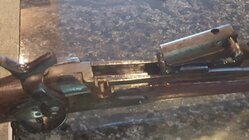
1864 springfield with 1866 trap door

Padelford4

Cadet
Joined
Mar 19, 2018
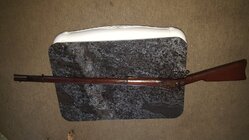
Hi All. I have an 1864 springfield with 1866 trap door conversion. I believe that it is a 50-70 caliber. I was hoping someone coukd give me some insite to the weapon and what's its value is? Any help would be greatly appreciated. Here are some pics.
 

Attachments

  • 20180313_172324.jpg
    20180313_172324.jpg
    240.5 KB · Views: 585
  • 20180313_173039.jpg
    20180313_173039.jpg
    308.8 KB · Views: 561
  • 20180313_173137.jpg
    20180313_173137.jpg
    168.8 KB · Views: 595
Hello and welcome to the talk forum from Southeast Missouri on the banks of the muddy Mississippi River. I have seen various trapdoor conversions over the years. That one is a very nice looking rifle.
 
Hi All. I have an 1864 springfield with 1866 trap door conversion. I believe that it is a 50-70 caliber. I was hoping someone coukd give me some insite to the weapon and what's its value is? Any help would be greatly appreciated. Here are some pics.
Welcome! When you get answers to your questions, be sure to stay around and join our conversations. New perspectives are always welcome!
 
Welcome! When you get answers to your questions, be sure to stay around and join our conversations. New perspectives are always welcome!

Well, almost always.

Anyway nice gun you've got there. Don't know the value but apparently there's enough of them out there that originals are used for load-and-fire demonstrations, at Fort Mackinaw for one. Though a state facility, I think they adopted NPS guidelines for use of these antique trap-doors:

https://www.nps.gov/stri/upload/19th-century-trapdoor-and-colt-revolver-manual.pdf
 
Last edited:
Looks like an early 2nd Allin Conversion if in 50-70. If in .58 rimfire it's value is a little better. I've seen several of these in the last year or so in the $800-1000 range. They're a fun shooter with good accuracy; an acquaintance has one and consistently gets 2" groups at 100 yards off hand.
 
Nice one. Welcome From The Heart Of Dixie. Its very hard to give an acurat appraisel based on photos as there are many different issues that really need to be done with it in your hands. Things such as the bore, matching parts etc. Still it a great looking piece.
 
Flayderman talks about the short rifles for the first time in 1866. Mine is a 3 band.

They sure are fun to shoot!
 
More information is needed. First is the rifle a rimfire or centerfire model? Open the trapdoor and look at where the firing pin exits the block. If in the center, then its a centerfire. Second, what is the length of the barrel?

The U.S. Model 1865 (1st Allin Conversion) is a rimfire. The U.S. Model 1866 (2nd Allin Conversion) is a centerfire.

Regarding barrel length. The vast majority of these were Springfield Armory made with a 40" barrel and 3 bands. The type of bands (clamp or spring) depends on which variation of the Civil War rifle-musket was used in the conversion. The barrels were bored out and a .50 cal sleeve inserted. The ramrod was replaced with a rod with a cleaning jag on the end.

Most of the shorter versions have a 32" barrel with the 2 bands in the position of lower 2 bands of the 3 band rifle. These mods are not military, they were done by multiple firms in the late 1800s to make the guns more salable in the surplus market of the day. There is mention of a 36" barrel version that is assumed to be an armory modification, but these are very rare.

I'm interested in learning more about rimfire vs centerfire and barrel length.
 
According to Flayderman, a legit Armory made shortened version has about a 15% premium. That seems low for a legit rare gun. But a wise old collector reminded me that price is always determined by supply and demand and that "rare" is only an expression of supply, not demand.
 
More information is needed. First is the rifle a rimfire or centerfire model? Open the trapdoor and look at where the firing pin exits the block. If in the center, then its a centerfire. Second, what is the length of the barrel?

The U.S. Model 1865 (1st Allin Conversion) is a rimfire. The U.S. Model 1866 (2nd Allin Conversion) is a centerfire.

Regarding barrel length. The vast majority of these were Springfield Armory made with a 40" barrel and 3 bands. The type of bands (clamp or spring) depends on which variation of the Civil War rifle-musket was used in the conversion. The barrels were bored out and a .50 cal sleeve inserted. The ramrod was replaced with a rod with a cleaning jag on the end.

Most of the shorter versions have a 32" barrel with the 2 bands in the position of lower 2 bands of the 3 band rifle. These mods are not military, they were done by multiple firms in the late 1800s to make the guns more salable in the surplus market of the day. There is mention of a 36" barrel version that is assumed to be an armory modification, but these are very rare.

I'm interested in learning more about rimfire vs centerfire and barrel length.
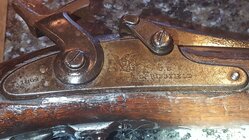
Thank you for the info. I will look at rim vs centerfire as well as barrel length when I get home thus evening. It is a 1864 ob lock plate and 1866 on trapdoor. I also found a filler on the stock on the right side where the 3rd ring may have been but not sure what that's about.
 

Learn About Us
About CivilWarTalk
Contact the Webmaster
Meet the Staff
Link to CivilWarTalk
Join Our Community
Register
Browse Forums
View Today's Discussions
Search the Forum
Get Help
FAQ
Student Guide
Forum Rules & Etiquette
Copyright / DMCA

     Contact Us CivilwarTalk on Facebook CivilWarTalk on YouTube CivilWarTalk on Twitter RSS Feed

Bringing the American Civil War and More to Life.
© 1999 - , CIVILWARTALK, LLC - Site Version 10.0

SlaveryTalk.com - SecessionTalk.com - CivilWarTalk.com - ReconstructionTalk.com
Back
Top