1863 Campaign - 2nd Winchester

Thomasgat

Private
Joined
May 14, 2018
From the Cedar Creek & Belle Grove National Historic Park:

"On These Days" 155 Years Ago - June 13 - 15, 1863

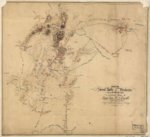
After the Battle of Brandy Station, June 9, 1863, Confederate Gen. Robert E. Lee ordered his II Corps, Army of Northern Virginia, under Gen. Ewell, to clear the northern Shenandoah Valley of Federal opposition. Ewell's columns converged on Winchester's garrison commanded by Gen. Milroy. Instead of retreating in the face of superior numbers, Milroy determined to make a stand in the supposedly strong fortifications west and north of town. There was fighting on the afternoon of June 13, but the next day the Confederate Louisiana Brigade captured the West Fort leaving Milroy in an untenable position. After dark, Milroy abandoned his remaining entrenchments in an attempt to retreat to Charles Town. Confederate Gen. Edward "Allegheny" Johnson's division marched at night and before daylight of the 15th cut off Milroy's retreat just north of Winchester at Stephenson's Depot. More than 2,500 Federals surrendered.

This stunning Confederate victory cleared the Valley of Federal troops and opened the door for Lee's second invasion of the North that led to the Battle of Gettysburg. The battle also demonstrated a rare use of extensive earthworks in the Shenandoah Valley.

Image: 2nd Winchester Battle Map by Jedidiah Hotchkiss
Credit: Library of Congress
Text Credit: Shenandoah Valley Battlefields Foundation
 

Attachments

  • 1863 Campaign Wnchester.jpg
    1863 Campaign Wnchester.jpg
    286.5 KB · Views: 90
i believe in
From the Cedar Creek & Belle Grove National Historic Park:

"On These Days" 155 Years Ago - June 13 - 15, 1863

After the Battle of Brandy Station, June 9, 1863, Confederate Gen. Robert E. Lee ordered his II Corps, Army of Northern Virginia, under Gen. Ewell, to clear the northern Shenandoah Valley of Federal opposition. Ewell's columns converged on Winchester's garrison commanded by Gen. Milroy. Instead of retreating in the face of superior numbers, Milroy determined to make a stand in the supposedly strong fortifications west and north of town. There was fighting on the afternoon of June 13, but the next day the Confederate Louisiana Brigade captured the West Fort leaving Milroy in an untenable position. After dark, Milroy abandoned his remaining entrenchments in an attempt to retreat to Charles Town. Confederate Gen. Edward "Allegheny" Johnson's division marched at night and before daylight of the 15th cut off Milroy's retreat just north of Winchester at Stephenson's Depot. More than 2,500 Federals surrendered.

This stunning Confederate victory cleared the Valley of Federal troops and opened the door for Lee's second invasion of the North that led to the Battle of Gettysburg. The battle also demonstrated a rare use of extensive earthworks in the Shenandoah Valley.

Image: 2nd Winchester Battle Map by Jedidiah Hotchkiss
Credit: Library of Congress
Text Credit: Shenandoah Valley Battlefields Foundation
i believe
this battle maryland boys routed the pa Bucktails
 
i believe in
this battle maryland boys routed the pa Bucktails

Ah. No. The only Pennsylvania Infantry Regiments involved at 2nd Winchester were the 67th and 87th.

The Bucktails were the 13th Pennsylvania Reserves or as they became the 42nd Regiment of Volunteers.

Later more of the Pennsylvania Reserve Brigade took the Bucktail title but neither the 67th or 87th did. Indeed Milroy's force that was defeated at 2nd Winchester in the main came from two states. West Virginia and Ohio. It should also be noted that the 5th Maryland was also present... on the Union side.

[Though yes it is probable that more Marylanders fought at 2nd Winchester on the Confederate side. There is some confusion about this because 'Maryland' Steuart [spelling?]'s Brigade of 'Marylanders' seems to have had a surprisingly large number of Virginians in it. Or so it has been claimed [Sears I think? Could be wrong about the attribution.]. I will admit to not being aware of a detailed study of this topic though I am sure there is one and I would love to read it.]

As to the OP, nice post about an overlooked but rather influential part of the Gettysburg Campaign. One that (briefly) left Ewell with the reputation that he was a worthy successor to Jackson... Thank you.
 
Ah. No. The only Pennsylvania Infantry Regiments involved at 2nd Winchester were the 67th and 87th.

The Bucktails were the 13th Pennsylvania Reserves or as they became the 42nd Regiment of Volunteers.

Later more of the Pennsylvania Reserve Brigade took the Bucktail title but neither the 67th or 87th did. Indeed Milroy's force that was defeated at 2nd Winchester in the main came from two states. West Virginia and Ohio. It should also be noted that the 5th Maryland was also present... on the Union side.

[Though yes it is probable that more Marylanders fought at 2nd Winchester on the Confederate side. There is some confusion about this because 'Maryland' Steuart [spelling?]'s Brigade of 'Marylanders' seems to have had a surprisingly large number of Virginians in it. Or so it has been claimed [Sears I think? Could be wrong about the attribution.]. I will admit to not being aware of a detailed study of this topic though I am sure there is one and I would love to read it.]

As to the OP, nice post about an overlooked but rather influential part of the Gettysburg Campaign. One that (briefly) left Ewell with the reputation that he was a worthy successor to Jackson... Thank you.
you Sir know your Pennsylvainia unit history!! I am sure that i will stand corrected on what i said i will say that on your comment of Virginians in Stuerts Maryland regiment i believe at the early stage of the war the majority were native marylanders there were however alot of men from the two states in each others regiments scewing the real number of Md men in gray thank you for the info
 
In as much as I am qualified to write about any State's troops (being from England) then yes it would be Pennsylvania. (Don't entirely know why I chose that State but that seems to be 'the one'). The Gettysburg Campaign (all of it - though I do not have as good a grasp of Brandy Station as I would like) is my specific passion. (The Naval War would come second).

And yes. I would (from my reading of things) more than accept that there is something of a blurring between Maryland and Virginia regiments. Some Marylanders served in 'Virginia' regiments while a possibly larger number of Virginians seem to have served in 'Maryland' Regiments.

[This is actually a topic that I have looked into some - though perhaps not enough. If you happen to know of any books on the subject I would be in your debt]
 
Now the yeomanry makes sense First off Pennsylvania aint a bad pick they were a tough breed of people and were very active in the civil war the states of Maryland and Virginia were 'sister' States being very similar in economic and cultural ways in antebellum times entire companies of marylanders were in Virginia regiments examples being Chiswells maryland exiles company B 35th Va CAV under Elijah V White of Maryland Company H 47th Va Company B 21st Va and 1st stuarts horse artillery a Virginia unit made up of Md boys to name a few as far as books on the topic i would recomend' A southern star for Maryland ' 'Maryands blue and gray junior officer Corps' but for our current topic i highly recomend 'Maryland my Maryland the cultural cleansing of a small southern state'
 

Learn About Us
About CivilWarTalk
Contact the Webmaster
Meet the Staff
Link to CivilWarTalk
Join Our Community
Register
Browse Forums
View Today's Discussions
Search the Forum
Get Help
FAQ
Student Guide
Forum Rules & Etiquette
Copyright / DMCA

     Contact Us CivilwarTalk on Facebook CivilWarTalk on YouTube CivilWarTalk on Twitter RSS Feed

Bringing the American Civil War and More to Life.
© 1999 - , CIVILWARTALK, LLC - Site Version 10.0

SlaveryTalk.com - SecessionTalk.com - CivilWarTalk.com - ReconstructionTalk.com
Back
Top