Trivia 12-2-15 How did he do that?

Status
Not open for further replies.

Trivia Master

The Keeper of Knowledge
Forum Host
Joined
Mar 21, 2012
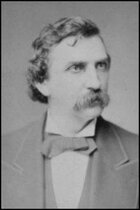
How did General John Fredericak Hartranft, the general in charge of the Lincoln conspirators, begin his meteoric rise during the war?

credit: @JPK Huson 1863
 
You mean, aside from defending the bridge with only 300 elephants against all those Persian cats? Well, it must be his refusal to retreat at Bull Run when all the men of the regiment he had raised decamped:

"Within four days of offering his services to Governor Andrew Curtin, Colonel Hartranft reported to Camp Curtin in Harrisburg with a regiment of men from Montgomery County, making up the 4th Regiment of Pennsylvania Volunteer Infantry. The regiment was to serve for 90 days, not because it was thought the war would be short but because that was the maximum time period the President could federalize state militias. (Congress was not in session during the spring of 1861 and a law allowing three-year enlistments would not be passed until later in the summer).

The 4th Pennsylvania joined General Irvin McDowell's army that marched out to meet the Confederates in the nearby Virginia countryside. On the eve of the Battle of First Manassas (Bull Run), the Regiment's ninety day enlistment was about to expire. Despite Hartranft's pleas, the entire regiment walked off the battlefield as the first shots were being fired. Hartranft was devastated and embarrassed. Rather than leave the fight, he volunteered his services to General William Franklin. Hartranft always considered the actions of his men to be a stain on his honor, erased in 1886 when he received the Medal of Honor for his own heroic actions at Bull Run"
http://civilwarstudies.org/articles/Vol_3/john-hartranft.shtm
 
In April 1861, Hartranft raised a Montgomery County regiment of ninety-day volunteers in Norristown, serving as Colonel of the 4th Pennsylvania Volunteer Infantry.
220px-JohnFHartranft.jpg
 

Attachments

  • 220px-JohnFHartranft.jpg
    220px-JohnFHartranft.jpg
    8.6 KB · Views: 54
Hartranft received a commission as a colonel and raised the 4th Penn volunteer regiment. Because of his work with the county and state militias and his tremendous popularity in the Norristown area, nearly 600 men quickly volunteered to serve under him. Things did not go smoothly in the 4th Pennsylvania. The work details were onerous and the food was poor. There was much sickness in the camps. It was weeks before troops received their equipment and uniforms and the latter were of such poor quality the men were ashamed to be seen wearing them. Dissatisfaction was so widespread that the men decided they would leave the army the next day when their enlistments expired. That afternoon, a delegation informed Hartranft of this decisionDespite his popularity he could do nothing to change their minds. The next day July 21 1st Bull Run was fought.
The Norristown colonel, now minus a command, served during the battle on the staff of his brigade commander, Col. William B. Franklin. During the battle, Hartranft demonstrated his courage by enduring enemy fire to rally regiments that had become disorganized. A quarter of a century later, on Aug. 26, 1886, Hartranft was awarded a Medal of Honor for "distinguishing himself in rallying several regiments which had been thrown into confusion."
source-http://www.dailylocal.com/lifestyle...ormer-civil-war-general-pennsylvania-governor
 
John Frederic Hartranft served as Colonel of the 4th Pennsylvania Infantry and received the Medal of Honor for staying on the field at the First Battle of Bull Run, when his 90-day regiment's enlistment expired and his troops walked off the field. Later, as commander of the 51st Pennsylvania Infantry, he would lead the charge across Burnside's Bridge at Antietam. Hartranft served in both the eastern and western theaters of the war, rising to the rank of Brevet Major General. He served as special provost marshal during the trial of the Lincoln assassination conspirators and supervised the hanging of the condemned. After the war, Hartranft served two terms as Governor of Pennsylvania. There is a statue of him in front of the Pennsylvania Capitol.
Hartranft Mon.jpg
 
In April 1861, Hartranft raised a Montgomery County regiment of ninety-day volunteers in Norristown, serving as colonel of the 4th Pennsylvania Volunteer Infantry. Their term of enlistment up, the regiment returned to Pennsylvania on the eve of the First Battle of Bull Run, just as the firing began. Hartranft was humiliated by his men's decision to go home. He stayed to fight with the Army on July 21, 1861. This act earned him the Medal of Honor on August 21, 1886, for volunteering his services to fellow Pennsylvanian Col. William B. Franklin. His citation reads: "Voluntarily served as an aide and participated in the battle after expiration of his term of service, distinguishing himself in rallying several regiments which had been thrown into confusion."[1] (Wikipedia)
 
I'm not quite sure if I have understood the point of the question.

I guess you are referring to his raising a regiment of 90-day volunteers who, their term of enlistment having expired, left just on the eve of the Battle of Bull Run. So Hartranft was left alone to fight with the army. He was later awarded the Medal of Honor for his action.

From Wikipedia:
"In April 1861, Hartranft raised a Montgomery County regiment of ninety-day volunteers in Norristown, serving as colonel of the 4th Pennsylvania Volunteer Infantry. Their term of enlistment up, the regiment returned to Pennsylvania on the eve of the First Battle of Bull Run, just as the firing began. Hartranft was humiliated by his men's decision to go home. He stayed to fight with the Army on July 21, 1861. This act earned him the Medal of Honor on August 21, 1886, for volunteering his services to fellow Pennsylvanian Col. William B. Franklin. His citation reads: "Voluntarily served as an aide and participated in the battle after expiration of his term of service, distinguishing himself in rallying several regiments which had been thrown into confusion."
https://en.wikipedia.org/w/index.php?title=John_F._Hartranft&oldid=681698352
 
By winning the MOH at First Bull Run by electing to stay and fight after the enlistment term of his regiment (4th PaVI) expired and his men decided to go home.

His citation reads: "Voluntarily served as an aide and participated in the battle after expiration of his term of service, distinguishing himself in rallying several regiments which had been thrown into confusion."
 
How did General John Fredericak Hartranft, the general in charge of the Lincoln conspirators, begin his meteoric rise during the war?

credit: @JPK Huson 1863
1) He stayed to fight voluntarily at First Battle of Bull Run after his men had decided to go home, for which he was later awarded the Medal of Honor. 2)He led the famous 51st Pennsylvania Infantry charge across Burnside's Bridge at Antietam. 3)Defeated Robt. E. Lee at the Battle of Fort Stedman, which led to the evacuation of Petersburg's defenses, and ultimate fall of Richmond.
 
With the call came for volunteers in April 1861, Hartranft offered his services to Pennsylvania Governor Andrew Curtin, who authorized him to raise a regiment. Within four days, Hartranft reported to Camp Curtin in Harrisburg with men from Montgomery County and he was commissioned Colonel of the 4th Regiment of Pennsylvania Volunteer Infantry. The regiment was to serve for 90 days, not because it was thought the war would be short but because that was the maximum time period the president could federalize the state militias. Congress was not in session during the spring of 1861 and a law allowing regiments to be raised for three-year enlistments would not be passed until later in the summer.
The 4th Pennsylvania was moved to Washington and became part of Gen. Irvin McDowell's army that marched out to meet the Confederate Army in the nearby Virginia countryside. On the eve of the Battle of First Manassas (Bull Run), the Regiment's ninety-day enlistment was about to expire. Despite Hartranft's pleas, the entire 4th Pennsylvania literally walked off the battlefield as the first shots were being fired. Hartranft was devastated and embarrassed. Rather than leave the fight, he volunteered his services to Gen. William Franklin and served with distinction. Hartranft always considered the actions of his men to be a stain on his honor and he was extremely pleased in 1886 when he received the Medal of Honor for his actions at Bull Run.
 
In April 1861, Hartranft raised a Montgomery County regiment of ninety-day volunteers in Norristown, serving as colonel of the 4th Pennsylvania Volunteer Infantry. Their term of enlistment up, the regiment returned to Pennsylvania on the eve of the First Battle of Bull Run, just as the firing began. Hartranft was humiliated by his men's decision to go home. He stayed to fight with the Army on July 21, 1861. This act earned him the Medal of Honor on August 21, 1886, for volunteering his services to fellow Pennsylvanian Col. William B. Franklin. His citation reads: "Voluntarily served as an aide and participated in the battle after expiration of his term of service, distinguishing himself in rallying several regiments which had been thrown into confusion."[1]

https://en.wikipedia.org/w/index.php?title=John_F._Hartranft&oldid=681698352
 
Hartranft was the Colonel of the 4th Pennsylvania Volunteer Infantry, a 90 day regiment and at the First battle of Bull Run remained on the field after most of his men decided to leave because their 90 day terms had expired. He next raised a 3 year regiment, the 51st Pennsylvania Infantry, and became its Colonel. Hartranft and the 51st participated in the Second Battle of Bull Run and at Antietam where he led the 51st in a charge over the Burnside Bridge, and finishing out the regiment's service in the Eastern theater at the Battle of Fredericksburg. Hatranft and the 51st were then transferred to the Western theater where they saw action at Vicksburg and then as a Division commander at Campbell's Station and Knoxville. He was next made a Brigade commander in the 3rd Division of IX Corps and participated in the Overland Campaign resulting in a promotion to Brigadier General. The IX Corps reorganized and General Hartranft was given command of a new 3rd Division made up of newly raised Pennsylvania regiments. Hartranft and his new Division participated in the Battle of Fort Stedman with his men counterattacking, containing and capturing 1, 900 of CSA General John Gordon's men who had overpowered the fort. This was a devastating blow for Lee's army and set up the defeat at Five Forks and the fall of Petersburg.

Sources: Civil War Trust - Battle of Fort Stedman
Wikipedia - John F. Hartranft
 
Just before the war, he rose to the rank of colonel in the Pennsylvania Militia. He organized a regiment of 90-day volunteers in April 1861, and was humiliated when they all went home at the beginning of the Battle of Bull Run. Hartranft stayed and fought in the battle and later received a Medal of Honor for his action.

He then raised a three-year regiment, the 51st Pennsylvania Infantry. He led the charge across the Burnside Bridge at Antietam and later fought at Fredericksburg. He then went to the Western Theater where he served at Vicksburg and Knoxville. "He commanded the 1st Brigade, 3rd Division, of the IX Corps in the 1864 Overland Campaign, participating in the fighting at the Wilderness and Spotsylvania before he was promoted to brigadier general, as of May 12, 1864. He continued in operations against Richmond and Petersburg....Hartranft was brevettedmajor general by Lt. Gen.Ulysses S. Grant for defeating ConfederateGeneral Robert E. Lee's last offensive at the Battle of Fort Stedman...."

At war's end he commanded the Old Capitol Prison and was appointed a special provost marshal for the trial of the Lincoln conspirators, as noted in the question.

Source: Wikipedia article, "John F. Hartranft"
 
General (and, as we Pennsylvanians should acknowledge, Governor) Hartranft began his involvement in the Civil War by raising a regiment of 90-day volunteers in Montgomery County. The 90 days expired just before the First Battle of Bull Run (Manassas) and the regiment decided to return home, despite Hartranft's urging them to stay. Though his men had all departed and he would have been justified in doing so himself, Hartranft volunteered his services to Col. (later General) William Franklin and stayed to participate in the battle, an act for which he was subsequently awarded the Medal of Honor.

My answer is that Hartranft's rise began when he first distinguished himself above the ordinary by staying to participate in the battle.

I used to work just across the street from the Capitol Complex in Harrisburg, and passed Hartranft's statue many times while walking around at lunchtime.
 
How did General John Fredericak Hartranft, the general in charge of the Lincoln conspirators, begin his meteoric rise during the war?

credit: @JPK Huson 1863
In April 1861, Hartranft raised a Montgomery County regiment of ninety-day volunteers in Norristown, serving as colonel of the 4th Pennsylvania Volunteer Infantry. Their term of enlistment up, the regiment returned to Pennsylvania on the eve of the First Battle of Bull Run, just as the firing began. Hartranft was humiliated by his men's decision to go home. He stayed to fight with the Army on July 21, 1861.

He went on to lead the charge of the 51st PA over Burnside's Bridge at Antietem and as the commander of the 3rd Division IX Corps defeated R E Lee in his last offensive movement, retaking Fort Stedman, for which he was breveted a Major General by US Grant.
 
Status
Not open for further replies.

Learn About Us
About CivilWarTalk
Contact the Webmaster
Meet the Staff
Link to CivilWarTalk
Join Our Community
Register
Browse Forums
View Today's Discussions
Search the Forum
Get Help
FAQ
Student Guide
Forum Rules & Etiquette
Copyright / DMCA

     Contact Us CivilwarTalk on Facebook CivilWarTalk on YouTube CivilWarTalk on Twitter RSS Feed

Bringing the American Civil War and More to Life.
© 1999 - , CIVILWARTALK, LLC - Site Version 10.0

SlaveryTalk.com - SecessionTalk.com - CivilWarTalk.com - ReconstructionTalk.com
Back
Top