What does the slang term: "Hot Box" mean in this text?

MackCW

Private
Joined
Aug 30, 2020
So I came across this strange line in a regimental history.

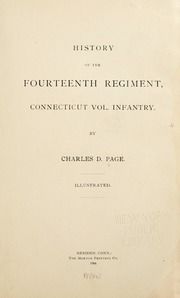
"An occasional "hot box" varied the monotony of the journey to Harrisburg."

That is literally the context. You can find the original line here:
proxy.php?image=https%3A%2F%2Farchive.jpg

History of the Fourteenth Regiment, Connecticut Vol. Infantry : Page, Charles D., 1839- : Free Download, Borrow, and Streaming : Internet Archive

archive.org

Was wondering if you came across this slang before. I never recall seeing it. I mean, I uh, know what it means today... I live in California after all.
 
This made me curious as well so I searched a few online sources for ACW slang. I didn't find a direct reference. I understand that "hot stuff" referred to liquor so perhaps a hot box would be slang for a bottle or jug. It would seem to fit the context. A torture device is another definition but somehow I don't think it would favorably vary anyone's monotony. 😬
 
It's an old railroading term. Presumably the regiment was travelling by train. Old style axle bearings had oil- or grease-soaked rags packed around them to reduce friction, which at times would heat to the point of smoldering or bursting into flames. Left untended it could start a fire or cause the bearing to seize up. Train and track crews were always on the lookout for hot boxes; if they saw smoke or sparks they would stop the train and repack and lubricate the bearing.
 
It's an old railroading term. Presumably the regiment was travelling by train. Old style axle bearings had oil- or grease-soaked rags packed around them to reduce friction, which at times would heat to the point of smoldering or bursting into flames. Left untended it could start a fire or cause the bearing to seize up. Train and track crews were always on the lookout for hot boxes; if they saw smoke or sparks they would stop the train and repack and lubricate the bearing.

Thank you!!
 
Last edited:
When I was a kid in the 1950's, I was fascinated by trains. Though he wasn't a railroader himself, my father recognized my interest and got me a copy of a magazine all about trains. I remember seeing advertisements in that magazine showing pictures of hot boxes, with flames shooting out of the axles.

Railroad technology has probably eliminated hot boxes by now, but they remained a problem long after the Civil War.
 
That railroad trip the 14th Connecticut went on was eventful. One of their favorite Lieutenants fell from a raised platform to the street below (thirty feet) when they were going through Easton, Pennsylvainia. He recovered and from that point on the poor guy was wounded in almost every single engagement he was in before finally being mortally wounded at Spotsylvainia.

Also many thanks to @Carronade. I have it confirmed from another soldier's letter that it was indeed the "hot box" that you described.
 
When I was a kid in the 1950's, I was fascinated by trains. Though he wasn't a railroader himself, my father recognized my interest and got me a copy of a magazine all about trains. I remember seeing advertisements in that magazine showing pictures of hot boxes, with flames shooting out of the axles.

Railroad technology has probably eliminated hot boxes by now, but they remained a problem long after the Civil War.
Strangely, no it hasn't, on this side of the pond all countries have hot box detectors trackside that measure the temperature of axle boxes on passing trains. Even the high tech roller bearing boxes can overheat from a variety of causes , not often , but it does happen.
 
I experienced a similar situation my first week as an M60 series tank platoon leader. My #1 right side roadwheel had a leaky hub seal. The grease leaked out; the roadwheel overheated and fused the metal of the roadwheel and the arm together. The roadwheel hub was glowing cherry red and shot off the roadwheel from the heat/pressure. Now maintenance on the #1 roadwheel requires that you break track, take off the compensating idler arm, take off the roadwheel arm, replace all your broken stuff then reassemble in the opposite order. 5-6 hours of work. And nothing on a tank is light, so it´s hard work. I learned how to check grease seals for leakage that week...
 
If you look closely at the last car on a train at a crossing, you will notice that there is flashing light attached to it. Much more than a simple lantern, it is an EOTD. The end of train device is an element of a sophisticated communications network.

The EOTD communicates with the engineer via radio. Not only does the engineer half a mile away receive updates, controllers hundreds of miles away are alerted, as well.

During the Civil War the axels of idle cars would would force the lubricant out of the bottom of the bearing. In order to lubricate the axel, every car of the lash-up had to be individually hitched & then rolled forward & back until the drag was ready to go.

The brakes were mechanical, so brakemen on the cars turned hand cranks, applying & releasing the brake on the car following signals from the engine's whistle. Some of the same whistle codes are used today. The mortally perilous lashing up of a train must have been something to hear.

I read a good deal about the railroad war here in a Middle Tennessee. Confederate cavalry & banditti were fond of removing rails on a curve to cause a derailment. Personal accounts often include the phrase, '...the engineer whistled for a stop...'. The fireman would pull as hard as he could on a Johnson bar in the cab as the brakemen atop the cars frantically spun the brake wheels as if their lives depended on it.

Railroaders I have known who were from the age of steam said that the hot box on the end of the axel sometimes glowed red. The friction from a dry bearing could cause a catastrophic failure. Without an EOTD, the crew walked the length of the lash up at every water & coaling halt. They held a hand out to feel for hot boxes.

CW railroading was not for the faint of heart.
 
Last edited:
During the 1800s many armies used hot boxes or sweat boxes as a form of punishment,
Google the image of an Crimean oven used to heat a tent for such a purpose and you get the general idea. I suppose it could be used in winter for comfort,
 
I was riding the footplate on a steam loco on one occasion when we smelt something unusual. at the next stop we found one box on the leading bogie (truck) was hot - ***** hot ! Reporting in, we flooded the box with oil and cautiously returned to the workshop. These particular boxes had white metal linings and this one had got so hot the metal was rotating with the axle. we were told to take an early break while the engineers lifted the loco, dropped the axle out, removed the box and replaced the lot in just over an hour!
 
I was riding the footplate on a steam loco on one occasion when we smelt something unusual. at the next stop we found one box on the leading bogie (truck) was hot - ***** hot ! Reporting in, we flooded the box with oil and cautiously returned to the workshop. These particular boxes had white metal linings and this one had got so hot the metal was rotating with the axle. we were told to take an early break while the engineers lifted the loco, dropped the axle out, removed the box and replaced the lot in just over an hour!
Where were you & what kind of engine was it?
 

Learn About Us
About CivilWarTalk
Contact the Webmaster
Meet the Staff
Link to CivilWarTalk
Join Our Community
Register
Browse Forums
View Today's Discussions
Search the Forum
Get Help
FAQ
Student Guide
Forum Rules & Etiquette
Copyright / DMCA

     Contact Us CivilwarTalk on Facebook CivilWarTalk on YouTube CivilWarTalk on Twitter RSS Feed

Bringing the American Civil War and More to Life.
© 1999 - , CIVILWARTALK, LLC - Site Version 10.0

SlaveryTalk.com - SecessionTalk.com - CivilWarTalk.com - ReconstructionTalk.com
Back
Top