
 Forum Host
- Joined
- Feb 5, 2017
From The National Museum of Civil War Medicine
*** Now this is interesting to me - look at the words in the poem and you don't see them used after the 1800s - "gore," "gurgling in the throat of the foe" - all the graphic words for death and fighting but gussied up with a flourish. ***. And poor Major General Howard gets completely lost as the poem takes a life of it's own.
#HumpDayHistory
(Civil War medicine facts to get you through the longest day of the week)
'The Empty Sleeve'
On June 1, 1862, at the Battle of Fair Oaks, Maj. Gen. Oliver Otis Howard was shot twice in the right arm, requiring the arm to be amputated. In July 1862, Howard toured Maine speaking on behalf of the Union war effort and urging citizens to volunteer. David Barker, a teacher and attorney, was so moved by one of Howard's speeches and the "silent eloquence" of his empty sleeve, he wrote a poem to be published in the local newspaper. Its popularity exploded and in 1864, publisher W.W. Whitney released sheet music for a song by Henry Badger, called "The Empty Sleeve." Barker's poem served as the song's lyrics although he was not credited for them. In 1866, artist Adelaide Sawyer, moved by the poem, visualized it with an engraving titled, "The Empty Sleeve." It was later reproduced as cartes des visite and sold to the public.
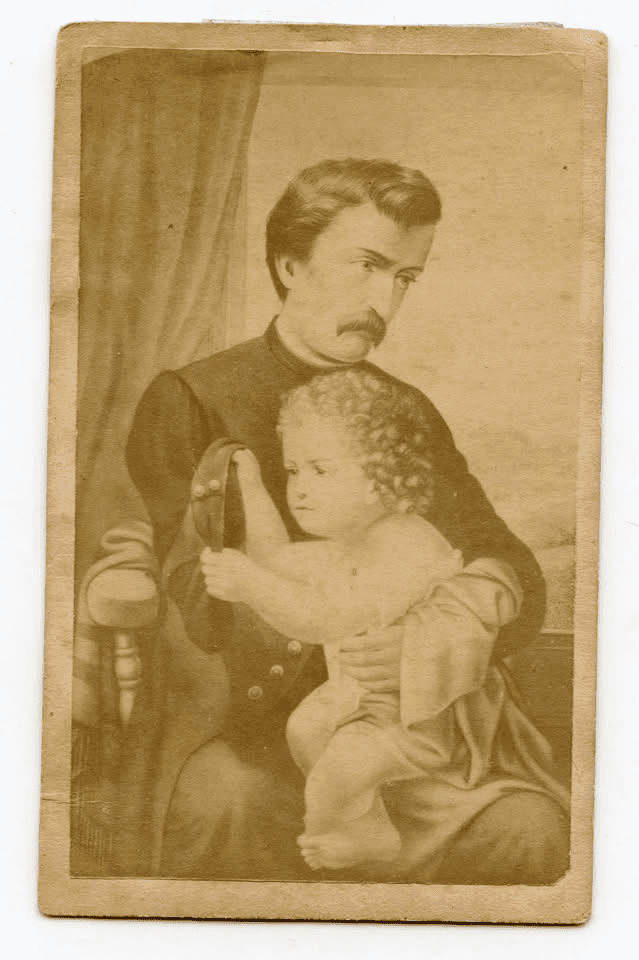
Published in 1866 as an engraving titled "The Empty Sleeve," the print's subtitle, "What a tell-tale thing is an Empty Sleeve," makes clear that David Barker's poem inspired it, despite the lack of any mention of the poet or General Oliver Otis Howard.
Photo: Melissa A. Winn Collection

Following O.O. Howard's amputation, his friend and comrade, Maj. Gen. Philip Kearny, also an amputee who had lost his left arm in the Mexican War, consoled Howard by saying, "General, I am sorry for you; but you must not mind it; the ladies will not think less of you!" Howard laughed and replied, "There is one thing we can do General, we can buy our gloves together!"
Photo: Library of Congress

As time passed and Barker's poem grew in popularity, the connection between O. O. Howard and the poem faded in public memory. In an 1886 retrospective of Barker's work, containing 130 poems, "The Empty Sleeve" received a two-page spread that included Adelaide Sawyer's drawing, but did not mention Howard.
Photo: Oliver Otis Howard Collection, Howard University
*** Now this is interesting to me - look at the words in the poem and you don't see them used after the 1800s - "gore," "gurgling in the throat of the foe" - all the graphic words for death and fighting but gussied up with a flourish. ***. And poor Major General Howard gets completely lost as the poem takes a life of it's own.
#HumpDayHistory
(Civil War medicine facts to get you through the longest day of the week)
'The Empty Sleeve'
On June 1, 1862, at the Battle of Fair Oaks, Maj. Gen. Oliver Otis Howard was shot twice in the right arm, requiring the arm to be amputated. In July 1862, Howard toured Maine speaking on behalf of the Union war effort and urging citizens to volunteer. David Barker, a teacher and attorney, was so moved by one of Howard's speeches and the "silent eloquence" of his empty sleeve, he wrote a poem to be published in the local newspaper. Its popularity exploded and in 1864, publisher W.W. Whitney released sheet music for a song by Henry Badger, called "The Empty Sleeve." Barker's poem served as the song's lyrics although he was not credited for them. In 1866, artist Adelaide Sawyer, moved by the poem, visualized it with an engraving titled, "The Empty Sleeve." It was later reproduced as cartes des visite and sold to the public.
Published in 1866 as an engraving titled "The Empty Sleeve," the print's subtitle, "What a tell-tale thing is an Empty Sleeve," makes clear that David Barker's poem inspired it, despite the lack of any mention of the poet or General Oliver Otis Howard.
Photo: Melissa A. Winn Collection
Following O.O. Howard's amputation, his friend and comrade, Maj. Gen. Philip Kearny, also an amputee who had lost his left arm in the Mexican War, consoled Howard by saying, "General, I am sorry for you; but you must not mind it; the ladies will not think less of you!" Howard laughed and replied, "There is one thing we can do General, we can buy our gloves together!"
Photo: Library of Congress
As time passed and Barker's poem grew in popularity, the connection between O. O. Howard and the poem faded in public memory. In an 1886 retrospective of Barker's work, containing 130 poems, "The Empty Sleeve" received a two-page spread that included Adelaide Sawyer's drawing, but did not mention Howard.
Photo: Oliver Otis Howard Collection, Howard University


 Bringing the