
- Joined
- Nov 26, 2016
- Location
- central NC
(Public Domain - Wikimedia Commons)
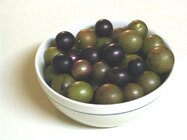
Most of us, especially Southerners, are familiar with the childhood excitement of locating wild grapes. Those with amber-green color hulls are called scuppernongs; those with purple to black hulls are muscadines. But a lot of folks have never heard of using the skins of these grapes to make a pie. This was a popular Victorian era recipe. It can likely be traced back to the 16th century.
Ingredients:
9-inch double-crust pie
¾ cup sugar
¼ cup all-purpose flour
¼ teaspoon salt
5 cups muscadine or scuppernong grapes (about 2 pounds), rinsed
1 tablespoon freshly squeezed lemon juice
3 tablespoons cold butter, cut into small pieces
Directions:
Heat the oven to 400º. Line a 9-inch pie pan with crust, leaving a 1-inch overhang.
In a small bowl, combine the sugar, flour, and salt, and stir with a fork to mix well. Set out a medium bowl and a medium saucepan.
Squeeze the grapes over the saucepan, dropping the pulpy, seed-filled grapes into the pan and placing their thick, sturdy skins, or hulls, into the bowl. Add 3 tablespoons of water to the saucepan and place over medium heat. Bring to a gentle boil and cook the grape pulp until softened and shiny, about 5 minutes. Transfer the cooked grape pulp to a strainer and place it over the bowl of grape hulls. Press the grapes through the strainer, pushing the softened pulp into the pan with the hulls while extracting the large, round seeds. Use the back of a large spoon to get as much pulp as possible. Discard the seeds, and transfer the hulls and pulp back to the saucepan. Cook them over medium heat to soften the hulls, about 5 minutes more.
Add the sugar mixture and lemon juice to the grapes and stir to mix everything well. Pour the filling into the piecrust. Sprinkle the small bits of butter over the grape filling, distributing it evenly. Wet the rim of the bottom piecrust to help seal it.
Roll the remaining dough into a 10-inch circle and cover the filling. Trim away the extra pastry extending beyond the rim of the pie pan. Crimp the edges firmly, or press them down with the back of a fork, working your way around the edge of the pie to seal the crust well. Use a sharp knife to cut 8 slits in the top crust, to allow steam to escape and fruit juices to bubble up as the pie cooks.
Place the pie on a foil-lined baking sheet to capture any drips, and place it on the lower shelf of the 400º oven. Bake 10 minutes, and then reduce heat to 350º. Bake until the crust is a handsome, golden brown and the grape juices are bubbling up through the crust, about 40 to 50 minutes more.

 Forum Host


 Bringing the