
texaswildcat
Sergeant
- Joined
- Feb 20, 2005
- Location
- Indiana
Commonly called the 'High Water Mark of the Confederacy' Pickett's Charge has been studied greatly, with many of its aspects tested to see if it was a contributing factor to the Confederate defeat. Such as 'Unsolved History' series dedicating an episode to study if the fence bordering the Emmitsburg Road was a major factor.
The Union II Corps was behind the stonewall, with artillery like Captain Alonzo Cushing's Battery A, 4th US Artillery. After a brutal two-hour long bombardment from the Army of Northern Virginia's batteries, 'Pickett's Charge' was unleashed. Though Pickett was one of three division commanders involved in the attack, the others being Major General Isaac Trimble and Brigadier General Johnston Pettigrew, and all three under the overall command of Lt. General James Longstreet.
Over twelve-thousand men, in three divisions, marched across the rolling fields towards Cemetery Ridge. What the Confederates didn't realize was, it was a trap.
The bombardment had driven off or silenced the Federal guns on Cemetery Ridge. It was only once the infantry assault began that the Federals unleashed their fire, not just from Cemetery Ridge but from Cemetery Hill, Culp's Hill and Little Round Top.
Another surprise awaited them. One Federal regiment, the 8th Ohio, was laying in the fields near the Ziegler House. Right in the path of Trimble's Division. The 8th Ohio arrived on 2 July and spent the rest of that day and the opening of the 3rd dealing with Confederate skirmishers, and remained on the field alone.
Seeing the assault coming, the Ohioans held their fire until close range. Rose and fired. This surprise fire rattled Brockenbrough's Brigade, and sent them running to the rear. Then the Eighth fired into the flank of Davis's Brigade. This sowed confusion into the rebel ranks. Many men either broke to the rear or surrendered.
After the Charge ended, the Eighth Ohio marched back to friendly lines, bringing with them some three hundred prisoners and three Confederate flags. Their bravery impressed the other regiments that they saluted the Ohioans as they returned.

(The Eighth Ohio at Gettysburg by Dale Gallon.)
South of the Angle, where Armistead's men briefly broke through, another threat presented itself. Confederates approached that part of the Stone Wall. Corporal Joseph H. De Castro, born in Massachusetts to a Spanish father and American mother, saw the color-bearer of the 14th Virginia waving his rag defiantly at the Bay State men. Corporal De Castro was the regimental bearer for the 19th Massachusetts. Seeing that rag, De Castro and his color-guard broke ranks and charged.
The Corporal himself went hand-to-hand with the 14th Virginia's color-bearer. Using his own flagstaff as a club, De Castro knocked down the rebel, seized both him and his flag and bore them back to their line. De Castro hurriedly approached his colonel, gave him the flag, and returned to the fighting without saying a word.
For his actions, De Castro was awarded the Medal of Honor. Four other men of his regiment likewise recieved the Medal of Honor for their gallantry.
 (Clubs Trump, by Dale Gallon)
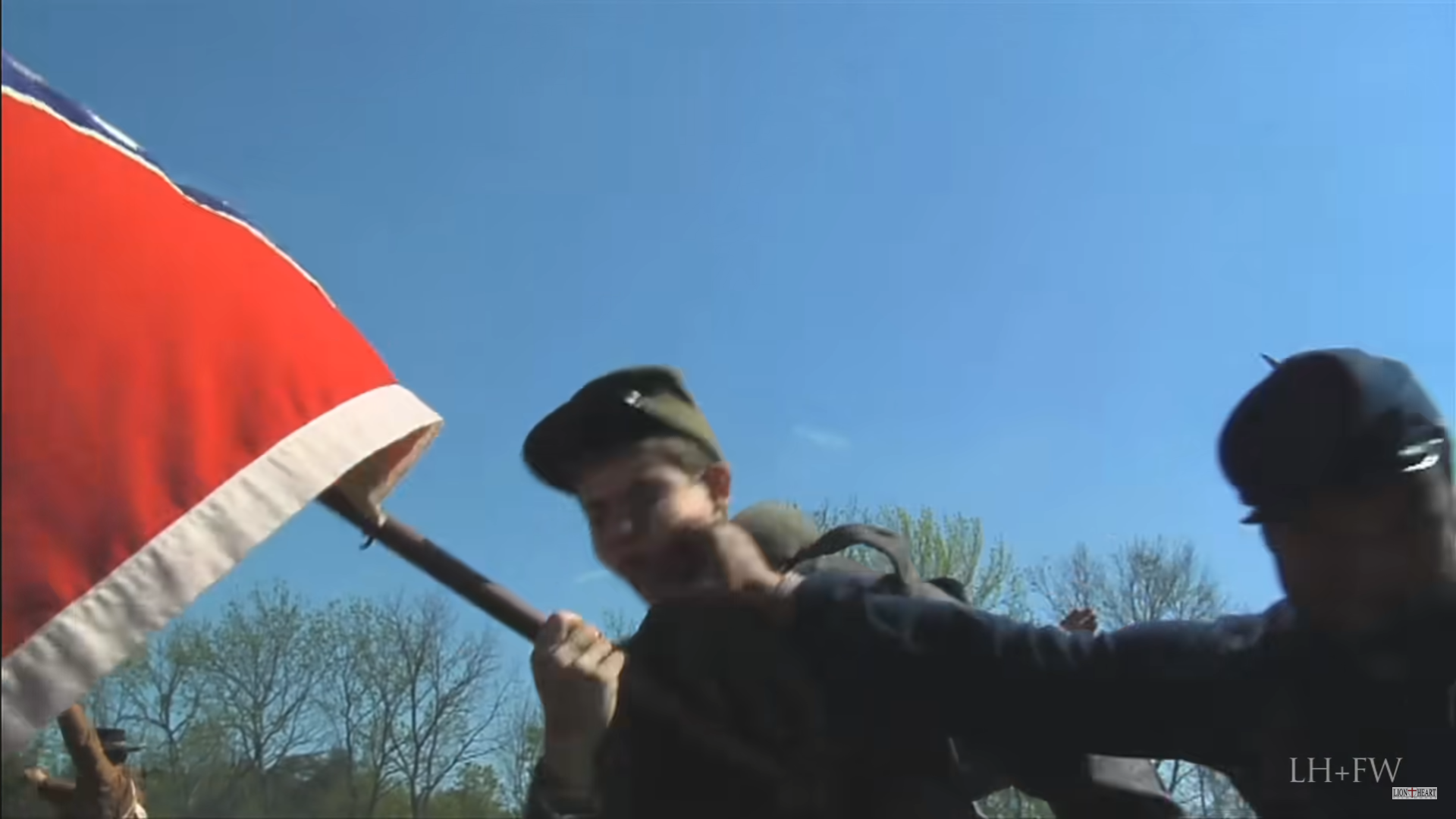
(Gettysburg-Pickett's Charge by Lionheart Films)
Just north of the 19th Massachusetts was the 1st New York Independent Battery found itself almost entirely alone, as their infantry support retreated. With the Confederates advancing right towards his guns, Captain Andrew Cowan ordered his six-3" Ordnance Rifles to be loaded with double canister. At a range of ten yards, thirty feet, his entire battery discharged their shotgun shells.
When the smoke lifted, not a single rebel remained standing.

(Screenshot from 'Unsolved History Pickett's Charge.')

(Cowan's Battery fired canister shot similar to this. Each gun was double-charged, two cans seated ontop of one another. Each ball is iron, 1.15inch in diameter. Taken from Historical Publications website.)
Pickett would survive Gettysburg, and the war. The rest of his service was marked with struggle and controversy. In February 1864, following his defeat in New Berm, North Carolina, Pickett ordered the court-martial and execution of twenty-two Union prisoners on the charge of 'desertion.' He claimed these twenty-two prisoners once served in the Confederate army before defecting to the Union.
All twenty-two men were found guilty, and hanged over the course of several days. Later it was found that only two of these men ever served in the Confederate armies. The rest had served in irregular units, not recognized as proper Confederate military service. Therefore they could not have deserted the Confederate military.
His last great failure was Five Forks, where he was absent from his command to attend a shad bake with fellow officers. When Union troops surprised and overwhelmed his command, Pickett couldn't be found. It was only when his command was routed and fleeing did Pickett return. By then it was too late to salvage the situation. What was left of the Confederate units retreated back to Petersburg.
Spurred by this victory, Grant ordered his commands to attack Petersburg the next day. This started the downfall of the Confederacy, with Lee evacuating Petersburg and Richmond, and surrendering later at Appomattox. Pickett and what was left of his command surrendered with the rest of the Army of Northern Virginia.
An official investigation was opened against Pickett after the war, prompting him to flee to Canada. The investigation was ultimately dropped, and Pickett returned to the US to be an insurance salesman.
The great question lingers, why did Pickett's Charge fail? Was it Longstreet's fault for not giving proper support? Was it Pickett's fault? Did the Confederate artillery fail to do its job? Or was it Lee for ordering the attack to begin with? Was it because the flank attacks on Culp's Hill and Cavalry Field failed?
One key piece is missing. The boys in blue themselves.
Division commander, General Isaac Trimble, was wounded in the left leg. That leg would later be amputated. Because the high risk of infection during a long, agonizing, voyage in an ambulance, Trimble was left behind when the Army of Northern Virginia retreated. He would spend the rest of the war as a prisoner.
When asked about Pickett's Charge after the war, Trimble said, "If the men I had the honor to command that day could not take that position, all hell couldn't take it."

When asked why his charge at Gettysburg failed, Pickett simply replied, "I always thought the Yankees had something to do with it."

(Screenshot from 'Gettysburg' (1993)
The Union II Corps was behind the stonewall, with artillery like Captain Alonzo Cushing's Battery A, 4th US Artillery. After a brutal two-hour long bombardment from the Army of Northern Virginia's batteries, 'Pickett's Charge' was unleashed. Though Pickett was one of three division commanders involved in the attack, the others being Major General Isaac Trimble and Brigadier General Johnston Pettigrew, and all three under the overall command of Lt. General James Longstreet.
Over twelve-thousand men, in three divisions, marched across the rolling fields towards Cemetery Ridge. What the Confederates didn't realize was, it was a trap.
The bombardment had driven off or silenced the Federal guns on Cemetery Ridge. It was only once the infantry assault began that the Federals unleashed their fire, not just from Cemetery Ridge but from Cemetery Hill, Culp's Hill and Little Round Top.
Another surprise awaited them. One Federal regiment, the 8th Ohio, was laying in the fields near the Ziegler House. Right in the path of Trimble's Division. The 8th Ohio arrived on 2 July and spent the rest of that day and the opening of the 3rd dealing with Confederate skirmishers, and remained on the field alone.
Seeing the assault coming, the Ohioans held their fire until close range. Rose and fired. This surprise fire rattled Brockenbrough's Brigade, and sent them running to the rear. Then the Eighth fired into the flank of Davis's Brigade. This sowed confusion into the rebel ranks. Many men either broke to the rear or surrendered.
After the Charge ended, the Eighth Ohio marched back to friendly lines, bringing with them some three hundred prisoners and three Confederate flags. Their bravery impressed the other regiments that they saluted the Ohioans as they returned.
(The Eighth Ohio at Gettysburg by Dale Gallon.)
South of the Angle, where Armistead's men briefly broke through, another threat presented itself. Confederates approached that part of the Stone Wall. Corporal Joseph H. De Castro, born in Massachusetts to a Spanish father and American mother, saw the color-bearer of the 14th Virginia waving his rag defiantly at the Bay State men. Corporal De Castro was the regimental bearer for the 19th Massachusetts. Seeing that rag, De Castro and his color-guard broke ranks and charged.
The Corporal himself went hand-to-hand with the 14th Virginia's color-bearer. Using his own flagstaff as a club, De Castro knocked down the rebel, seized both him and his flag and bore them back to their line. De Castro hurriedly approached his colonel, gave him the flag, and returned to the fighting without saying a word.
For his actions, De Castro was awarded the Medal of Honor. Four other men of his regiment likewise recieved the Medal of Honor for their gallantry.
(Gettysburg-Pickett's Charge by Lionheart Films)
Just north of the 19th Massachusetts was the 1st New York Independent Battery found itself almost entirely alone, as their infantry support retreated. With the Confederates advancing right towards his guns, Captain Andrew Cowan ordered his six-3" Ordnance Rifles to be loaded with double canister. At a range of ten yards, thirty feet, his entire battery discharged their shotgun shells.
When the smoke lifted, not a single rebel remained standing.
(Screenshot from 'Unsolved History Pickett's Charge.')
(Cowan's Battery fired canister shot similar to this. Each gun was double-charged, two cans seated ontop of one another. Each ball is iron, 1.15inch in diameter. Taken from Historical Publications website.)
Pickett would survive Gettysburg, and the war. The rest of his service was marked with struggle and controversy. In February 1864, following his defeat in New Berm, North Carolina, Pickett ordered the court-martial and execution of twenty-two Union prisoners on the charge of 'desertion.' He claimed these twenty-two prisoners once served in the Confederate army before defecting to the Union.
All twenty-two men were found guilty, and hanged over the course of several days. Later it was found that only two of these men ever served in the Confederate armies. The rest had served in irregular units, not recognized as proper Confederate military service. Therefore they could not have deserted the Confederate military.
His last great failure was Five Forks, where he was absent from his command to attend a shad bake with fellow officers. When Union troops surprised and overwhelmed his command, Pickett couldn't be found. It was only when his command was routed and fleeing did Pickett return. By then it was too late to salvage the situation. What was left of the Confederate units retreated back to Petersburg.
Spurred by this victory, Grant ordered his commands to attack Petersburg the next day. This started the downfall of the Confederacy, with Lee evacuating Petersburg and Richmond, and surrendering later at Appomattox. Pickett and what was left of his command surrendered with the rest of the Army of Northern Virginia.
An official investigation was opened against Pickett after the war, prompting him to flee to Canada. The investigation was ultimately dropped, and Pickett returned to the US to be an insurance salesman.
The great question lingers, why did Pickett's Charge fail? Was it Longstreet's fault for not giving proper support? Was it Pickett's fault? Did the Confederate artillery fail to do its job? Or was it Lee for ordering the attack to begin with? Was it because the flank attacks on Culp's Hill and Cavalry Field failed?
One key piece is missing. The boys in blue themselves.
Division commander, General Isaac Trimble, was wounded in the left leg. That leg would later be amputated. Because the high risk of infection during a long, agonizing, voyage in an ambulance, Trimble was left behind when the Army of Northern Virginia retreated. He would spend the rest of the war as a prisoner.
When asked about Pickett's Charge after the war, Trimble said, "If the men I had the honor to command that day could not take that position, all hell couldn't take it."
When asked why his charge at Gettysburg failed, Pickett simply replied, "I always thought the Yankees had something to do with it."
(Screenshot from 'Gettysburg' (1993)


 Bringing the