
 Forum Host
- Joined
- Feb 5, 2017
From FB "Civil War Medicine and Surgery"
When Private Edmund Craft marched onto the Gettysburg battlefield with the 126th New York Infantry, his regiment had something to prove. In September 1862, less than a month after Craft mustered in, the126th was among the Union troops that surrendered at Harpers Ferry. The men were paroled and endured months of ridicule as the "Harpers Ferry Cowards." At Gettysburg, they erased that reputation in blood.
On the evening of July 2, the 126th New York joined the Union counterattack against Barksdale's Mississippi Brigade near Plum Run. They were successful, but casualties were severe. Craft was shot in the left arm. The missile fractured his humerus and remained lodged in the limb.
Attempting to salvage the arm, on July 14 surgeons removed only the bullet. Unrecorded circumstances necessitated a formal amputation in the mid-shaft of the humerus on August 12th. An amputation more than 30 days after the initial injury was categorized as "secondary" and, at this site, carried a 21.6% mortality. He survived.
Ten days later the stump began to bleed significantly, the much-feared complication of "secondary hemorrhage." Surgeons arrested this with the "actual cautery," pressing a heated iron directly against the bleeding tissue. This ancient but accepted measure was generally reserved for bleeding that could not be controlled by pressure or ligature.
On December 18, the amputation was revised higher on the arm because of "caries," a destructive infection of the bone. Four days later, on December 22, what was left of the humerus was removed at the shoulder.
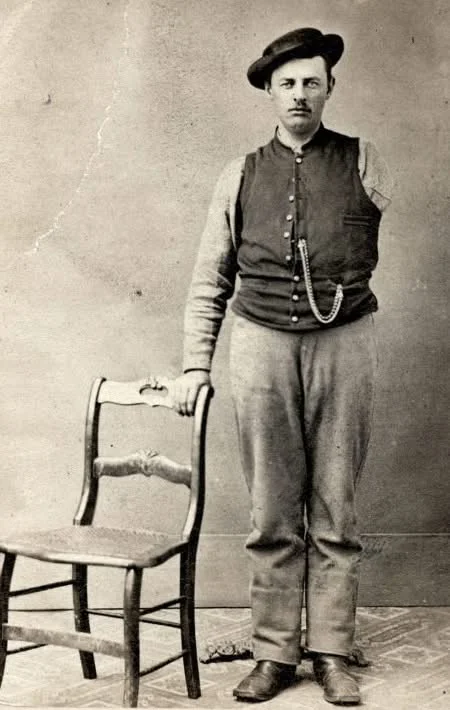
Craft survived all of this. Sometime during his recuperation, he was photographed at the Lovell Hospital in Rhode Island. His carte de visite survived in the photograph album of Annie M. Strout, a nurse at Lovell (pictured). After leaving the service, Craft returned to his home in Tyre, NY, married and became the father of two sons. He died in February 1880, only about 39 years old.
Edmund Craft had survived surrender at Harper's Ferry, a shattered arm at Gettysburg, secondary hemorrhage, and three amputations.
His regiment left the bloody field with its honor restored.


When Private Edmund Craft marched onto the Gettysburg battlefield with the 126th New York Infantry, his regiment had something to prove. In September 1862, less than a month after Craft mustered in, the126th was among the Union troops that surrendered at Harpers Ferry. The men were paroled and endured months of ridicule as the "Harpers Ferry Cowards." At Gettysburg, they erased that reputation in blood.
On the evening of July 2, the 126th New York joined the Union counterattack against Barksdale's Mississippi Brigade near Plum Run. They were successful, but casualties were severe. Craft was shot in the left arm. The missile fractured his humerus and remained lodged in the limb.
Attempting to salvage the arm, on July 14 surgeons removed only the bullet. Unrecorded circumstances necessitated a formal amputation in the mid-shaft of the humerus on August 12th. An amputation more than 30 days after the initial injury was categorized as "secondary" and, at this site, carried a 21.6% mortality. He survived.
Ten days later the stump began to bleed significantly, the much-feared complication of "secondary hemorrhage." Surgeons arrested this with the "actual cautery," pressing a heated iron directly against the bleeding tissue. This ancient but accepted measure was generally reserved for bleeding that could not be controlled by pressure or ligature.
On December 18, the amputation was revised higher on the arm because of "caries," a destructive infection of the bone. Four days later, on December 22, what was left of the humerus was removed at the shoulder.
Craft survived all of this. Sometime during his recuperation, he was photographed at the Lovell Hospital in Rhode Island. His carte de visite survived in the photograph album of Annie M. Strout, a nurse at Lovell (pictured). After leaving the service, Craft returned to his home in Tyre, NY, married and became the father of two sons. He died in February 1880, only about 39 years old.
Edmund Craft had survived surrender at Harper's Ferry, a shattered arm at Gettysburg, secondary hemorrhage, and three amputations.
His regiment left the bloody field with its honor restored.


 Bringing the